

India is potentially on track to becoming a $300 billion bioeconomy
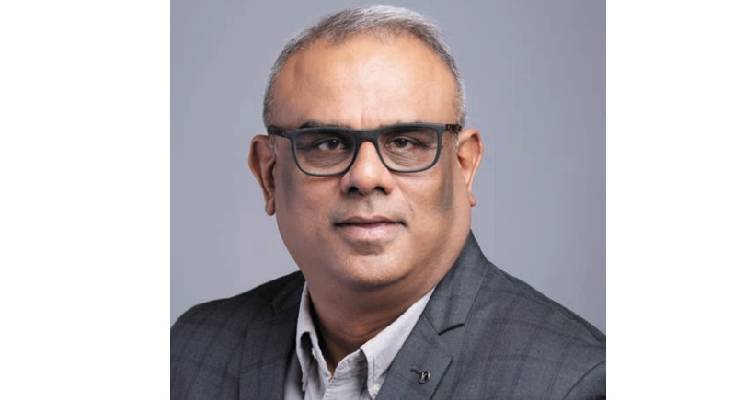
Srinath Venkatesh, MD, India & South Asia, Thermo Fisher Scientific, shares insights on the drivers shaping India’s biopharma growth, the company’s role in building innovation capacity, upcoming investments in Hyderabad’s Genome Valley, and how partnerships, policy support, and startup collaborations are accelerating India’s move up the value chain, in a freewheeling conversation with Lakshmipriya Nair


To understand the landscape better, how big is biopharma in India? Where are we headed, and what role does Thermo Fisher play in this journey?
India is potentially on track to becoming a $300 billion bioeconomy. The major shift we are witnessing is from being a largely generics driven industry — which accounts for about 20 per cent of the world’s generics supply — to developing and manufacturing larger molecules and biologics. That’s where we see significant momentum, and that’s where companies like us play a critical role.
We continue to support generics manufacturers, who remain key customers, but the future opportunity clearly lies in enabling the transition to complex biologics. This shift is being driven by several factors. First, strong government support through initiatives like PRIP and BioE3 has created an enabling policy environment. Second, private sector investment is rising. As companies prepare to compete globally, they are raising the bar in quality, R&D, and regulatory compliance, including global approvals like the US FDA.
Third, India has a large talent pool. While not all expertise is specialised yet, the foundational capability is strong and upskills rapidly once deployed. And finally, there is a strong national push toward innovation and moving up the value chain. From our perspective, as this ecosystem evolves, we are well-positioned across the entire biologics value chain. If you break it down into four phases, we operate in all of them:
◆ Discovery & R&D: We offer a wide range of analytical and scientific instruments.
◆ Process development: We provide comprehensive solutions to build scalable and efficient production workflows.
◆ Clinical research: Our teams support clinical trial design, protocol development, packaging, storage, and logistics.
◆ Manufacturing: We supply the platforms and technologies to manufacture large-molecule therapeutics. We don’t often highlight it, but our solutions span every step of the biopharma workflow. And with India currently representing only two to three per cent of the global biologics market, despite leadership in generics, moving deeper into biologics is a natural progression. That’s where we contribute meaningfully.
What are the opportunities that are unique to India?
Scale and cost advantage, undoubtedly. Take cell and gene therapies, for example — they offer tremendous patient benefits. India’s proven record in cost efficient manufacturing and its scalable talent pool provide a unique advantage in bringing these therapies to market affordably.
I was speaking to someone recently who said that when innovation comes from India, it serves the world, because of our cost competitiveness. Which means we need a stronger innovation ecosystem. Your thoughts?
Absolutely. I’ll connect that to something we recently announced, a collaboration with Startup India under DPIIT, called the BioVerse Challenge. The idea is to identify around 500 startups across medtech, biopharma, biophysics, proteomics, etc., and help them scale. We will mentor about 400 startups offline, and 100 will be brought into our Customer Experience Center (CEC) and Bioprocessing Design Center (BDC) in Genome Valley, Hyderabad, for hands-on support. The BDC is being set up with the Government of Telangana, and the CEC is our own facility. Startups will get access to infrastructure, equipment, and technical expertise, essentially the ecosystem needed to accelerate innovation. And how are the startups being selected? The applications are invited through the DPIIT Startup India portal. Startups share the problem they are addressing, market relevance, and feasibility. An advisory board of academicians and industry leaders evaluates them. The top 100 receive hands-on training; the others receive structured mentorship.
When will the new Hyderabad facilities be ready? Can you share the scale of investment at these facilities?
Within this year. They are at an advanced stage and we expect to announce in Q4. We won’t be sharing numbers at this stage. But broadly, for the BDC it’s largely equipment and people, and for the CEC it includes infrastructure, space, and solutions. It is a significant investment across both.
What is Thermo Fisher’s five-year plan for India?
Our vision is to become the partner of choice in scaling and enabling the biopharma manufacturing ecosystem. We are expanding our presence through commercial teams, service centers, infrastructure, R&D investments, and localised supply chains. Beyond biopharma, the CEC will also support semiconductors and clean energy workflows. You’ll see a stronger, more embedded on-ground presence.
Any new partnerships?
We continue to partner across the ecosystem — with the Government of Telangana, DPIIT, CFSL Ahmedabad, CCAMP, and Atal Incubation Centres, among others. These partnerships combine our technical expertise with institutional scale and reach.
Are more centers planned after Hyderabad?
Not immediately. These are experience and workflow centers, not manufacturing sites. Our manufacturing footprint is already national — in Maharashtra (Chakan and Pune), near Amarnath, and in Bengaluru.
What challenges do you encounter in the Indian market?
The need for more specialised skills, especially in emerging areas like CGT, and continuously evolving regulatory pathways. These are natural in a growth market, not roadblocks. Our ongoing investments address these areas.
How is Thermo Fisher supporting MSMEs, especially in a cost sensitive environment?
Many MSMEs are already our customers — for example, in air quality monitoring solutions. While the market is priceconscious, customers value high-technology solutions when we demonstrate clear value and reliability.
How has your supply chain evolved post-pandemic?
We’ve increased local stocking and localised manufacturing for several products. We’ve also strengthened our service capabilities and spare-part availability. Faster response and reliable service have been key. One final question — tariffs and geopolitics.
How are you managing customer concerns?
We stay transparent, stay close to our customers, and continue doing what we do best. We adjust where needed and remain committed to supporting our customers consistently.