

Pharmacy beyond pills: Why India needs better drug awareness and pharmacy practice
Dr Ashok Omray examines India’s growing culture of self-medication and highlights the urgent need for stronger pharmacy awareness nationwide

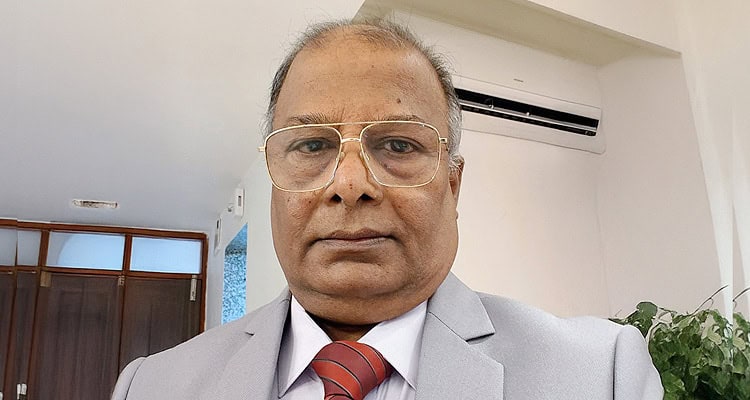

Medicines: An integral part of everyday life
Medicines are as important to human beings as food, water and air. Nobody wants to consume drugs for fun or enjoyment, though in our country every individual behaves like a doctor for others, except for himself. India has a history of medicines and medical practice going back several thousand years, since the times of Charak, Sushruta and Dhanvantari. From infants to centenarians, drugs are a part of life. Care, hygiene, cleanliness and nutritious food alone are not enough to keep us prepared to face the world, its challenges and struggles.
I do not think there is any exception — almost every household has at least a dozen different medicines (tablets, capsules, syrups, gels, ointments, first-aid kits, etc.) available at any moment to counter health-related emergencies like cough, cold, sprain, cuts, burns, headache, fever, gastric problems, malaria and even infectious diseases. In earlier times too, mothers and grandmothers were often the biggest healers. Their kitchens had everything needed as the first step to ward off an adverse situation at any hour of the day.
Why basic drug awareness is needed today
The question then arises: why is there a need in 2026 to revisit age-old practices? The need for basic education becomes important when shallow knowledge is misused and, with the help of Google, AI and other modern tools, every individual believes he can diagnose and correct himself. The result is that every family seems to have at least one “MBBS doctor” besides several assistant doctors. In spite of this, there are still long queues outside clinics and hospitals.
Today, out of India’s 145 crore population, it appears that at least 60 crores are focused on Semaglutide. A similar situation occurred when Viagra was launched by Pfizer in 1998; the world thought it had achieved the ultimate solution. Eventually, the drug began selling even at tea stalls and paan shops. Whether out of necessity or thrill, drugs often become toys in the hands of fantasy sellers. The hope is that diabetes will automatically be cured through weight reduction. Instead of its approved indication for Type II diabetes, Semaglutide is now being widely publicised for weight reduction.
We may be the only country in the world where almost any drug and dosage form can be purchased without a doctor’s prescription or advice, including medicines for cancer and pregnancy termination.
Growth of pharmacy education in India
I would like to take you back about 58 years, to 1968, when I joined a Pharmacy course for higher education. At that time, awareness was so limited that many elders asked whether I had joined Agriculture studies because they confused B. Pharm with B. Farm.
The growth of specialised Pharmacy education has been phenomenal. From about 30 institutions across the country in 1968, India now has nearly 5,000 colleges imparting Pharmacy education through Diploma, Degree, Pharm D, postgraduate and doctoral programmes — almost 170 times more. Industrial growth has also been remarkable. Unfortunately, Pharmacy practice in India is still largely limited to research, industry, academia, regulation, marketing, and wholesale and retail sales.
Lakhs of Pharmacy graduates pass out every year, but providing meaningful employment opportunities for such a large population remains a major challenge. However, my objective here is not merely to highlight the problem, but to be part of the solution.
Traditional remedies and India’s kitchen pharmacy
Herbal medicines and Ayurveda have been practised since the beginning of civilisation. Every Indian kitchen is a small pharmacy. It is difficult to name any material that does not have some medicinal value. Consider the following common household ingredients:
Ajwain, heeng, baking soda, cardamom, castor oil, cinnamon, cloves, coriander, cumin seeds, fennel, fenugreek, garlic, ghee, ginger, besan, gripe water, tulsi, honey, amla, lemon, menthol, mint leaves, peppermint, rosewater, turmeric and many other oils, natural dyes and flavours.
Most common health problems such as body ache, digestive disorders, cough and cold, sprains and skin problems have home remedies readily available. Allopathic medicines are hardly 150 years old. Different parts of trees, plants and herbs have been used medicinally for centuries. Natural salts have also been in use for generations. Even today, plant-based insecticides command premium value.
Certain formulations such as aromatic waters, infusions, decoctions, tinctures, extracts, poultices, pills, powders, granules, pastes, lotions and inhalations have almost disappeared from common use. Earlier, these were often prepared manually either at the prescriber’s desk or at home. Ironically, many of these simple and inexpensive natural products are now sold at premium prices under the label of “natural” products.
India’s rise as the “Pharmacy of the World”
Medicines have become so common that even an ordinary person now knows what to use for fever, cough, cold or infectious diseases. This became possible because of education, the focus on self-sufficiency, and the need to tackle diseases and epidemics arising from environmental conditions, sanitation problems and poor hygiene.
India earned the title of the “Pharmacy of the World” because of education, research and development, technology, automation, innovation and large-scale generic drug manufacturing for both domestic and international markets. We must be proud that the chemical and pharmaceutical industry has grown tremendously over the last few decades and has become a major contributor to the country’s economy.
India was once considered a dumping ground for outdated materials from the West, but today it has become a provider of quality medicines to the world.
India’s pharmaceutical journey: From scarcity to global leadership
Generations such as Baby Boomers and Gen X are now interacting with Gen Z and Gen Alpha, many of whom may not understand what life was like during the 1960s, 70s and 80s. They may even consider us to belong to the “stone age.” Lanterns, kerosene oil and wax candles now seem like objects from history books.
This perspective is important because many major discoveries and developments took place when India was still in its infancy after Independence. At that time, the country’s priorities included food, drinking water, roads, electricity, agriculture, maternal care, immunisation and basic healthcare. India depended heavily on imports even for essential medicines and nutritional supplements.
You may be surprised to know that drug manufacturing and trade in India is more than 125 years old. One of the oldest companies, Bengal Chemicals and Pharmaceutical Company, was established in 1901 by Acharya P. C. Ray. Indian companies such as Dabur, Alembic, Unique and FDC continue to remain major players even today.
The government’s focus on healthcare can be seen in the establishment of Hindustan Antibiotics in 1954 and Indian Drugs and Pharmaceuticals Limited (IDPL) in 1961 at Hyderabad and Rishikesh. These visionary initiatives laid the foundation for India’s remarkable pharmaceutical progress.
The rapid expansion of education and industry during the 1980s and 1990s clearly showed that there was no stopping India’s growth. Despite patent restrictions, progress continued steadily. The Indian pharmaceutical revolution accelerated after the Hatch-Waxman Act of 1984 in the US, which opened opportunities for generic drug manufacturing and exports. Today, India is among the world’s largest suppliers of medicines to the Americas, Europe, Australia, Africa and Asia, largely due to its cost competitiveness.
Misuse, commercialisation and ethical concerns
There has also been serious misuse and malpractice in the race for quick monetary gains. Drug manufacturing and trade have increasingly fallen into the hands of businessmen, while education itself is often treated as a “cash crop” by politicians and private operators.
The need for affordable medicines cannot be denied, but medicines are meant for unhealthy or abnormal conditions, not casual consumption. Public awareness must be created so that people do not fall prey to substandard and spurious drugs. The term “generic drugs” has unfortunately made medicines appear cheap and casual in the public mind.
The noble professions of prescribing, manufacturing, storing, handling and dispensing medicines are increasingly losing their dignity. Medical practice and pharmaceutical manufacturing should be treated as two separate but equally important functions. There are important principles that all of us must respect in both law and conscience.
Basic principles for safe use of medicines
We are perhaps the only country where almost any medicine — except possibly narcotics — can be purchased without a prescription. There must be greater concern for public safety against the health hazards arising from indiscriminate drug use.
The following basic principles should be followed:
- Treat drugs with respect.
- Drugs are needed only when we are unwell. They should not be treated like daily essentials.
- Indiscriminate use of OTC (Over-the-Counter) medicines can be harmful.
- Do not become your own doctor.
- Buy medicines only from reliable manufacturers and preferably those recommended by your doctor.
- Avoid using leftover medicines.
- Medicines should be stored properly and never kept in bathrooms or kitchens.
- Do not leave medicine containers open or loosely packed.
- Medicines without proper labels should be discarded.
- Always check expiry dates before purchasing medicines.
- Expired medicines may become ineffective or harmful.
- Do not believe claims that medicines do not require expiry dates.
- Home remedies may help with minor ailments such as cold, sore throat, indigestion, cuts and sprains.
- Self-medication, whether allopathic or ayurvedic, can be harmful.
- Avoid taking medicines solely on the advice of chemists.
- Be cautious about blindly trusting Google, YouTube or Facebook for medical advice.
- Seeking advice is fine, but do not start treatment without proper consultation.
- Generic medicines can be less expensive, but seek medical guidance before using them.
- Branded medicines from reputed companies are usually backed by research, testing and quality assurance.
- Always consult a doctor if symptoms persist or worsen.
- Packaging and dispensing devices are also important for safe medicine use.
- Improper storage can damage medicines because many ingredients are prone to microbial growth.
- Medicines must be produced and handled only by trained professionals under strict quality checks.
- Any abnormality observed in medicines should immediately be reported to the authorities.
- Ethical practices in pharmacy must never be replaced by a profit-only approach.
- The market still contains many counterfeit and substandard drugs.
- Do not donate medicines that are improperly stored or without clear labels.
- Poor-quality and spurious drug manufacturing continues to pose a major threat to public health.
Household medicines and the age of internet diagnosis
In many households, the number of medicines keeps increasing. Dolo, Augmentin, Insulin, Metformin, Cetirizine, Ciplox TZ, Sorbitrate and Volini (without any intention to promote brands) have become common household items and are often used casually. Sometimes I wonder whether excessive drug consumption itself is contributing to unexplained health disturbances.
The need for basic pharmaceutical awareness has become even more important in the age of Google and ChatGPT, where even MRI and CT scan reports are interpreted by people with limited medical knowledge, who then decide their own course of treatment — or non-treatment.
Unfortunately, while there are many “medical interpreters,” very few people discuss pharmaceutical practice, drug research and development, or drug manufacturing. Pharmacy professionals can serve as an important bridge between patients, diseases and medical practitioners.
Drugs become outdated quickly, and some substances may even get banned over time. The science of drug substances, formulations, dosage design, therapeutic efficacy, pharmacology and clinical studies belongs to pharmaceutical scientists. However, this understanding has still not adequately reached community pharmacy, hospital pharmacy and rural health programmes in India.
The need to respect pharmacy professionals
Merely speaking philosophically or politically is not enough unless we create meaningful opportunities for lakhs of Pharmacy graduates while respecting their role and providing fair compensation.
It is unfortunate that even in 2026, a fresh Pharmacy graduate, after four years of rigorous education, may receive only ₹15,000–20,000 per month for long working hours and shift duties. Such underpayment discourages talented professionals and wastes scientific training when graduates are forced into unrelated clerical or office jobs.
My writings alone cannot bring about dramatic change, but I would be happy if society begins to understand Pharmacy in the same way it values Engineering, Medicine, Architecture, Showbiz or sports.
Pharmacy is more than dispensing medicines
Pharmacists are not merely dispensing chemists. The science of drugs, safety and efficacy is extremely complex. The discovery of new drugs involves billions of dollars and requires expertise from Chemistry, Physics, Engineering, Electronics, Project Management, Business Management and now Artificial Intelligence as well.
The migration of skilled Pharmacy professionals to countries offering better salaries and opportunities amounts to a drain on India’s own scientific resources. If the profession cannot immediately become highly lucrative, at the very least Pharmacy practitioners must receive the respect and recognition they deserve so they can proudly serve humanity and suffering patients.
India still has a long way to go. Merely manufacturing, exporting and earning money cannot be the sole objective of the Pharmacy profession.

Very well said sir especially the 28 basic rules. You are an inspiration.
Very well said sir especially the 28 basic rules.