

We train professionals to see quality not as a checklist but as a mindset
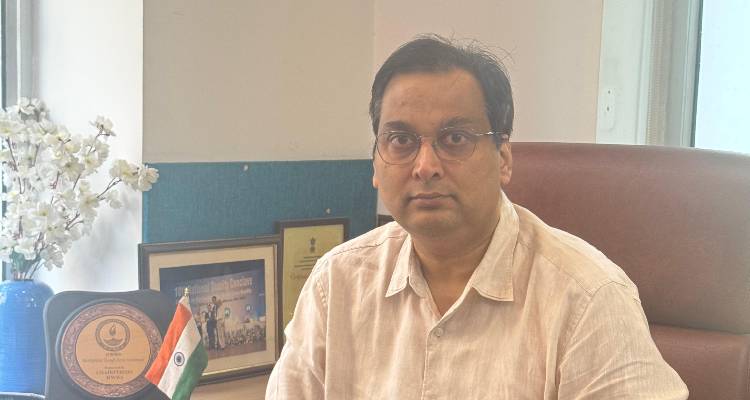
Prof. Dr Syed S. Abbas, Director, Institute of Good Manufacturing Practices India (IGMPI), explains how globally benchmarked programmes, hands-on learning, industry-aligned curricula, and flexible training models are preparing professionals to meet global compliance expectations and strengthen India’s position as a hub for safe, high-quality pharma products, in an interaction with Kalyani Sharma


How does IGMPI’s training ecosystem directly address the root causes of patient safety lapses such as weak documentation, manufacturing deviations, and gaps in pharmacovigilance within India’s pharma and healthcare sectors?
If we look closely, most patientsafety failures don’t happen overnight. They start small, maybe a missed entry in a logbook, a deviation that isn’t fully documented, or a followup on an adverse reaction that’s delayed. At IGMPI, our programmes are designed around addressing exactly these weak points.
We train professionals to see quality not as a checklist but as a mindset. Modules on good documentation practices, data integrity, deviation handling, and CAPA make participants understand why precision matters at every step. Similarly, our pharmacovigilance courses build the skills needed to monitor drugs even after they’re out in the market, ensuring that any risk is caught early. When professionals learn to connect each step of compliance with the larger picture of patient safety, they make fewer mistakes and when they do, they know how to respond effectively. That’s the culture we try to build through our training ecosystem.
IGMPI’s programmes are benchmarked to USFDA, EMA, WHO, and ICH guidelines. Could you elaborate on how aligning with these global standards helps Indian professionals meet international compliance expectations and support India’s export readiness?
India’s pharma industry is massive; it is a global powerhouse for generic medicines. So, following international regulations is not optional. It is the only way to keep that reputation strong. That’s why every IGMPI programme is structured in line with international standards like USFDA, EMA, WHO, and ICH. We want Indian professionals to be fluent in the language of global regulation. When a learner studies our GMP or QA modules, they’re not just studying Schedule M from the Indian rulebook; they’re also comparing it with EU Annexes or USFDA 21 CFR parts.
When professionals really dig into how different countries handle compliance, they start to see what inspectors actually want, what paperwork they need to have ready, and how audits go down in other places. That kind of awareness sticks. It gives people the confidence to face any audit, from any agency, and it helps companies stay consistent. That’s how you build trust across borders.
IGMPI emphasises industry relevance. How does your curriculum spanning GMP, QA/QC, regulatory affairs, and healthcare quality ensure that learners are ready to tackle real-world challenges in pharma and healthcare environments?
We have built our curriculum backward from the real challenges people face at work. Every course, whether it’s in GMP, regulatory affairs, or healthcare quality, reflects what’s actually happening on shop floors, in audit rooms, or during product recalls. For example, GMP and QA/QC learners work through case studies that mirror real deviation reports or CAPA investigations. Those studying regulatory affairs also learn formats like CTD and eCTD for submission, exactly what they’ll need to handle in their jobs. In healthcare quality, we explore process improvement, patient safety indicators, and documentation systems used in modern hospitals.
This approach keeps learning practical. By the time participants finish their programme, they’re not just aware of regulations; they’ve already practiced applying them. That’s what helps them walk into the workplace ready to solve problems, not just identify them.
How does IGMPI integrate practical exposure through case studies, lab sessions, and tools like QbD, Process Analytical Technology, and Computer System Validation into its programmes to create job-ready professionals?
The truth is, you can’t just read a textbook and expect to handle the real-life challenges of pharma manufacturing or compliance. That’s why our training is hands-on. In the lab, participants get their hands dirty with the basics of QA and QC; calibration, validation, sampling, and analytical methods. We bring in sessions on Quality by Design and Process Analytical Technology, so people can see first-hand how these tools cut down on process hiccups and keep everything running smoothly.
Inclusive of Computer System Validation, the digital systems and automation are taking over. People learn to validate manufacturing and documentation software, ensuring every record is accurate and traceable. By mixing real-world case studies, technical skills, and digital knowledge, we are building professionals who can manage both the traditional and the emerging sides of pharma. That is the kind of talent the industry needs right now.
With professionals often unable to take career breaks, how does IGMPI’s flexible learning model (online, parttime, and corporate training) help in continuous workforce development without disrupting existing roles?
Most people we train are already working and that’s a good thing because it means they can apply what they learn immediately. We’ve made flexibility a core part of how we teach. Our online and part-time courses let people learn without quitting their day jobs. Classes are hands-on, and the assignments tackle real problems, not just things you memorize and forget. We also bring training straight to companies, shaping it around whatever compliance headaches or audit surprises they’re facing.This kind of setup helps companies build stronger teams without missing a beat. Employees develop new skills, and the whole system gets sharper. Upskilling happens right on the job, blended into the workplace instead of just pulling people away from it.
Looking ahead, how do you see IGMPI’s training model contributing to India’s long term goal of becoming a global hub for safe, highquality, and compliant pharma products?
The big shift now is that everyone expects higher standards for quality and compliance and that’s where solid training comes in. Our aim is to create professionals who don’t just follow global standards, but actually get why they’re important. With programmes aligned to USFDA, EMA, WHO, and ICH, and new focus areas like automation, ESG, and digital validation, we’re preparing the workforce for the next phase of global manufacturing.
If India wants to be recognised as a hub for safe and high-quality pharma products, compliance has to become a habit; something that’s embedded in everyday practice. That’s what we’re working toward at IGMPI: a workforce that treats quality as culture, not as a requirement.
[email protected]
[email protected]
