

We can help our customers reach markets faster
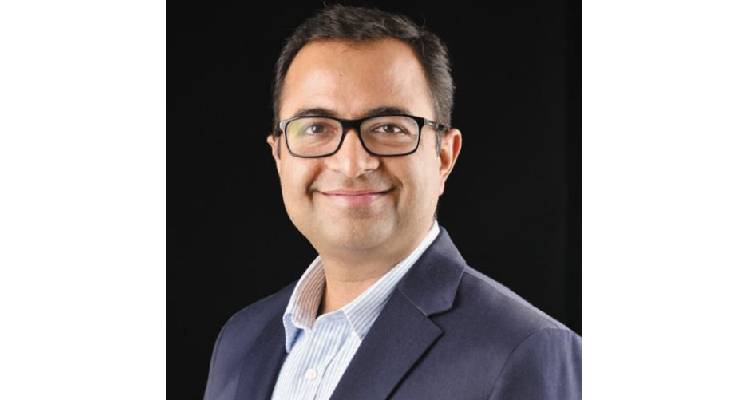
Merck Life Science recently augmented its Formulation & Technology Center in Navi Mumbai. On a recent tour of the lab, Aditya Sharma, Head of Process Solutions, India Region, Merck Life Science explained to Viveka Roychowdhury how the lab plays a pivotal role in supporting Pharma and biopharmaceutical companies in excipient technology, formulation research and drug delivery to result in high-quality products matching the required dissolution, stability, and efficacy profiles.


Excerpts from the interview:
What’s the vision and strategy behind Merck’s Formulation & Technology Center in Navi Mumbai, which adds on to the two existing labs in Bengaluru?
We started this lab on a small scale around 10 years ago and recently, in February 2025, expanded to a new modern lab. The whole idea of this Formulation & Technology Center is to help our customers, especially around small molecules, build their formulations. The lab now has modern capabilities to cater to the need for formulators to resolve critical challenges in the drug formulation using Merck excipients.
As formulation development takes time and needs the required expertise, our offer to customers is that if they face challenges in certain formulations and need help, they can come to this lab. And we can bring in our expertise. We have people, we have the lab, so we can utilise the expertise there.
When you talk about helping clients and companies, is it the larger clients, larger companies, or is it the SME sector?
Because formulation research, as you said, needs to be kind of done over a period of time. And in the MSME sector, the mid-sized players may not have a fullfledged in-house laboratory. We have a broad clientele that includes both established multinational corporations and emerging SMEs. Regardless of size, our services are designed to support any organization facing challenges in formulation development, regardless of size. There is a growing trend in the industry where businesses are increasingly outsourcing formulation research to specialised partners like us, particularly those without a dedicated R&D infrastructure.
We recently introduced mPredictTM, an AI-powered platform, to meet this need. After the API has been determined, this tool helps clients choose the best excipients for a particular formulation. It makes recommendations for excipient combinations that are most likely to result in a successful formulation by using predictive modeling. We provide both the digital solution and practical assistance. But if customers also want a proof of concept, to see it in our lab, then we can create the formulation, show it to them and then take it forward from there.
How long would such a project take, from proof of concept to final product?
The final product may take a couple of months depending upon the formulation.
What would be the cost differential between outsourcing formulation R&D work and doing it inhouse? Would outsourcing FR&D give enough ROI to prefer outsourcing rather than doing it within the company?
The price of the service would differ, of course, depending on the kind of work it is. But the ROI, in terms of speed to market, is very critical, right? So, for us—with the expertise we have available in the lab— we can help our customers reach markets faster. And this is what this lab enables our customers to do: develop their formulations quickly, without too much trial and error inhouse, and move forward with their molecule more efficiently.
So you fail fast earlier and therefore you save time-to-market?
Yes, time to market is faster and the probability of success is faster because the team here in this lab is doing this day in, day out and aided by this AI tool mPredict™, we can provide a much quicker turn around.
Could you illustrate this with examples?
Merck has been working closely with leading biotechnology solution providers for collaborative data analysis in genomics and to ensure data privacy. Merck is also partnering with leading life science research companies to provide equipment and technologies for the manufacturing of monoclonal antibodies (mAbs) and novel modalities.
Merck is actively working with various leading partners to help build a robust ecosystem that enables emerging biotech firms, smaller companies, and startups to scale rapidly. Apart from such MOUs, we have also signed agreements with the Department for Promotion of Industry and Internal Trade (DPIIT). We have been working with them to identify a few startups that Merck can mentor, offering expertise and training. If they wish to take their products to different markets, we can consult with them. This is how we are engaging with the government to ensure that we, Merck as an organization—with the government’s support and endorsement—can work with the industry, both startups and established players, to help bring products and therapies to market faster.
You mentioned emerging biotechs and start-ups in the biotech space. India’s Start-up policy has spurred many emerging biotechs. You’ve talked about mentoring some of them. What do you feel about the role of India’s policy initiatives in this space? How will the Government’s Bio-E3 policy impact R&D and manufacturing within this space?
The Bio E3 policy definitely was the starting point, as it began building focus on biotech as an industry. But the recent Research Development and Innovation (RDI) policy is a game changer because the amount that has been allocated Rs 1 lakh crore clearly shows that the government is serious about R&D and innovation. Within the RDI policy, Rs 20,000 crore will be allocated to several technology sectors of strategic importance, like biotechnology, which is substantial.
This is the kind of financial support our startups need because taking a molecule to preclinical and then clinical trials is a very, very expensive endeavor. You need really deep pockets to do that, and that’s where most of the molecules or research efforts die in India. So, with this kind of financial support, startups will have access to funding. Once they get access to funding, the second biggest step is looking for technology and guidance. That is something Merck can provide—and is already doing. So, I think with the government’s policies and the whole ecosystem Merck is trying to create, we will enable these emerging startups to scale up faster.
What are the emerging trends in vaccine manufacturing? Where does India stand?
India is the world’s largest vaccine manufacturer and fulfils more than 50% of the world’s demand for vaccines. The focus predominantly has been on pediatric vaccines and pentavalent vaccines. With more and more companies expanding their business, we are witnessing a significant shift towards adult vaccines. Leading companies have grown interest in oncology related vaccines and tremendous progress has been made in areas such as HPV, pneumonia, dengue, malaria. Indian manufacturers are actively launching vaccines targeting these diseases.
The other trend I see is that we now have the ambition to play directly in the established markets, like the US and Europe, with our vaccines. So far, most Indian companies participate in UNICEF, WHO tenders and supply to billions of people in Africa, Asia, Latin America and many other markets. India holds a significant cost advantage, expertise, and trained manpower. India has been manufacturing vaccines for the past 70-80 years and holds substantial knowledge. Our facilities are all approved by the World Health Organization (WHO) and other premier bodies. India is leading vaccine manufacturers today. We can now realise this ambition through directly selling in US and Europe markets.
India is the largest player by volume in vaccines. Do you think that India can make it also in value because with the new generation vaccines, there’s new technology like the mRNA vaccines, et cetera. Where does India figure in that space? These are newer technologies and more difficult to replicate. Where does India stand in this space?
Regarding the volume-value play, I would say that because we have been participating in tenders for these pentavalent vaccines, pediatric vaccines which are sold at a very low price, you see very high volumes, and the number of dosages is in billions. But the kind of price that you see is low. But with these new vaccines, the other vaccines which we are targeting, like pneumonia and HPV, I think the value would definitely grow faster. Second, once we start tapping the US and European markets directly, a lot more value would definitely come in.
New therapies such as mRNA and new technologies would also significantly contribute to the value aspect. Going back to our conversation around startups, there are companies in India that are harnessing mRNA as a technology to develop novel products. So, in working with some established players, some start-ups can further these new therapies through mRNA. I don’t know the timelines yet. I see a lot of people debating as to when mRNA would become a very large technology, where you will see several vaccines and products coming out of mRNA. I don’t know when that would happen, but I’m sure technology is moving in that direction.
How can technology help biopharma companies in India to attain and maintain high standards in drug development and in a sustainable, cost-effective manner? Any advanced technologies that help your clients achieve consistent quality at sustainable cost?
I think the quality standards of Indian pharmaceutical companies, whether its generics, small molecules, vaccines, or biosimilars, are very high. I would say we produce world-class quality products. Forty percent of the US generic requirement is fulfilled by India. If you go to America or Europe, you will see a lot of products from Indian pharmaceutical companies. So, I think in terms of quality standards, we produce some of the finest, and Merck is definitely working very closely with all leading Indian pharmaceutical players. Whether it’s our excipients, filtration technology, or downstream or upstream purification technologies, all help our customers maintain consistent quality. We have labs in India where we do a lot of validation of the processes. And that is something which helps our customers consistently produce their products.
Apart from that, we have our life science services business, which is BioReliance, acquired earlier by Merck. We provide a lot of services such as lot release criteria, which help customers ensure they consistently deliver top quality products to their customers globally. The evolving regulatory framework, be it EU GMP or Schedule M, which was implemented recently, helps the Indian industry progress further. So, I would say that if you look at the way technology has evolved, if you see most of the Indian manufacturers today, they are producing world-quality products and selling to all global markets. If you see, India has the maximum number of USFDA approved plants outside the US. So, I think we definitely produce the best quality products globally.
We talked about advanced therapies and mRNA vaccines, etc. What about GLP-1s? Many companies in India are gearing up for the patent expiries, the first one is coming up in March 2026. Is Merck working on such projects?
That’s a very exciting space right now. And if you see, more companies are trying to get a piece of this huge opportunity which has opened up. We are working with many of our customers on different aspects spanning process materials, excipients for these products, formulation development, filter validations, and filtration aspects. We are also working closely with them to help them build their own applications and formulations, setting the right process and validating the process. It is a very exciting new space which is opening up, and most companies are trying to scale up their business around this.