

Navigating legal and regulatory landscape of GLP-1 drugs in India
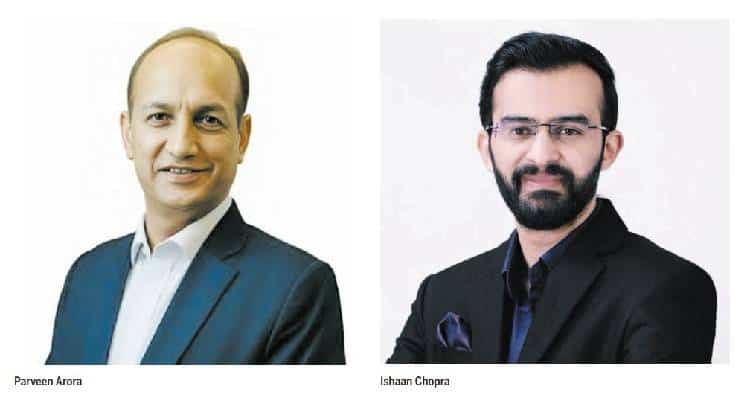
Parveen Arora, Partner, BTG Advaya and Ishaan Chopra, Associate, BTG Advaya outline how GLP-1 drugs are drawing sharp regulatory and legal scrutiny, especially with generics entering post-patent expiry. They emphasise that navigating IP, compliance, and marketing rules is now critical for stakeholders


India is currently facing a growing public health issue, with recent data showing that nearly a quarter of the adult population is now overweight or obese. Amid this increasing metabolic crisis and its associated cardiovascular risks, the emergence of Glucagon-Like Peptide-1 (GLP-1) receptor agonists (molecules that bind to cell receptors and activate them to produce a biological response, mimicking natural substances) has been a groundbreaking medical advancement.
These innovative drugs, which effectively imitate natural gut hormones to control appetite and blood sugar, offer a pharma solution for longterm weight management when traditional lifestyle changes often fall short.
Due to the alarming rise in obesity rates in India and the recent expiry of the patent for ‘Semaglutide’ (a leading GLP-1 receptor agonist), there has been an immediate surge in generic alternatives in India’s domestic market. Most pharma companies, wellness centres, clinics, and other health-sector stakeholders are vying to claim a share of this large market. This has, in a way, significantly lowered prices and made these treatments more accessible to a larger population. However, this rapid democratisation of access has also prompted swift and comprehensive responses from India’s regulatory and judicial authorities. Concerns are growing about the risks of self-medication and aggressive commercialisation, fuelled by the unprecedented attention GLP-1 drugs have received as a miracle cure.
This piece provides a structured overview of the current legal framework, recent intellectual property disputes, and the prevailing regulatory environment. The underscored message is addressed to stakeholders across the GLP-1 ecosystem, including pharma manufacturers, digital health platforms, telemedicine providers, and wellness clinics, and outlines the critical operational boundaries.
- The intellectual property landscape
Beginning with the fact that the expiry of the primary compound patent does not mean the intellectual property landscape is entirely clear. Stakeholders must navigate a complex, ongoing series of patent and trademark disputes that continue to influence market entry and new entrants.
(a) The compound patent: The foundational patent for the Semaglutide molecule (IN 262697) expired on March 20, 2026. Leading up to this significant moment, the patent faced rigorous validity challenges in the Delhi High Court. In a landmark ruling earlier in March, the Division Bench declined to grant an interim injunction against generic manufacturers. Importantly, the Court provided crucial clarity on patent invalidity grounds, clearly distinguishing between ‘anticipation by prior claiming’ and ‘obviousness’. The former requires a strict, identical claim-to-claim correspondence between the suit patent and an earlier patent, while the latter involves a broader analysis of what a hypothetical ‘person skilled in the art’ might infer from prior disclosures. By identifying a credible prima facie case for obviousness, the Court set an important precedent for future pharmaceutical patent litigation in India, effectively clarifying the evidentiary threshold needed at the interim injunction stage.
(b) The subsisting oral formulation patent: Although the patent for the injectable compound has expired, a secondary patent covering the oral formulation of Semaglutide (IN 325669) remains active and is currently under intense litigation. The commercial importance of an oral formulation cannot be overstated, as it completely bypasses the strict cold-chain storage and logistical distribution requirements associated with injectables. This patent specifically covers a solid oral composition combined with an absorption enhancer within a specific concentration range. Recent proceedings before the Delhi High Court have seen generic manufacturers submit sworn undertakings not to infringe upon this specific concentration range. Any enterprise planning to develop, manufacture, or distribute an oral semaglutide product must carefully evaluate whether their specific formulation might infringe upon this active, highly valuable patent.
(c) Trademark scrutiny: The rush to market has also significantly crowded the trademark register. With multiple players competing for a share of the GLP-1 sector, brand identity has become a fiercely contested battleground. Recently, trademark infringement proceedings were initiated concerning the phonetic and visual similarity between the innovator’s brand (Ozempic) and a generic entrant’s proposed mark (Olymviq). A comprehensive trademark clearance search within the Trade Marks Register is now essential before investing in any new product launch or marketing campaign in this space.
- The regulatory framework and recent enforcement
The distribution and promotion of GLP-1 drugs in India are governed by a complex set of strict laws. After the patent expires, authorities have shown a zero-tolerance approach towards violations, considering the rise in demand as a major public health risk.
- Strict restrictions on promotion and marketing: The Drugs and Magic Remedies (Objectionable Advertisements) Act, 1954 (DMR Act) explicitly bans advertising any drug for diagnosing, curing, alleviating or treating ‘obesity’. This is a strict legal restriction with criminal penalties, including possible imprisonment for corporate directors and marketing heads. Furthermore, on March 10, 2026, the Central Drugs Standard Control Organisation (CDSCO) issued an advisory directly targeting the GLP-1 market to restrict aggressive commercial tactics. The advisory clearly classifies indirect promotions – such as ‘disease awareness’ campaigns, celebrity and influencer engagements, or subtle digital outreach that promotes demand for pharmacological treatment therapy as unlawful surrogate advertising. Marketing communications must present these interventions strictly within the framework of ‘comprehensive (weight) management’ and must accurately emphasise the vital role of lifestyle changes, like dietary control and physical activity, instead of portraying the drug as a standalone ‘magic pill’.
- Prescription and dispensing mandates: GLP-1 receptor agonists are classified as Schedule H drugs under the Drugs Rules, 1945, meaning they can only be dispensed with a valid prescription from a Registered Medical Practitioner (RMP)1. Following alarming reports of indiscriminate prescribing, the Ministry of Health confirmed on March 24, 2026, that the Drugs Controller of India had conducted targeted audits across 49 entities. This coordinated enforcement action included online pharmacy warehouses, distributors, retailers, and unlicensed slimming clinics. The authorities have explicitly reminded stakeholders that GLP-1 drugs are approved in India under strict prescribing conditions, such as limiting authorisation exclusively to specialists like Endocrinologists, Internal Medicine Specialists, and Cardiologists for certain indications. A general practitioner’s prescription may not be sufficient under the specific conditions of the drug’s marketing authorisation.
- Consumer protection and telemedicine: Under the Consumer Protection Act, 2019, unsubstantiated efficacy claims, exaggerated ‘before-and-after’ testimonials implying guaranteed results, and the deliberate concealment of potential side effects constitute actionable unfair trade practices. The Central Consumer Protection Authority (CCPA) has broad powers to impose substantial financial penalties and order the immediate withdrawal of misleading campaigns. Additionally, for digital health platforms prescribing these treatments remotely, the Telemedicine Practice Guidelines, 2020, apply strictly. The legal framework states that an online consultation must match the clinical rigour of an in-person encounter. Conditions of the drug’s marketing authorisation are equally important in a virtual setting.
III. Strategic guidance for stakeholders
The regulatory framework for GLP-1 drug therapies in India is developing quickly alongside the market it aims to regulate. To participate sustainably and legally in this heavily scrutinised sector, stakeholders should adopt these basic principles:
Audit marketing assets: Ensure all digital campaigns, website copy, SEO strategies, and influencer briefs strictly adhere to the DMR Act and the latest CDSCO advisory. Avoid any language that promises rapid weight loss, minimises potential side effects, or promotes a prescription drug directly to the public under the cover of an educational campaign.
Enforce clinical governance: Dispensing ‘Schedule H’ drugs without a valid specialist prescription or through unlicensed premises is a criminal offence under the Drugs and Cosmetics Act. Therefore, entities such as wellness clinics, beauty salons, and digital tech platforms lacking pharmacy licences are prohibited from legally dispensing these products. Furthermore, an informal referral arrangement with a licensed pharmacy doesn’t exempt someone from this strict legal requirement.
Ensure proper substantiation: Maintain strong, product-specific clinical data to support any efficacy claims and avoid overpromising. Regulators may consider generic global data on the Semaglutide molecule insufficient, so evidence must demonstrate the brand’s performance specifically within the Indian demographic.
Prioritise patient safety: In line with the CDSCO mandate, manufacturers and marketing authorisation holders must prepare and submit detailed Risk Management Plans. Additionally, firms must ensure that Patient Information Leaflets (PIL) clearly and prominently feature a consumer complaint mechanism for the quick reporting of adverse drug reactions.
Thus, stakeholders who base their operations on primary legal instruments, seek independent advice before acting, and clearly distinguish between what is legally and commercially established and what remains uncertain, are best positioned to participate in this market sustainably and on a sound legal foundation.
