

EY-Parthenon India launches report on platform-led transformation in biopharma at BioAsia 2026
Study outlines integration of AI, discovery science and manufacturing in global and Indian biopharma

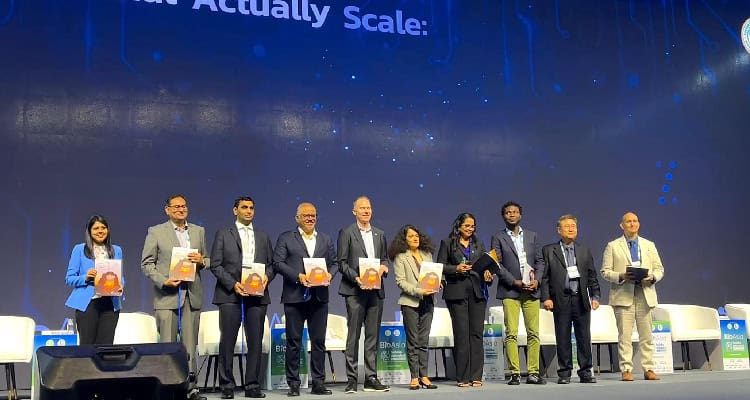

EY-Parthenon India has launched its report titled “Pharma’s New Architecture: Where Novel Science Meets AI and Manufacturing Power” at BioAsia 2026. The report presents an overview of how global and Indian biopharma are being re-architected. It states that the industry is moving beyond incremental product development towards platform-led innovation models that integrate discovery science, AI-native R&D, manufacturing and supply chains into unified systems.
According to the report, rising scientific complexity is leading companies to redesign R&D around platform-based models rather than one-off products. Instead of building each medicine separately, companies are creating reusable discovery engines that apply shared data, workflows and development pathways across multiple programmes. The report states that this approach carries learning forward, reduces duplication and brings predictability to execution. It notes that progress depends on integrated systems that move assets from early research to clinical testing.
Suresh Subramanian, National Lifesciences Leader, EY Parthenon India said, “Indian Biopharma is undergoing a structural reset. Scientific breakthroughs alone are no longer enough. The winners will be those who integrate discovery, AI-native intelligence and manufacturing into disciplined, repeatable platforms. The shift from one-off products to reusable engines – from mRNA and CRISPR to AI-driven design stacks – is redefining speed, reliability and scale. It is about building systems that compound learning and consistently deliver therapies to patients. This will help India pivot to large molecules and new modalities where the larger opportunities moving forward will emerge.”
Daniel Mathews, EY Global Life Sciences Leader said, “India stands at a decisive inflection point. The country has the digital depth, biologics capability and integrated CRDMO infrastructure to move beyond being the pharmacy of the world. If these strengths are connected into platform-led models, India can emerge not just as a supplier, but as a global innovation and execution hub for next-generation therapies. The opportunity is to lead in how modern biopharma is built — not just in how it is manufactured.”
Shakthi Nagappan, CEO, Telangana Lifesciences said, “The life sciences sector is being reshaped by a deeper integration of biology and digital technologies. As research becomes more data-intensive, AI and advanced analytics are helping bridge the gap between discovery and real-world application — accelerating insight while maintaining scientific rigor. This shift extends beyond R&D into clinical development and manufacturing, creating more coordinated and resilient systems. Telangana’s continued focus on innovation-led growth reflects this direction, and we are proud that EY Parthenon has been a longstanding partner to BioAsia in convening and shaping these conversations as the ecosystem evolves.”
The report states that biologics account for more than half of global prescription revenues and are projected to approach 60 per cent by 2028. It notes that modalities including ADCs, bispecifics, RNA therapies, and cell and gene therapies are reshaping value concentration despite scientific and regulatory complexity.
The report states that India, referred to as the “pharmacy of the world,” is participating in this shift. It cites over 100 approved biosimilars, proprietary biologics programmes, CRISPR innovation from institutions such as CSIR-IGIB, and multimodality CRDMOs expanding into ADCs, peptides and oligonucleotides. It states that the country is transitioning from volume-led generics to platform-enabled innovation.
A theme of the report is the rise of the AI-native R&D stack, described as a layered architecture spanning scientific intelligence, generative design, digital twins, automated experimentation, real-world evidence integration and regulatory traceability. The report states that development models now run discovery, CMC, clinical and regulatory workstreams in parallel. It notes that scientific copilots synthesise literature and multi-omics data in minutes, generative models design molecules before synthesis, and digital twins simulate biological and manufacturing scenarios before capital is committed. It states that speed in R&D is based on decisions from linked data and AI flows.
The report states that as biologics and therapies grow, manufacturability is no longer a downstream function. It notes that CMC decisions shape discovery strategy from the outset and that integration between science, digital modelling and production planning improves reliability, quality consistency and cost control. It states that supply continuity is emerging as a design requirement. It adds that modalities depend on inputs including vectors, enzymes and high-potency payloads, making diversification and coordination critical.
The report places India at an inflection point. It refers to policy signals including the Biopharma SHAKTI programme announced in Budget 2026, clinical networks and regulatory modernisation, indicating a shift from capacity building towards capability building.
It states that India’s pharma ecosystem includes over 900,000 professionals across research, engineering and manufacturing. It cites the CDMO market at approximately US$7.9 billion in 2024, projected to nearly double by 2033. It also notes that 23 of the top 50 global life sciences firms operate GCCs in India, embedding AI, clinical analytics and digital innovation into global pipelines.
The report concludes that the next phase of biopharma will depend on ecosystem design. It states that organisations aligning discovery, AI, clinical evidence, manufacturing and supply into governed platforms will reduce avoidable failure, improve predictability and scale innovation.