

AstraZeneca launches K+ Connect to advance hyperkalemia management in heart failure, chronic kidney disease across India
Pan-India initiative brings together 33 leading tertiary centers to develop multidisciplinary care pathways and a Centers of Excellence network, united against hyperkalemia

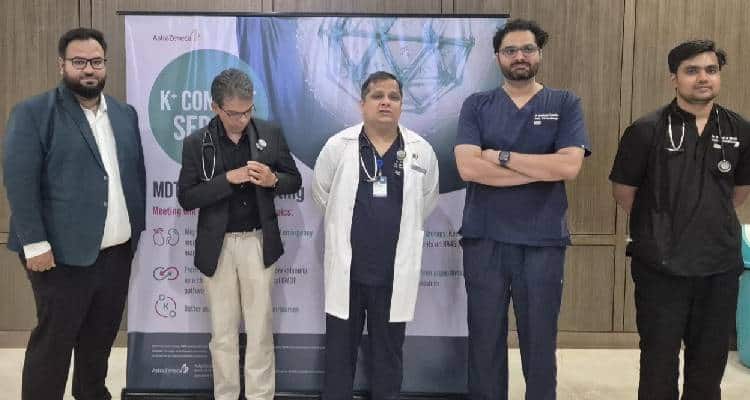

AstraZeneca Pharma India has launched K+ Connect, a pan-India multidisciplinary initiative focused on advancing the management of hyperkalemia in patients with heart failure (HF) and chronic kidney disease (CKD). The initiative aims to shift the understanding of hyperkalemia from an episodic laboratory abnormality to a recurrent clinical challenge requiring coordinated, long-term management across specialties.
Hyperkalemia, or elevated potassium levels in the blood, is a common and often recurring complication in patients with HF and CKD. Chronic kidney disease affects approximately 850 million people globally and hyperkalemia represents a significant burden in this population. While hyperkalemia affects only 2–3% of the general population, its prevalence rises to 40–50% among patients with CKD, particularly in advanced stages. In India, the prevalence of chronic hyperkalemia is estimated at 13.24%, underlining the need for more proactive and consistent management.
Through K+ Connect, AstraZeneca is bringing together multidisciplinary experts from 33 leading centers across India to support a more standardized approach to hyperkalemia management, helping eligible patients remain on guideline-directed medical therapy (GDMT) with appropriate monitoring and clinical oversight. The initiative reflects AstraZeneca’s broader commitment to keeping healthcare systems and clinicians united against hyperkalemia through practical, evidence-based action.
“Hyperkalemia remains an under-recognized and dynamic risk in heart failure and chronic kidney disease, often leading to reactive rather than proactive treatment decisions. At AstraZeneca, we see a clear opportunity to help shift this approach by supporting earlier risk recognition, stronger clinical alignment, and more practical integration of evidence into routine care. Through K+ Connect, we aim to enable a more structured approach that supports treatment continuity and strengthens long-term patient care,” said Dr. Sandeep Arora, Director, Medical Affairs, AstraZeneca Pharma India Ltd.
The initiative will be delivered in two phases. The first will focus on clinician alignment across cardiology, nephrology, internal medicine, emergency medicine, pharmacy, and nursing, to build a shared understanding of hyperkalemia’s recurrence, risk, and impact on treatment continuity. The second will use case-based workshops to develop consensus-driven institutional pathways covering screening, treatment thresholds, monitoring, escalation criteria, and care coordination across inpatient and outpatient settings.
Anchored by a national network that includes Max Healthcare, Delhi; Jaslok Hospital, Mumbai; Apollo Hospitals, Bengaluru; and Yashoda Hospital, Hyderabad, along with 29 additional tertiary care centers, K+ Connect aims to strengthen multidisciplinary coordination and promote more consistent care practices across settings.
“Hyperkalemia is not a one-time event. For patients living with chronic kidney disease, heart failure, or diabetes, it is a recurring and potentially life-threatening condition that demands sustained, long-term management. Yet awareness among both patients and healthcare professionals about the risks of chronic and recurrent hyperkalemia remains alarmingly low. Multidisciplinary team meetings have been instrumental in changing this narrative by bringing together cardiologists, nephrologists, diabetologists, and dieticians to help ensure no patient falls through the cracks. AstraZeneca’s commitment to supporting these conversations and fostering cross-specialty collaboration has been invaluable in shifting our approach from reactive to proactive care. On World Hyperkalemia Day, I urge every clinician to look beyond the immediate numbers and ask, is my patient at risk of recurrence? Because chronic hyperkalemia deserves chronic vigilance,” said Dr. Umapati Hegde, MD, DNB, Vice Chairman, Department of Nephrology, M P U Hospital, Nadiad, Gujarat.
“Hyperkalemia remains one of the most under recognized yet potentially life-threatening electrolyte disorders encountered in clinical practice. Too often, it is managed reactively, and patients fall through the gaps between cardiology, nephrology, endocrinology, and primary care. AstraZeneca’s initiative to support multidisciplinary team meetings focused on hyperkalemia awareness is a significant step forward. By bringing together nephrologists, cardiologists, intensivists, dietitians, and nursing teams with one collaborative framework, we can help ensure that patients at risk, particularly those with chronic kidney disease, heart failure, or receiving RAASi therapy, receive consistent, evidence-based care rather than fragmented management. On this World Hyperkalemia Day, I urge hospital systems to embrace this MDT approach. Early identification, structured monitoring, and coordinated treatment pathways can reduce emergency presentations, prevent treatment interruptions, and ultimately save lives. This is the kind of cross-specialty collaboration our patients deserve,” said Dr. Rushi Deshpande, MD, DM, DNB (Nephrology), Consultant Nephrologist and Renal Transplant Physician, Mumbai.
Following publication of the consensus protocol, participating institutions will be designated as Centers of Excellence (COEs) based on pathway adoption, staff training, and continuous improvement, supporting wider uptake of best practices in hyperkalemia management.
AstraZeneca’s role in K+ Connect is to convene stakeholders, support scientific exchange, and provide evidence-based and operational support. Clinical decisions and protocol adoption will remain under the governance of the participating institutions.