

Rise of injectables and minimally invasive procedures has actually helped expand the overall aesthetics market
Madhusudhan HK, Country Manager, Aerolase in an interview with Kalyani Sharma discusses the growing need for clinical standardisation, the impact of cost pressures on procurement decisions, the complementary role of device-based dermatology alongside injectables, and the structural barriers limiting the adoption of advanced dermatology technologies beyond metro cities

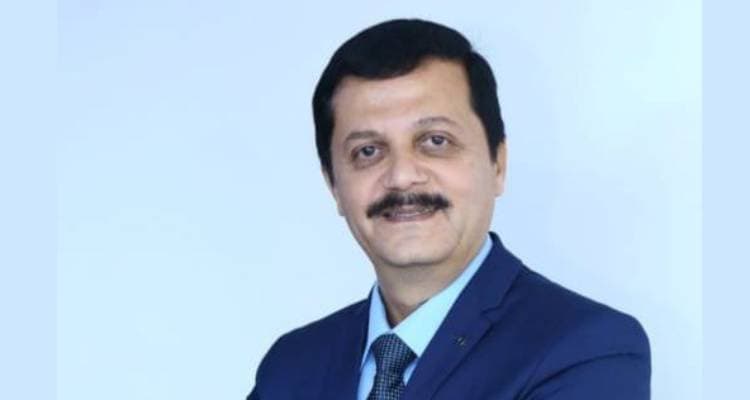

As Aerolase expands in India, what is your strategy for enabling dermatology clinics to achieve both clinical outcomes and sustainable ROI with capital-intensive devices?
Our approach in India is very deliberate we recognise that for dermatology clinics, success is not just about acquiring advanced technology, but about consistently delivering outcomes while ensuring a viable return on investment.
-
We focus on clinical versatility and utilisation. Devices like our Neo Elite are designed to address multiple high-demand indications from acne and pigmentation to hair removal and vascular conditions. This allows clinics to maximise usage across patient segments rather than relying on a single revenue stream.
-
We invest heavily in clinical education and protocol development. We work closely with our customers to ensure they are confident in delivering predictable outcomes. When patients see visible results quickly and comfortably, it naturally drives repeat visits and long-term loyalty.
-
We support clinics with patient awareness and positioning strategies. In a market like India, where sensitivity to pain and downtime is high, highlighting differentiated benefits such as “no pain” and “no downtime” helps clinics attract new patients and command premium positioning.
Finally, we are evolving our commercial models to reduce upfront burden and align with clinic growth. This includes flexible structures that allow clinics to scale usage and revenue before fully absorbing capital costs.
In essence, our strategy is to partner with clinics not just as a device provider, but as a long-term growth enabler balancing clinical excellence with financial sustainability.
India’s energy-based device market is expanding rapidly. Do you see a need for stronger regulatory frameworks or standardised clinical guidelines to ensure safe and ethical adoption across practices?
India’s energy-based device market is indeed growing rapidly, which is a positive sign for both innovation and patient access. With that growth, there is certainly a case for stronger regulatory clarity and more standardised clinical guidelines not as a barrier, but as an enabler of safe, ethical, and consistent adoption.
From a clinical standpoint, clearer guidelines help ensure that treatments are delivered with the right protocols, appropriate patient selection, and well-defined endpoints. This ultimately protects patient outcomes and builds long-term trust in these technologies.
At the same time, regulatory frameworks need to strike the right balance they should uphold safety and quality standards without slowing down innovation or access to newer, more effective treatments.
Equally important is industry-led responsibility. Companies like ours invest in structured training, and ongoing clinical education to ensure that practitioners are well-equipped to use these devices safely and effectively. In many ways, continuous education and peer-driven best practices can complement formal regulation.
In summary, a combination of thoughtful regulation, standardised clinical guidance, and strong industry-led education will be key to sustaining the growth of this category while maintaining the highest standards of patient care.
How are cost pressures and ROI expectations shaping procurement decisions for dermatology clinics, especially when investing in high-value capital equipment?
Clinics are far more strategic and data-driven than before when evaluating high-value capital equipment. The conversation has clearly shifted from “What is the cost of the device?” to “How quickly and sustainably can this platform generate revenue across multiple indications?” Clinics are prioritising technologies that are not limited to a single use case, but can address a broad spectrum of high-demand conditions such as acne, pigmentation, and vascular concerns ensuring consistent utilisation throughout the day and is approved to be used on all skin types including the darker skin.
Equally important is the ability to deliver predictable outcomes with high patient comfort. Devices that minimise pain and downtime tend to drive higher patient acceptance, better adherence to treatment plans, and stronger word-of-mouth directly impacting repeat business and lifetime value.
There is also growing emphasis on operational simplicity and efficiency. Platforms that are easy to use, require minimal/no consumables, and allow for faster treatment times help improve throughput and reduce dependency on highly specialised operator skills.
Finally, clinics are increasingly open to commercial models that align investment with performance, reducing upfront risk while enabling them to scale as demand grows.
In essence, procurement today is a balance of clinical versatility, patient experience, and financial predictability. Technologies that can deliver consistently across all three dimensions are emerging as clear winners.
With increasing competition from injectables and minimally invasive procedures, how do you see the role of device-based dermatology evolving within the broader treatment ecosystem?
The rise of injectables and minimally invasive procedures has actually helped expand the overall aesthetics market. Rather than viewing this as competition, we see device-based dermatology playing a complementary and increasingly foundational role within the treatment ecosystem.
Device-based treatments are uniquely positioned to address underlying skin health conditions like acne, inflammation, pigmentation, and vascular concerns rather than just structural or volume-related changes. As a result, they are becoming an essential first step in many treatment journeys, helping to optimise skin quality before, alongside, and after injectables.
There is also a growing shift toward non-invasive, low-downtime solutions, especially among younger patients. Technologies that can deliver visible results comfortably and without disrupting daily life are seeing strong adoption in this segment.
From a clinic perspective, devices enable repeatable, protocol-driven treatments, which support long-term patient engagement and recurring revenue, something that complements the episodic nature of many injectable procedures.
Looking ahead, the most successful practices will be those that take an integrated approach, combining injectables with device-based therapies to deliver more holistic, personalised outcomes. In that ecosystem, devices are evolving from being optional add-ons to becoming core enablers of skin health and treatment continuity.
What structural gaps whether in training, infrastructure, or clinical evidence continue to limit the penetration of advanced dermatology technologies beyond metro cities?
Several structural gaps still limit the adoption of advanced dermatology technologies beyond metro cities. Training is one of the biggest barriers, because many clinicians may be interested in new devices but need more hands-on exposure, protocol guidance, and confidence in treatment outcomes. Infrastructure is another challenge, especially in smaller cities where clinics may be more selective about capital investment and equipment space. Clinical evidence that is locally relevant can also make a meaningful difference. Practitioners outside major urban centers often want to see stronger proof of patient response, practical workflows, and economic viability in settings similar to their own. Bridging these gaps will require a combination of education, access, and trust-building.
With devices like the Neo Elite offering multi-indication treatment capabilities, how does Aerolase position itself in terms of practice scalability and reducing dependence on multiple standalone devices?
As clinics scale, the challenge is not just adding more devices—it’s about optimising space, workflows, and return per square foot. This is where multi-indication platforms like Neo Elite play a critical role.
Our positioning is centred on enabling clinics to do more with less. Instead of investing in multiple standalone devices for different indications, a single versatile platform can address a wide spectrum of conditions from acne and pigmentation to vascular concerns and hair removal. This significantly improves utilisation rates and reduces idle capital.
Equally important is operational scalability. With a simplified workflow and a single, easy-to-use handpiece, clinics can train teams faster, standardise treatment protocols, and maintain consistency in outcomes across practitioners. This reduces dependency on highly specialised operators and makes it easier to expand services across multiple locations.
From a financial standpoint, consolidating treatments onto one platform helps lower the total cost of ownership not just in terms of upfront investment, but also maintenance, space, and ongoing operational complexity.
Ultimately, our goal is to help clinics build a more agile and scalable practice model, where growth is driven by higher utilisation, broader patient appeal, and consistent clinical outcomes rather than continuous addition of fragmented technologies.
