

Results win customers. Leadership discipline keeps them
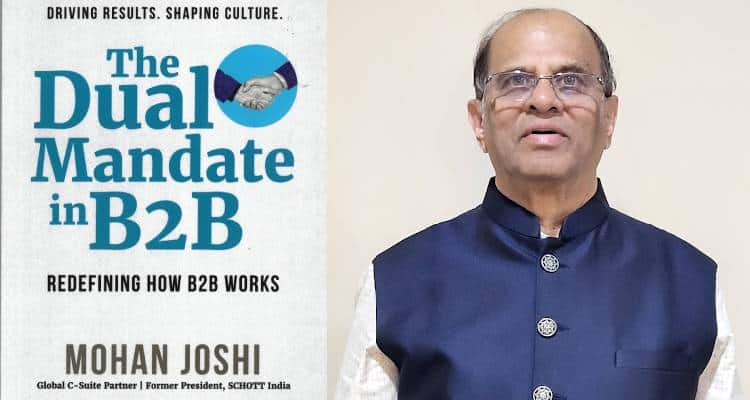
Drawing themes from his new book The Dual Mandate in B2B – Driving Results. Shaping Culture, Mohan Joshi – Global C-Suite Partner & Former President, SCHOTT India, discusses leadership systems, alignment, and execution in conversation with Neha Aathavale.


What inspired you to write The Dual Mandate in B2B, and how is it different from your earlier book?
My inspiration came from a consistent observation across B2B ecosystems: organisations rarely struggle because of technical capability — they struggle because of inconsistent leadership actions. I saw high expertise but weak alignment, unclear assumptions, delayed communication and uneven ownership. These gaps silently weaken quality, documentation, supply reliability and customer confidence.
My first book, Real Time Growth with Customers, focused on the customerfacing side of the DIG 3×3 Framework. But the deeper challenge lies inside organisations — in how leaders think, communicate and act every day. That realisation shaped The Dual Mandate in B2B, which brings results and culture together through nine leadership drivers.
As I write in the book:“Results win customers. Leadership discipline keeps them.”
My perspective comes from working closely with global suppliers to pharma companies — the organisations responsible for quality, compliance, supply assurance and customer trust. This experience deepened my understanding of how pharma stakeholders operate and why alignment between partners strengthens long-term credibility.
The first book built the foundation through the customer lens. The Dual Mandate in B2B builds the leadership system behind it.
Where do organisations struggle more in B2B — driving performance or building culture? Leaders often assume performance is the problem. In reality, challenges begin when leadership discipline becomes inconsistent.
You see this in patterns like:
- high activity but low clarity
- high communication but low alignment
- high reporting but low movement.
These gaps reduce predictability, increase friction, and frustrate customers. As I write: “Leaders rarely fail by moving slowly — they fail by moving blindly.
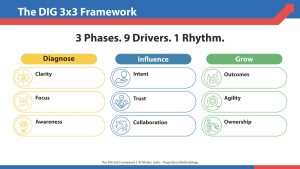
The DIG 3×3 Framework brings clarity to this. From the Diagnose pillar, Clarity (supported by Focus & Awareness) immediately sharpens direction, often more effectively than adding processes or dashboards. In pharma ecosystems, culture is not expressed in words — it is revealed through leadership precision and response discipline.
Which global insights matter most for India’s pharma ecosystem?
Three insights apply universally across global pharma partnerships:
- Transparency reduces anxiety: A supplier once informed a customer of a deviation before completing the investigation.The response was:“Your transparency reduced our anxiety.”In pharma, early communication is leadership.
- Alignment beats capability: Customers trust suppliers when QA, SCM, Production and Commercial present one aligned narrative. Parallel truths erode confidence.
- Predictability builds longterm partnerships:Customers do not expect perfection — they expect visibility, clarity and early signals.
India’s pharma ecosystem already has strong capability.Strengthening leadership actions makes this capability more predictable, scalable and audit-ready.
How can leaders build clarity, trust and ownership — inside teams and with customers?
By converting values into visible leadership actions. A practical way to do this is by applying one core driver from each DIG 3×3 pillar: Clarity – Diagnose (supported by Focus & Awareness) Clarity becomes visible when leaders:
- define success in one sentence
- surface assumptions before acting
- close meetings with one outcome, one owner and one next step “Clarity is the first act of leadership — without it, every solution risks solving the wrong problem.”
Trust – Influence (supported by Intent & Collaboration) Trust increases when teams:
- communicate deviations early
- maintain one version of truth
- share facts transparently.
In global pharma:“The speed of trust determines the speed of collaboration.” Ownership – Grow (supported by Outcomes & Agility) Ownership becomes visible when teams:
- move decisions without reminders
- escalate risks before customers feel the impact
- focus on outcomes, not activity “Ownership is not about doing more — it’s about caring more.” These leadership actions shape customer experience far more than capability alone.
How can senior pharma leaders use your book during planning, reviews and team discussions?
The Dual Mandate in B2B is built as a leadership operating system, not a conceptual model. One driver per pillar for real-world meetings
- Clarity strengthens QBRs and RCA discussions
- Trust aligns cross functional communication
- Ownership ensures momentum without reminders.
Ten sharp leadership questions One example:“What has changed for this customer in the last 90 days?”This question alone improves forecasting, decision-making and audit readiness. Direct pharma applicability. The framework works across:
- deviation and escalation handling
- risk and documentation reviews
- supply assurance communication
- customer visits
- internal alignment before major audits Its power lies in simplicity — and simplicity scales.
Culture is difficult to measure. How can leaders convert values into everyday actions?
Culture becomes measurable when leadership actions become consistent. As I write:“Culture grows when values become verbs.”
Trust becomes visible when:
- early visibility is given
- functions speak one aligned narrative
- no parallel truths exist.
Ownership becomes visible when:
- loops close proactively
- escalations happen early
- reminders are unnecessary.
Clarity becomes visible when:
- assumptions are surfaced
- outcomes are defined
- decisions lead to movement.
These actions quietly shape how customers perceive reliability and create the predictability that global pharma depends on. The future of pharma partnerships will be shaped less by capability and more by leadership discipline and alignment. Organisations that strengthen clarity, trust and ownership will build predictable, transparent and resilient ecosystems — creating long-term confidence across global supply chains. “Leadership isn’t proven by ideas — it’s remembered by impact.”
[email protected]
[email protected]
