

Leadership imperative shaping India’s healthcare and pharma landscape in 2026
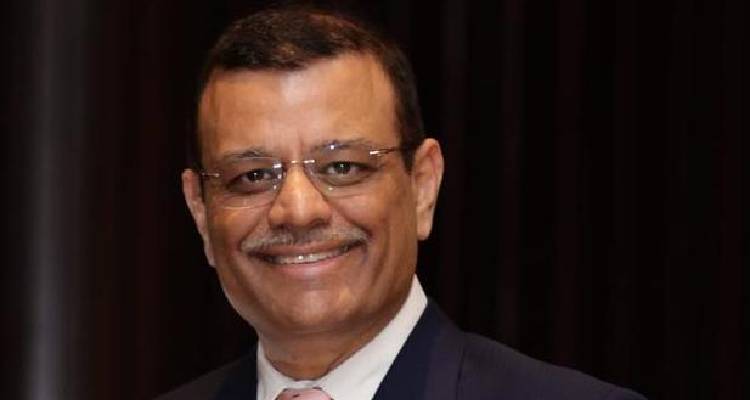
India’s rapidly growing healthcare sector now needs a new kind of leadership—one that blends scientific expertise with strategic, ethical, and digital capabilities to remain globally competitive, explains Sai Gandhi, Partner, Positive Moves. He argues that the future will be shaped by hybrid, diverse, and ethically grounded leaders who can connect science, business, and purpose to guide the industry through its next stage of transformation


India’s healthcare and pharmaceutical industries stand at an inflection point. The sector grew at a remarkable 17.5 per cent CAGR over the past decade—primarily driven by large-scale innovation in hospitals, pharmaceuticals, and diagnostics—and is projected to surpass USD 1.5 trillion by 2030. As scientific discovery, digital transformation, and global expansion continue to accelerate, the most critical question is no longer about growth anymore. It is whether leadership at the helm can match the pace of this growth and sustain it in the long run.
As the healthcare ecosystem transforms through digitalisation, AI-driven research, global ESG mandates, and patient-centric models, it is becoming clear that scientific excellence alone cannot sustain global competitiveness. As we enter 2026, the next era of healthcare leadership will be defined by how leaders connect science, business, and purpose.
From specialists to synthesists
Amidst global disruption, expectations from healthcare and pharma leaders—by boards, investors, and markets—are evolving from narrow specialisation to integrated synthesis, combining scientific mastery with strategic insight, commercial acumen, and organisational foresight. This shift in expectations is prompting global organisations to rethink leadership design. In the US and Europe, high-potential executives are being rotated across business functions and geographies to build cross-cultural and commercial fluency. Scientists are being encouraged to take on P&L responsibilities, while business leaders are being exposed to R&D environments to strengthen empathy for innovation cycles. This fusion of science and strategy is cultivating a generation of hybrid leaders who understand both molecules and markets.
Indian organisations must also recognise and prepare for this shift at scale to support domestic growth, global expansion, and rapid digital transformation. Leadership pipelines now need to be designed for complexity—including crossborder operations and technology adoption—not just regulatory compliance. To guide globally integrated, digitally intelligent enterprises, India’s healthcare leaders must pair operational discipline with visionary agility.
The ethics and empathy imperative
As technology increasingly permeates healthcare, leadership in this sector warrants a heightened moral dimension. The adoption of GenAI, for instance, is transforming every layer of the healthcare value chain— from discovery to diagnostics to patient interaction. While this acceleration drives efficiency and scale, it comes with profound ethical questions: how to manage bias in data-driven models, how to balance automation with empathy, and how to ensure that the pursuit of efficiency does not compromise patient trust.
This is where leadership becomes both art and responsibility. The leaders shaping the future of healthcare will be those who can integrate ethics into business strategy, and scale innovation without losing sight of humanity. In this era, boards and C-suites must elevate their oversight to match the dual imperatives of technological growth and ethical accountability.
Reimagining leadership for healthcare’s next decade
The future of India’s healthcare and pharmaceutical industries demands boards to go beyond traditional succession planning and cultivate a leadership philosophy that integrates diversity, purpose, ethics, and patient outcomes alongside cost, compliance, and operational efficiency. Boards must proactively build systems and processes that embed these values into leadership pipelines rather than treating them as optional considerations.
Women currently occupy less than one-fifth of leadership roles in India’s healthcare ecosystem and earn 34 per cent less than their male counterparts. This is not merely a social imbalance—it’s a strategic blind spot. Studies consistently show that diverse leadership drives superior decision-making, richer innovation, and stronger financial performance. India’s healthcare growth trajectory over the next decade will hinge on how inclusively its leaders are developed and deployed.
The leadership challenge for boards today is no longer about filling senior roles—it is about reimagining what effective leadership looks like in an industry being reshaped by GenAI and global integration. By 2026, this challenge will become even more pronounced, as organisations face a sharper need for leaders who can seamlessly connect science, business, and purpose. with strategic clarity, operational depth, and global agility. This isn’t just an evolution of roles; it’s a redefinition of the very capabilities that will determine which organisations lead the next phase of healthcare transformation.
For the first time, the conversation around healthcare’s future is not just about science, markets, or systems. It is about mindsets that drive culture, ethical decision-making, and sustainable impact. The organisations that will define the next decade will be those that understand that in the business of healing, leadership itself must evolve as the ultimate catalyst for change.
