

Indore Pharma Summit: Mapping the future of India pharma
From AI and smart manufacturing to sustainability,quality culture,faster drug development,and CDMO opportunities,the summit highlighted how India’s pharma industry is preparing for a more innovation-led and globally competitive future. Reports Swati Rana

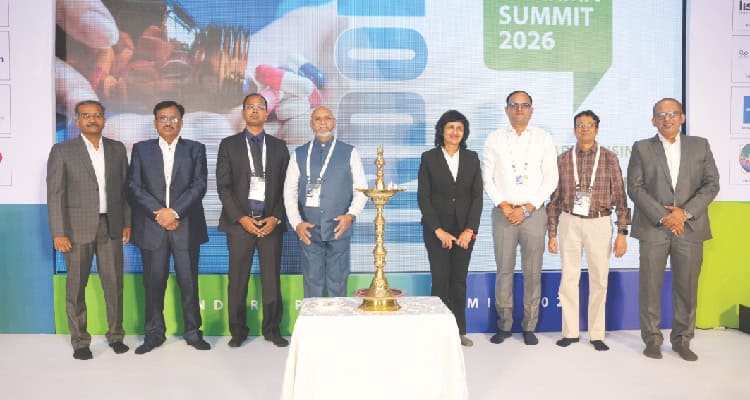

As India’s pharma industry prepares for a future shaped by innovation, AI, sustainability, regulatory transformation, and global competition, one message emerged strongly at the Indore Pharma Summit 2026 — the next phase of India Pharma Inc will not be defined by scale alone, but by how collaboratively the industry evolves.
Held in Indore on 8th May, 2026, the summit brought together pharma leaders, regulators, manufacturing experts, quality professionals, academia, technology providers, and supply chain specialists to discuss the future of Indian pharma across manufacturing, R&D, quality, sustainability, skilling, and global competitiveness.
The summit commenced with a ceremonial lamp lighting led by Ranjit Menon,Site Head – Indore Manufacturing, Cipla; Mahanand Thakur, VP-Operations, McW Healthcare;Amit Malviya, VP-Quality Assurance, Zest Pharma; Suveer Shrivastava, Global Pharma Compliance Expert; ShilpySingh, GM & Head-ProjectManagement, Piramal Pharma; Ajay Singh Dassundi, Secretary, MP Small andMedium Drugs Manufacturers Association; Vikalp Nagori, Associate Director – Formulation TechnologyTransfer, Cipla; and Rajesh Bhatkal, Vertical Head, Express Pharma
India Pharma 2035: The next global leadership story
The opening panel discussion titled ‘India Pharma 2035: The Next Global Leadership Story’, set the tone for the summit by examining how India can transition from a volume-driven pharma economy into a globally respected innovation-led healthcare ecosystem.
Moderated by Suveer Shrivastava, Global Pharma Compliance Expert, the panel featured Amit Malviya, VP-Quality Assurance, Zest Pharma; Mahanand Thakur, VP-Operations, McW Healthcare; Shilpy Singh, GM & Head-Project Management, Piramal Pharma; and Vikalp Nagori, Associate Director – Formulation Technology Transfer, Cipla.
One of the strongest themes emerging from the discussion was that India’s pharmaceutical future cannot remain dependent solely on conventional generic manufacturing. While India’s position as the “pharmacy of the world” remains globally significant, panelists argued that the next growth wave would come from innovation-driven areas such as biosimilars, peptides, complex injectables, specialty therapies, and globally competitive drug development.
The panel emphasised that Indian pharma companies must now move from cost leadership to capability leadership. According to the panelists, innovation itself must become more purposeful and patientcentric. The future of R&D will not be defined simply by the number of products developed, but by whether those innovations address real and underserved healthcare needs.
The panel stressed that proof of concept and patient impact must become central to innovation strategies. Incremental innovation without clear therapeutic value would struggle to remain commercially relevant in increasingly competitive global markets.
The discussion also highlighted the critical role of regulatory support in building a stronger innovation ecosystem. Panelists noted that agencies such as CDSCO will play an increasingly important role in encouraging entrepreneurship, accelerating approvals, enabling innovation, and retaining scientific talent within India.
Another key focus area was digital transformation. AI and automation emerged repeatedly during the discussion as non-negotiable pillars of the future pharma industry. Panelists agreed that Indian pharma companies can no longer treat digitalisation as an optional operational upgrade.
Instead, AI-enabled systems, automated manufacturing, digital quality systems, and data-driven compliance frameworks are becoming essential for improving transparency, reducing manual dependency, enhancing operational consistency, and preparing Indian pharma for future regulatory expectations.
The panel also emphasised that India’s long-term global credibility will depend heavily on ethical practices, accountability, data integrity, quality culture, and patient-centricity. As regulatory scrutiny increases globally, the speakers stressed that trust and compliance will increasingly become strategic business differentiators rather than just regulatory obligations.
The panel concluded with a broader message that India Pharma Inc must adopt a proactive approach toward innovation, future-ready manufacturing, capability building, and global collaboration if it aims to emerge as a long-term global pharma leader.
Smart manufacturing gains momentum
Technology-driven transformation in pharma manufacturing formed another major pillar of the summit.
In the session on ‘Smart Industrial Weighing Solutions’, Murali Krishna Veeramallu, Head – Industrial Division, Smart Labtech, highlighted how precision systems and digital manufacturing technologies are becoming increasingly critical for modern pharma operations.
According to Veeramallu, Smart Labtech has evolved into a strong ‘Make in India’ laboratory and industrial weighing solutions manufacturer with more than 1000 installations across pharma and industrial facilities.
He explained that modern pharma manufacturing now requires far more than standalone instruments. Companies increasingly require integrated, connected, and compliance-focused systems capable of supporting Industry 4.0- ready operations.
The session showcased how smart weighing systems, analytical balances, moisture analyzers, dispensing systems, and digitally connected platforms are helping pharma manufacturers improve traceability, compliance, and operational efficiency. Veeramallu also highlighted the importance of 21 CFR Part 11-compliant systems in ensuring data integrity and audit readiness.
The broader takeaway from the session was clear: digital manufacturing infrastructure is no longer a future investment for pharma companies. It is becoming a present-day operational necessity.
Faster coating technologies
Manufacturing productivity and process optimisation remained another major area of discussion during the summit. In the session titled ‘Faster Coating Technology Advantage’, Akil Kadiyavala, GM – Technical Services, Dhara Lifescience, discussed advances in pharma coating technologies aimed at improving manufacturing speed, process consistency, and overall operational efficiency.
According to Kadiyavala, coating remains one of the most time-intensive stages in oral solid dosage manufacturing. Reducing coating cycle time while maintaining uniformity and quality can significantly improve manufacturing productivity and reduce operational costs. He highlighted Dhara Lifescience’s coating solutions such as Readycoat HS and Readycoat EZE, which can reduce coating process time by up to 50 per cent.
The session demonstrated how advanced polymer science and formulation engineering are helping manufacturers achieve faster processing, improved coating uniformity, and better batch consistency. Kadiyavala also emphasised that globally competitive manufacturing increasingly depends on combining speed with scientific precision. He explained that modern pharma excipient and coating technologies must deliver not only faster throughput, but also improved process robustness, regulatory compliance, and scalability.
The company’s focus on strong R&D capabilities, advanced polymer technologies, and global certifications reflects the broader trend of Indian pharma suppliers moving toward higher-value and technology-driven offerings.
Quality becomes a strategic leadership function
One of the summit’s most impactful discussions focused on the evolving role of quality within pharma organisations. Speaking on ‘Quality as Strategy: Winning Trust in Global Markets’, Ranjit Menon, Site Head – Indore Manufacturing, Cipla, pointed out that quality can no longer remain confined to compliance departments.
He stated that, quality is no longer just compliance. It is a strategic leadership function driving business success, Menon highlighted how the pharma industry is increasingly moving toward patient-centric and risk-based quality systems.
Rather than treating compliance as a checklist activity, companies are now expected to embed quality thinking into every stage of manufacturing, operations, decision-making, and leadership. The session focused extensively on the growing importance of data integrity and transparent decision-making.
According to Menon, regulatory confidence and market trust increasingly depend on the reliability, traceability, and transparency of manufacturing data. As global inspections become more sophisticated and digitally driven, pharma companies must create strong quality cultures where accountability and integrity are deeply embedded across functions.
The session also reinforced that quality excellence is no longer merely a regulatory expectation. It has become directly linked to business sustainability, global market access, and long-term reputation.
Sustainability emerges as a business imperative
In the session titled ‘Sustainability as Strategy: The Next Frontier for Pharma Leaders’, Vivek Asthana, Head EHS & Sustainability, Symbiotec Pharmalab, argued that ESG is rapidly becoming fundamental to pharma business continuity, investor confidence, and long-term competitiveness.
Asthana pointed out that sustainability can no longer be viewed as a peripheral corporate social responsibility initiative. Emphasising that it is fundamental to survival, credibility and growth.
The session highlighted how regulators, investors, customers, and global buyers are increasingly evaluating pharma companies not just on financial performance, but also on how responsibly those returns are generated.
Asthana discussed how frameworks such as SEBI’s Business Responsibility and Sustainability Reporting (BRSR) requirements are in creasing pressure on companies to improve transparency around environmental, social, and governance practices.
Global procurement trends are also evolving rapidly. According to Asthana, multinational customers and global pharma buyers are increasingly prioritising ethical, transparent, and sustainable manufacturing partners. The session highlighted that sustainability is gradually moving from a compliance-driven activity toward becoming a core business strategy influencing investment decisions, partnerships, procurement, and long-term market positioning.
Strengthening industry academia collaboration
Talent development and industry-academia collaboration formed another important dimension of the summit discussions. Addressing the session on ‘Academia-Industry Collaboration for the Development of Future Pharma Professionals’, Prof (Dr) Neelesh Malviya, Principal, Smriti College of Pharmaceutical Education, Indore, highlighted the urgent need to bridge the gap between academic learning and industry requirements.
According to Prof Malviya, stronger academia-industry collaboration is essential for transforming research into commercially viable innovation. He explained that industry-aligned research can accelerate commercialisation, solve practical manufacturing and R&D challenges faster, and reduce development costs. The session emphasised that pharma education can no longer remain isolated from industry realities.
Prof Malviya stressed that continuous interaction between academia and industry is critical to developing futureready pharma professionals capable of adapting to rapidly evolving technologies, regulatory systems, manufacturing techniques, and research environments.
The discussion also highlighted how stronger collaboration can encourage entrepreneurship, modernisation, and sustainable societal growth. The broader message from the session was that India’s pharma growth ambitions will depend heavily on building stronger skilling ecosystems and creating a workforce capable of supporting future innovation-led growth.
From molecule to market faster
One of the summit’s most engaging and technically rich discussions was the panel discussion titled From Molecule to Market Faster: Rethinking Drug Development.
Moderated by Sanjay Tiwari, Pharma Consultant, the panel featured Dayanand More, Head Site – Operation, Alembic Pharma; Nishikant Ghadge, VP (R&D and Manufacturing), Symbiotec Pharma; Nitin Tiwari, VP-CQA and Cluster Head (Indore, Dewas, Ratlam and Wardha), Ipca Laboratories; Dr Bipin Chaubey, Head of Site Process & Technology (Dewas), Sun Pharmaceutical Industries; Gopinath Santhosh, GM – Supply Chain Management, Felix Generics; and Dr Sharad Jain, AVP, PSA Chemicals and Pharmaceuticals.
The discussion focused on one of the pharma industry’s biggest challenges: how to accelerate drug development and commercialisation timelines without compromising quality, scientific rigor, or patient safety.
Panelists repeatedly emphasised that speed alone cannot define successful pharma development. Instead, the future of drug development will depend on balancing scientific understanding, process robustness, analytical excellence, supply chain resilience, and regulatory readiness.
The panel highlighted the growing importance of strong API and Key Starting Material (KSM) ecosystems in enabling resilient and faster pharma development. Given increasing geopolitical disruptions and supply chain volatility, speakers stressed that India must continue strengthening domestic API and intermediate capabilities to reduce dependency risks.
Another major takeaway was the importance of cross-functional collaboration. The panelists agreed that faster commercialisation increasingly depends on stronger coordination between R&D teams, API manufacturers, regulators, analytical experts, supply chain partners, and logistics providers.
The discussion also explored the transformative role of AI and digital technologies across pharma development. According to the speakers, AIenabled systems are increasingly reshaping drug discovery, clinical trial management, regulatory workflows, documentation systems, process optimisation, and manufacturing analytics. Digital tools are helping pharma companies reduce timelines while simultaneously improving process efficiency, data visibility, and decisionmaking accuracy.
Integrated supply chains emerged as another critical requirement. The panel highlighted that robust end-to-end visibility across procurement, development, manufacturing, and logistics operations is essential for reducing delays from molecule development to market launch.
The session also highlighted the often-underestimated role of logistics. Speakers pointed out that maintaining product integrity during transportation is just as important as manufacturing quality itself, particularly for temperature-sensitive and complex pharma products.
Overall, the panel reinforced that future pharma competitiveness will depend not only on innovation speed, but on the ability to build scientifically robust, digitally connected, and operationally resilient development ecosystems.
India’s CDMO opportunity
Speaking on ‘CDMO Opportunity: India’s Next Manufacturing Advantage’, Gajanan Patil, COO, H&H Healthcare and Cosmetics, highlighted how the global pharma industry is increasingly shifting from traditional manufacturing models toward strategic CDMO partnerships.
According to Patil, pharma companies worldwide are seeking manufacturing partners capable of delivering cost efficiency, speed, innovation, flexibility, and supply chain resilience. He noted that the ongoing China+1 strategy is creating significant opportunities for Indian pharma manufacturers. India’s scientific talent base, regulatory credibility, manufacturing capabilities, and cost competitiveness position the country strongly to capture the next wave of global CDMO growth.
Patil also highlighted the strategic advantages of the Indore-Pithampur pharma ecosystem. According to him, the region possesses strong infrastructure, export capabilities, logistics connectivity, industrial ecosystems, and talent availability that could help it emerge as a major global pharma CDMO hub.
The session highlighted that India’s future manufacturing opportunity lies not just in scale-based manufacturing, but in building integrated development and manufacturing partnerships capable of supporting complex global pharma programmes.
Indore: Next manufacturing powerhouse
The summit concluded with a high-energy panel discussion titled ‘Indore Rising: Central India’s Next Manufacturing Powerhouse’.
Moderated by Dr Vipin Saxena, Director, Vishwa Life Sciences, the panel featured Paresh Chawla, MD, Alpa Laboratories; Amit Chawla, Director, McW Healthcare; Tapan Das, Sr GM – Quality, Sun Pharmaceutical Industries; Mahendra Kumar Sahu, GM, Sun Pharmaceutical Industries; Nikhil Sahu, Sr Group Leader and Head – Packaging Development, Knovea Pharmaceuticals; and Praveen Jindal, Deputy Chief Manager, Piramal Pharma (Pithampur).
The discussion focused on how Madhya Pradesh — particularly the Indore-Pithampur belt — is steadily emerging as one of India’s important pharma manufacturing ecosystems. Panelists highlighted that proactive governance, infrastructure support, industrial policies, and subsidies are helping create a more industry-friendly environment for pharma investments in the state.
However, the panel also acknowledged several operational challenges that continue to affect pharma MSMEs. One of the biggest concerns raised during the discussion was skilled manpower retention. Despite the region’s growing industrial ecosystem, retaining technically skilled professionals remains a challenge for several companies.
The panel also discussed delayed payment cycles and their impact on MSME cash flows, operational stability, and expansion plans. Another major theme was the need to strengthen local support ecosystems. According to the panelists, Indore’s next phase of growth cannot rely solely on manufacturing expansion.
Instead, the region must build integrated local ecosystems across R&D, testing laboratories, packaging development, analytical services, regulatory support, and specialised pharma services.
The discussion also explored the role of pharma parks and allied industrial clusters. Panelists emphasised that integrated pharma parks with connected ancillary industries can significantly improve collaboration, productivity, operational efficiency, and supply chain coordination.
The issue of skilling remained central throughout the panel discussion. Speakers repeatedly stressed that the future competitiveness of India Pharma Inc will ultimately depend on continuous skill upgradation. As pharma manufacturing technologies, materials, automation systems, and regulatory expectations evolve rapidly, the industry must continuously invest in workforce development.
The panel also emphasised the need for stronger industry academia collaboration to build professionals who are truly industry-ready from the beginning of their careers. According to the panelists, pharma education itself must evolve with deeper industry participation and more practical, application-driven learning.
Way forward
As the Indore Pharma Summit 2026 concluded, one message resonated across every session and panel discussion: India’s pharma industry stands at a defining inflection point. The future of India Pharma Inc will depend on how effectively the industry builds innovation capabilities, integrates AI and automation, strengthens quality systems, develops sustainable operations, accelerates drug development, creates resilient supply chains, and nurtures future-ready talent.
As India seeks to strengthen its global pharma leadership position, emerging ecosystems beyond traditional pharma clusters are expected to play a critical role in supporting the industry’s next phase of growth.
The Indore Pharma Summit 2026 showcased more than just industry perspectives. It reflected a larger transition underway within Indian pharma itself — from scale-driven growth toward innovation-led, technology-enabled, quality-centric, and globally competitive development.
And as industry leaders repeatedly emphasised throughout the summit, the companies and ecosystems that succeed in the coming decade will be those willing to evolve continuously, collaborate deeply, and prepare proactively for the future.
