

India has the infrastructure to lead the global gene therapy market
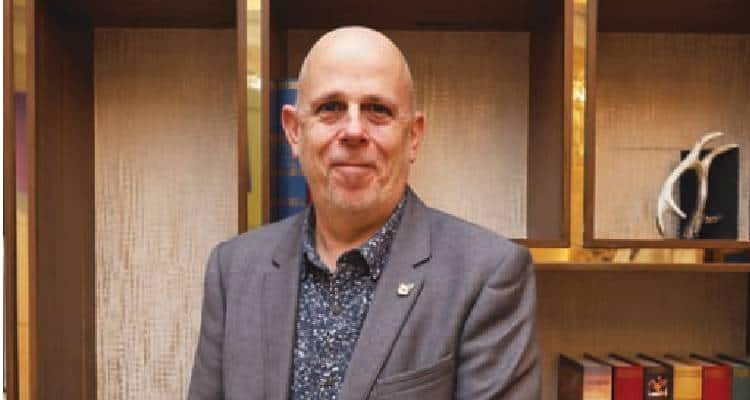
Professor Philip J. Young, Director of Educational Analytics, School of Life Sciences, University of Warwick, outlines how AI is compressing drug discovery timelines, why affordability remains the real bottleneck in SMA care, and how India can lead the next phase of precision medicine, in an exclusive interview with Neha Aathavale


AI is often described as a game changer in drug discovery and manufacturing. Where do you see it making the biggest difference today, and where should expectations be more measured?
Regarding the biotech industry, AI has multiple impacts that are already revolutionising the sector, but the most obvious one is moving us closer to solving the protein structure issues that have dogged protein biochemistry for decades. Effectively, it is incredibly difficult (if not impossible) to predict how a protein folds from the amino acid sequence. Therefore, to develop drugs and small compounds that target / inhibit proteins (which is the bed rock of biological engineering) you need to perform structural analysis (crystallography / NMR). This can take many years and significantly impacts the time it takes to develop drugs. However, the introduction of AlphaFold2 (the Google DeepMind AI model that predicts protein structures with >90 per cent accuracy) has had a huge impact.
For a direct comparison of the experimental approaches (crystallography) v AlphaFold2, scientists have been working for >20 years to solve the crystal structure of the Survival Motor Neuron (SMN) protein (mutations in SMN cause spinal muscular atrophy, SMA). In 2025, AlphaFold2 was used to solve the SMN structure- it took less than 10 minutes. To-date, AlphaFold2 has been used to predict the structure of >200 million proteins, for which Demis Hassabis and John Jumper were awarded the 2024 Nobel Prize in Chemistry.
What also excites me, but also has triggered concern, is the ability of AI to help introduce precision or truly personalised medicine. Drug discovery involves five different stages: 1) target identification; 2) structural analysis of the target protein; 3) biological engineering of small compounds that can target the protein of interest; 4) pre-clinical analysis (cell and animal-based work); and 5) clinical trials. In general, these five stages can take 10- 15 years.
Ren et al, in 2023, used AI to optimise target discovery / validation and small compound screening/validation, meaning they were able to get a new therapy (TNIK) for Idiopathic Pulmonary Fibrosis (IPF) into clinical trials in around 24 months. This is incredibly exciting, but the rate limiting step (even with AI) is the preclinical (animal models) and clinical trial stages.
There is a growing belief that AI could ultimately be used to replace preclinical trails, reducing the reliance on animal models. However, before this can happen, we would need to be absolutely sure that AI can accurately predict off target effect, drug breakdown product toxicology, and (essential) be used to calculate NOAEL / DNEL and MABEL to ensure we can identify safe start doses for human clinical trials, and we are a long way off this being the case.
When a breakthrough therapy or technology shows promise, what is usually the biggest bottleneck in translating it into real-world healthcare impact?
Really good question, and there are several answers. The first is funding – it costs a lot of money to convert a promising academic discover into a marketable drug, and most interesting findings will never take the next step because academics cannot fund the research.
The second is the preclinical work (i.e. animal models). Drugs can show true promise in in vitro or in cell based assays but demonstrate unforeseen toxicological issues in animal models. For a drug to progress from preclinical to clinical trials, it needs to work (i.e. improve outcomes in animals), display minimal or tolerable side effects, and have a therapeutic dose that is considerably lower than the toxic dose. In many cases, this simply is not the case, meaning drugs work but the effective dose causes too many complications.
The third is clinical trial results, and this is probably the main bottleneck. Trials cost a lot of money, and there is no way of predicting if a drug that works well in mice or rats, will have the same beneficial effects in humans. Most drugs that enter trials will simply not work as well as hoped.
The final issue is financial and involves regulatory bodies. Even if a drug performs well in clinical trial, it does not directly mean it will make its way into clinical practice. Regulatory bodies will assess whether the drug is cost effective, whether it produces marked improvement in patients’ quality of life and whether it is better than existing drugs. Again, this step is more complicated than most people believe, and a high percentage of drugs will not be officially approved for clinical use, even when the clinical trials are positive.
In diseases like SMA, where timing is everything, how prepared are current healthcare systems in emerging markets to act quickly once a diagnosis is made?
The main two issues in emerging markets are manufacturing and costs. For SMA in particular there are three separate therapies – one novel chemical entity (NCE) and two biotechnological products (BTPs).
The two BTPs – Zolgensma (SMA gene therapy) and Spinraza (SMA antisense oligonucleotide therapy) – are incredibly expensive. While both have been approved for use in India, they are two of the most expensive drugs ever made and as neither are manufactured in India, their use is not covered by standard Indian insurance policies. This means families rely on alternative funding (i.e. crowd sourcing or international humanitarian programs) to gain access. This effectively introduces a two-tiered healthcare system for Indian SMA families, where families with the funds to cover costs can receive state of the art therapies quickly, while less affluent families must raise the funds to treat their children.
This is a major concern because as SMA is a progressive disease, with severe children unlikely to live beyond the age of 2 years if untreated, any delay in treatment can result in significant clinical complications.
The NCE (Risdiplam) is less expensive, due to simpler manufacturing processes. However, as with the BTPs, because it is not manufactured in India, there are issues with insurance policies covering costs. This means that because of cost and non-Indian manufacturing, the three therapies are not providing the benefit to Indian families that they should.
However, all this potentially changed in October 2025, when a Delhi High Court ruled that Natco Pharma was legally able to release a generic version of Risdiplam, called Natsmart. This is manufactured in India (as part of India’s world leading generic pharmaceutical sector), meaning: 1) production costs are lower (it is effectively 97 per cent cheaper than Risdiplam); and 2) because Natsmart is manufactured in India, it’s use will be covered by standard Indian insurance policies.
The ruling is a major boost for Indian families impacted by SMA, effectively putting Indian patient care and welfare above patent protection for international pharmaceutical companies. The company who manufactured Risdiplam are challenging the ruling in the Indian Supreme Court, but if the high court ruling is upheld, India will have one of the most affordable SMA therapeutic programs in the world.
There is growing discussion around developing affordable gene therapy alternatives for emerging markets. How realistic is this in the near future, and what role can countries like India play in making it possible?
India is incredibly well placed to not only be involved in the production of gene therapy alternatives, but to be the world leader in this market. Natsmart has shown India is capable of producing cost effective generic medicines. Importantly, India is also the global leader in biosimilar production, with >130 approved biosimilars manufactured by Indian companies already in clinical practice. This means that when the AveXis/Novatis patent and market exclusivity is no longer an issue, India has the biotech infrastructure to mass produce a Zolgensma biosimilar. However, if Natsmart is ruled to be legally acceptable by the Indian Supreme Court, the need for a biosimilar gene therapy is not as high.
From your experience, what is one assumption the global healthcare ecosystem still gets wrong when it comes to innovation in emerging markets like India?
I covered the main issue above – it is cost and place of manufacturing. Biopharma companies will predominantly produce drugs aimed at markets that can afford them, like Europe, Japan and the US. This produces a two tiered system in emerging markets, which is a major concern. While the biotech sector will have major concerns with the Natsmart High Court ruling, if up-held, I think it will have a significant impact on how emerging markets are treated.
I personally would like to see better collaboration between major biotech companies and Generic / Biosimilar manufacturers in emerging markets. Rather than focusing on patent protection, it would benefit everyone if biotech companies were willing to “franchise” drug production to India-based generic companies, like Natco Pharma. This would mean a version of brand named drugs could be produced in emerging markets, while maintaining the integrity of market exclusivity and patents, reducing costs of manufacturing, shipping and import duty on patent holder, while maintaining market share in India. It would also mean drugs were manufactured in India, allowing cheaper costs and insurance coverage.
From your experience across academia and industry, how can universities better bridge cutting-edge research with real-world healthcare impact, particularly through collaborations?
This is a really good question and one better people than me have struggled with for many years. The first, and basic approach, is to change the way we train academics and students. In general, university degrees are based around what departments can teach and tend to focus on the research interests of academics. However, this means we are not truly providing details skills that are needed to make realworld impacts. This means we need a paradigm shift in how we develop degrees.
To improve collaborations, you first need to make sure academics have core skills needed to work in industry, and this comes from changing degree structures. We need better communication between academics and industry, ensuring we produce tailored programs that produce graduates with core skills needed to make true impacts. This is what I am doing here in the UK at the University of Warwick, where I lead the educational arm of the STEM Connect program. We are identifying core real-world issues and building degrees that provide the core skills needed to address them. We are focusing on climate change, healthcare, manufacturing and scientific computing, with close involvement and input with the National Health Service (NHS) and industrial sector.
The second approach is focused on ensuring academic discoveries are ready for industrial scaling. This is a major flaw in the sector – and one that I have first hand experience with. When I worked for a biotech company, I had many meetings with academic researchers who were hoping to develop their concepts into marketable products. However, most of the time all the academics had was a basic idea and proof of concept data.
This means the route followed by most academics is to take their idea and use it to develop new start-up companies. However, academics in general are not prepared for this process, meaning 90 per cent of all biotech will eventually fail, and only 7-10 per cent will produce a treatment that makes it into clinical trials (if start-up companies do make it to trial, this is where large, more established companies will become involved).
So, what do we need to do (as a sector) is to improve the “start-up” part of this process? We need to improve support, provide better mentoring and help with patent production. Most universities will have teams that support this type of process, but one of the most impressive I have encountered is the Centre for Cellular and Molecular Platforms (C-CAMP), which is part of the National Centre for Biological Sciences (NCBS) based in Bengaluru.
C-CAMP provides an incredible link between basic / translational science and commercialisation. It acts as a major support hub for academics, providing mentoring and funding. What sets C-CAMP apart from other centres is they support many ventures from outside NCBS. Importantly, their core focus is development of real-world therapies that are affordable in emerging markets, meaning their efforts are impacting the whole of the Indian Biotech sector and patients alike. If any of your readers are considering developing a start-up company, I would strongly suggest they contact CCAMP for support.
[email protected]
[email protected]
