

IDMA PAC 2025: Industry leaders call for AI and sustainable GMP practices
The conference was graced by Padma Vibhushan Prof. Dr. Man Mohan Sharma, FNA, FRS and Dr. Vivekanandan Kalaiselvan, Secretary-cum-Scientific Director, Indian Pharmacopoeia Commission (IPC)

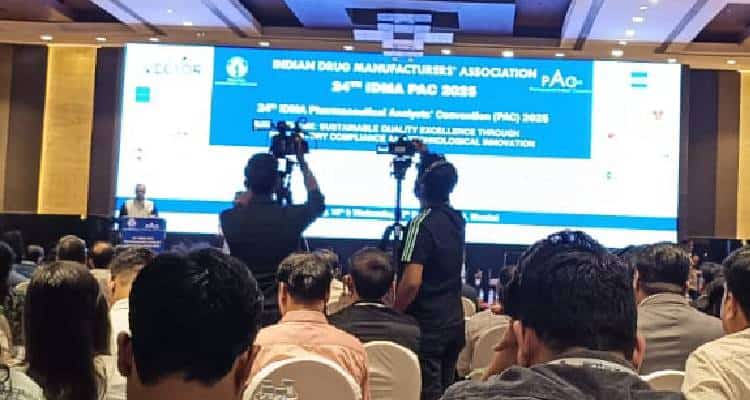

The 24th IDMA Pharmaceutical Analysts’ Conference (PAC) commenced on December 16, to deliberate on the evolving landscape of quality, technology, and sustainability under the theme “Sustainable Quality Excellence Through Regulatory Compliance and Technological Innovation.” The 2-day conference brought together senior industry leaders, regulators, scientists, and quality professionals to share insights and define the road ahead for India’s pharma sector.
The conference was graced by Padma Vibhushan Prof. Dr. Man Mohan Sharma, FNA, FRS, as the Chief Guest and Keynote Speaker, whose address underscored the importance of scientific thinking, innovation, and long-term vision in building globally competitive and sustainable pharmaceutical quality systems.
The Guest of Honour, Dr. Vivekanandan Kalaiselvan, Secretary-cum-Scientific Director, Indian Pharmacopoeia Commission (IPC), highlighted the critical role of robust standards, science-led regulation, and harmonisation in safeguarding patient safety and strengthening India’s global credibility.
The first panel on ‘Embedding Quality with AI – Redefining Standards of Excellence’ explored how artificial intelligence and intelligent automation are redefining quality management across pharmaceutical operations.
The panel featured Umang Vohra, Managing Director & CEO, Cipla; Bhushan Akshikar, Managing Director, GlaxoSmithKline Pharmaceuticals; Nagarajan Thyagarajapuram, AVP – Manufacturing & Quality Technical Hub, Eli Lilly India; Vishwa Savla, Managing Director, Pinnacle Lifesciences; and Mehul Shah, Vice President (Western Region), IDMA and Promoter & Managing Director, Encube Ethicals as moderator.
Vohra spoke about leveraging AI to automate routine tasks, make quality more predictive, and improve employee productivity. Akshikar emphasized moving beyond AI to Intelligent Automation, focusing on automating manual processes. Thyagarajapuram highlighted the use of AI in designing better drug molecules, reducing iterations from lab to manufacturing, enhancing prediction capabilities, and enabling scientists to focus on higher-value thinking. Savla stressed the importance of building organization-wide understanding of AI to ensure effective adoption.
The second panel – ‘Sustainability in GMP – Regulatory Expectations & Industry Efforts’ focused on sustainable GMP practices and the evolving role of regulators and industry collaboration. The session was moderated by S. M. Mudda, Chairman, Regulatory Affairs Committee – IDMA & Managing Director, Misom Labs, Malta.
Panellists included Dr. Hemant G. Koshia, Former Commissioner, Food and Drugs Control Administration, Gujarat; S. W. Deshpande, Former Joint Commissioner, FDA Maharashtra & Proprietor – PHARMALEX; Jyoti Sardesai, Former Director, FDA Goa; Dr. S. V. Veeramani, Chairman & Managing Director, Fourrts (India) Laboratories; and Dr. Viranchi Shah, National Spokesperson, IDMA & Director, Saga Lifesciences.
Dr. Koshia described regulatory evolution as a “blessing in disguise,” citing the significant rise in WHO-GMP compliance and exports from Gujarat, and called for a scientific balance between enforcement and growth. Deshpande advocated a shift from penalty-driven to compliance-based regulation, emphasizing mutual trust between regulators and industry. Dr. Koshia further noted that quality must be a mindset and culture, not merely end-point testing. Dr. Shah highlighted the need to build trust through strong quality systems amid price erosion and the pursuit of operational efficiencies. Summing up, Mudda emphasized that quality and GMP must go beyond compliance to include trust, judgment, and partnership.
In addition to the panel discussions, Day 1 featured several other important sessions, including the IDMA 24th PAC Awards. Delegates also attended knowledge sessions such as Digital Transformation in Pharmaceuticals, presentations by knowledge partners ACG, Thermax Group, Micro Labs, Caliber, and GD Waldner, as well as technical sessions on Regulatory Expectations for Sterility Assurance Level in Pharmaceutical Manufacturing, Discriminatory Dissolution Methods and Their Relevance to Biowaiver Approaches, and Quality Management Systems and Risk Management.
Day 2 of the conference will continue the focus on quality and innovation, featuring sessions on USP standards and public health, contamination control strategies in multi-product facilities aligned with EU and US guidelines, quality culture and skill enhancement, technology transfer from R&D to QC, green laboratories and sustainability in EHS monitoring, supply chain resilience and security, cyber issues in the pharmaceutical industry, and advancements in biotransformation technologies.