

Despite global volatility India’s pharma exports continue to demonstrate steady resilience
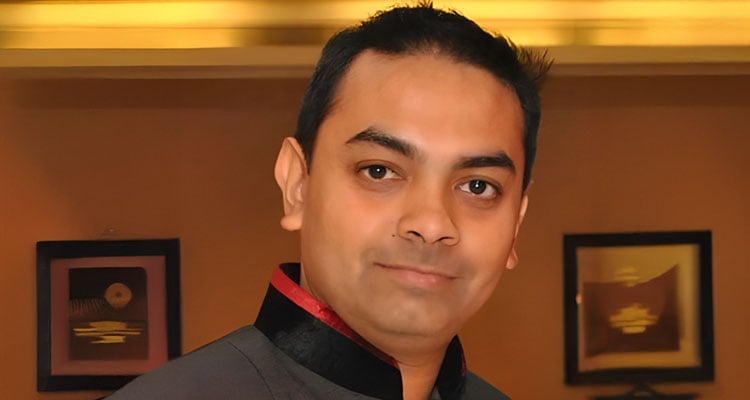
Bhavin Mukund Mehta, Whole-Time Director at Kilitch Drugs and Vice-Chairman of Pharmexcil, discusses India’s pharma export outlook, the impact of the PLI scheme, market diversification, and Kilitch’s global strategy in an interview with Express Pharma


1. How is India’s pharmaceutical export performance shaping up this year, especially in light of global uncertainties?
Despite global volatility—whether it’s geopolitical tensions, pricing pressures, or regulatory shifts—India’s pharmaceutical exports continue to demonstrate steady resilience. Momentum is expected to strengthen further in the coming quarters, which are traditionally stronger for exports. At Pharmexcil, we are actively engaged in government-to-government discussions, particularly with key markets like the US, to ensure smoother access and greater policy clarity.
That said, the real transformation is happening at a structural level. Initiatives like the PLI scheme are beginning to show tangible results, with increased domestic manufacturing of key starting materials (KSMs), which is gradually reducing import dependency. The focus ahead is on sustaining this growth trajectory while enhancing regulatory compliance and reinforcing India’s leadership in global quality standards.
2. What impact has the Production Linked Incentive (PLI) scheme had on boosting domestic manufacturing of pharma ingredients?
The PLI scheme has definitely been a turning point for India’s pharma manufacturing, especially in APIs and KSMs. For the first time in years, we’re seeing real movement on the ground—projects for critical APIs like penicillin and ofloxacin, which were earlier entirely import-dependent, have now gone live.
This shift is important not just for self-reliance but also for building trust globally. When you have local manufacturing for key ingredients, you’re not only more competitive on cost but also more reliable in your supply commitments. The ₹4,025+ crore investment so far shows how seriously the industry is responding. Over time, this will reduce our dependence on China, stabilize input costs, and strengthen India’s position as a consistent and credible global supplier.
3. Are Indian pharma companies looking to diversify their product portfolios or focus markets in response to recent global shifts?
Absolutely, we’re seeing a conscious shift across the industry. Indian pharma companies are not just diversifying product portfolios—especially into complex generics, injectables, and value-added formulations—but also exploring newer geographies beyond traditional markets like the US and EU. There’s growing interest in Latin America, Southeast Asia, Africa and parts of Eastern Europe. These strategic moves are driven by the need to hedge against pricing pressures and regulatory shifts in mature markets, while also tapping into rising healthcare demand in emerging economies. It’s a balanced approach—deepening presence where we’re strong, while thoughtfully expanding into under-served regions.
4. What are the trends in pharma exports, given the tariffs and FTAs recently signed and in the pipeline ?
There’s been some volatility this year with evolving tariffs and shifting trade deal dynamics, but things have begun to stabilize. India’s proactive engagement with key markets—especially the US—has helped preempt potential disruptions from tariff speculation and maintain steady export flows. The pipeline of new FTAs is also expected to ease market access and provide greater pricing stability for Indian drugmakers.
At the same time, structural shifts are reshaping the landscape. The PLI scheme has spurred significant domestic investment in APIs and key starting materials, reducing import dependency and strengthening India’s cost competitiveness. China, meanwhile, is aggressively cutting API prices to retain market share, but with India scaling up capacity, its dominance is expected to erode over time, further reinforcing India’s export resilience.
5. What have been the initiatives from Pharmexcil to prepare pharma companies in India India to cope with such volatility in global trade practices?
In the current landscape of global trade volatility, Pharmexcil has been actively engaging with its member companies to ensure preparedness and resilience. We’ve emphasized a cautious, wait-and-watch approach during periods of uncertainty, while simultaneously facilitating communication between industry stakeholders and the government. Indian pharma exporters have been urged to stay focused on long-term strategy rather than reacting to short-term disruptions. We’ve seen encouraging signs on the regulatory front through recent government-to-government discussions—particularly with the United States, in light of potential pharma-related tariffs. India has been one of the few countries to engage proactively on this front, as acknowledged in recent bilateral dialogues. At Pharmexcil, we’ve also been in close coordination with the Department of Commerce and the Department of Pharmaceuticals to relay industry concerns and ensure exporters stay updated. This includes sharing timely advisories, decoding trade developments, and helping companies explore alternative markets to mitigate global risks.
6. How is Kilitch Drugs navigating the current global trade uncertainties?
At Kilitch Drugs, we’re addressing uncertainty in global trade with a concerted strategy built on diversification, vertical integration, and operational flexibility. Global trade has definitely become more unpredictable, but we’re navigating it with a clear strategy. First, we’ve diversified our markets—we’re now present in over 38 African countries, along with the Philippines and Yemen, which reduces dependency on any single region.We also have a manufacturing unit in Ethiopia, which not only strengthens our local presence in East Africa but also helps us meet government expectations for localization.
Secondly, our upcoming ₹125 crore greenfield plant at Khopoli will bring a lot of outsourced manufacturing in-house, improving cost efficiency and giving us better control over quality and timelines. These steps, along with a sharper focus on branded sales and operational flexibility, give us the confidence to surpass ₹1,000 crore in revenue over the next 3–4 years despite global trade uncertainties.