

Clearsynth receives government backing to advance India’s deuterated chemical production
With TDB's support, Clearsynth Labs aims to create a facility that will make India a supplier of high-value deuterated compounds

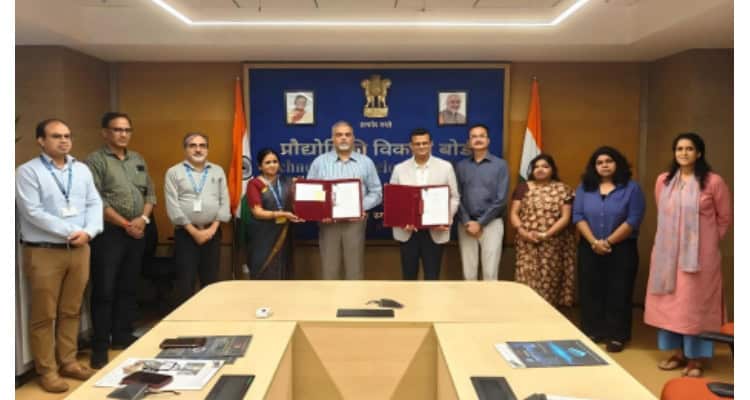

Clearsynth Labs has obtained grants from the Technology Development Board (TDB), which is part of the Department of Science and Technology (DST), Government of India, to build a dedicated manufacturing facility for the commercial-scale production of deuterated reagents, intermediates, and building blocks. This is a significant step towards enhancing India’s capabilities in advanced specialty chemicals.
Source: https://tdb.gov.in/tdb-extends-financial-support-ms-clearsynth-labs-limited-establishment-bulk-manufacturing-facility
Deuterated compounds have vital uses in high-tech industries such as fiber optics, semiconductors, OLEDs, defence and pharmaceuticals. India has a robust pharmaceutical manufacturing ecosystem, but lacks high-purity, scalable domestic technologies; it has until now been dependent on imports for these specialised but strategically significant chemicals.
With TDB’s support, Clearsynth Labs aims to create a facility that will make India a supplier of high-value deuterated compounds. This project supports the Make in India and Atmanirbhar Bharat missions, focusing on self-reliance in the chemical sector. Clearsynth’s partnership with the Heavy Water Board (Department of Atomic Energy, GOI) for continued access to heavy water ensures cost competitiveness and the ability to grow to meet local and global needs.
The project is anticipated to make a contribution in the following areas:
❖ Developing domestic capabilities in isotope-labelled compounds
❖ Conserving foreign exchange by displacing imports
❖ Promoting innovation through IP generation
❖ Establishing highly skilled jobs in chemical manufacturing and research and development
❖ Establishing India as a dependable worldwide supplier in a high-value niche market.
Collaboration with HWB
In the year 2018, the Heavy Water Board recognised the potential of non-nuclear applications and took the first step in collaborating with two Indian Private organisations to encourage the development and manufacturing of deuterated products. The Objective was to substitute Imports and promote its exports