

Our goal is to help companies reduce cost per cubic meter of wastewater treatment
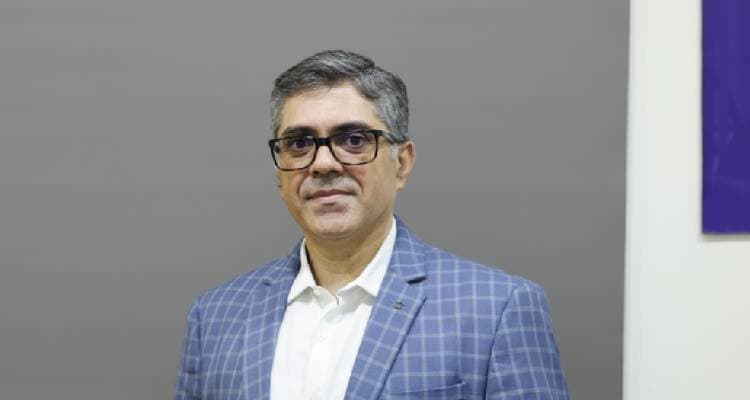
On the sidelines of IFAT India, Vishal Mehra, VP and Strategic Business Unit Head, Water and Waste Solutions, Thermax spoke to Viveka Roychowdhury on the increasing environmental consciousness among pharma companies, including MSMEs, who now view effluent management not as a regulatory expenses, but as an essential component of their business continuity and productivity


The pharma industry is considered one of the most polluting industries, not just in India, but across the world. Antibiotics have been linked to increased antimicrobial resistance due to the wastewater which flows into water systems. What can be done to tackle this, how much does it add to the cost of operations in terms of treating wastewater and any waste that a pharma manufacturing plant generates?
One of the most critical challenges for any pharma company today is the effective treatment of wastewater. This waste often contains complex contaminants such as microbes, antibiotics, and antibodies – some of which are used in the production of life-saving vaccines and drugs, while others end up being discharged into wastewater streams.
Pharma effluents are unique because they contain active biological materials that are difficult to degrade. A typical Effluent Treatment Plant (ETP) relies on three stages – physical, chemical, and biological treatment. The physical process removes suspended solids, which is relatively straightforward. The chemical stage neutralises pH and reduces chemical contaminants. However, the real challenge lies in the biological treatment stage, where residual antibiotics and antibodies must be broken down by microorganisms. This process requires introducing specific microbial communities that compete with and eventually neutralise these resilient biological compounds. Such biological systems demand larger areas and longer retention times, as the microbes need sufficient space and oxygen to thrive. Consequently, the civil infrastructure becomes more expensive, larger tanks, higher aeration requirements, and increased operating costs.
At Thermax, along with other technology leaders in this space, we are actively working to reduce this burden on pharma companies. One approach is stream segregation, identifying and treating different wastewater streams separately. Not all streams contain high levels of biological contaminants. By isolating high-COD (Chemical Oxygen Demand) streams and treating them with advanced technologies while managing low-COD streams through simpler methods, we can significantly optimise both cost and efficiency.
Another area of focus is embedded technologies designed to minimise space and cost. Traditionally, biological media used for bacterial growth had surface areas of about 500 m² per m³. Today, through innovation and partnerships with global experts, we have developed media with surface areas exceeding 3,000 m² per m³. This expanded surface allows for denser bacterial colonies that more effectively break down antibodies and other complex compounds.
To draw a simple analogy, it’s like increasing the number of soldiers in a smaller battlefield, making the biological process faster and more efficient. The cost of such media is much lower compared to the cost of building massive civil structures and the energy intensive oxygen supply they require.
We are also exploring anaerobic treatment systems, which inherently require less oxygen. While these traditionally demand larger footprints, our tall-tower designs and use of granular sludge technologies enhance surface area and biological activity, making the process more compact and effective.
A great deal of ongoing research focuses on supporting the pharma sector, an industry often seen as a heavy polluter, but one that is equally committed to sustainability. Our goal is to help these companies reduce the cost per cubic meter of wastewater treatment, not necessarily to eliminate capital expenditure altogether, but to significantly ease the operational and environmental burden. If a company was previously spending Rs 100 on treatment, we aim to help them bring it down to Rs 50 while maintaining resilience and reliability. The challenge set before us is to design smaller, smarter, and more robust systems that can handle fluctuations and shock loads without compromising performance.
In essence, our mission is to make pharma wastewater treatment more efficient, sustainable, and future-ready, enabling companies to focus on what they do best – delivering health and healing to the world.
What is the capex required to put in place such systems? And do your solutions typically get adopted by larger companies and smaller companies cannot afford them? The Micro, Small, and Medium Enterprises (MSME) sector in pharma is quite large, and they feed into larger contract manufacturers, etc.
So, let’s first talk about the broader ecosystem. You’re absolutely right – India continues to face a serious challenge when it comes to wastewater management. A significant volume of effluents still finds its way into our rivers and plains, and currently, the country treats only about 30 per cent of its total wastewater.
And that’s across sectors?
Effluent management is not just a challenge for the pharma industry, it’s a cross sectoral issue. However, pharma remains the toughest to handle, given the complex nature of its waste. Naturally, a significant portion of untreated effluent may originate from this sector. The reality is simple, if no viable treatment solutions exist, what alternatives do industries really have? Fortunately, the pharma sector in India operates largely within industrial clusters, which provides an opportunity for collective solutions. Prominent pharma hubs such as Baddi, Hyderabad, the Visakhapatnam belt, parts of Tamil Nadu, and Maharashtra’s western corridor account for a majority of production. This geographical concentration, unlike industries such as food processing that are more dispersed, makes it easier to design and implement centralised treatment infrastructure.
To support this effort, the government has introduced Common Effluent Treatment Plants (CETPs), a crucial step, particularly for MSMEs . These smaller players often lack the resources to install and operate individual effluent treatment plants due to the complexity and cost of emerging technologies. Yet, they form the backbone of the larger pharma ecosystem, supplying essential intermediates and raw materials. Without their cost efficiency, the overall affordability of medicines would be compromised. Recognising this, the government has been strengthening the CETP framework. Earlier, CETPs were not strictly regulated under pollution norms, but today they are categorised just like individual industries under red, orange, or green categories based on performance and compliance. This approach enables more effective monitoring and ensures that environmental standards are met at a cluster level.
CETPs also act as quality checkpoints, as they only accept effluent that meets certain pre-treatment standards. Each contributing unit must therefore ensure basic wastewater quality before discharge. This is where companies like ours step in, to help MSMEs achieve the required
discharge quality using cost effective, space-efficient technologies. Many small manufacturers face land constraints, so our solutions often involve vertical, compact designs that fit within limited footprints without compromising performance.
Encouragingly, environmental consciousness among MSMEs is growing. Many now understand that sustainable practices are not optional, they’re essential. Larger pharma companies are increasingly sourcing only from environmentally compliant partners, making sustainability a business imperative for smaller suppliers as well.
In this interconnected ecosystem, our role is to empower every level of the value chain. In fact, a significant portion of our business today comes from supporting these smaller players, not just the large corporations.
Of course, cost remains a crucial factor. Our focus is to help MSMEs treat their effluent up to a manageable level, after which more advanced treatment can be handled by centralised or larger facilities. By improving operational efficiency, we help them lower overall treatment costs without compromising environmental compliance.
There’s also a growing recognition within the industry that water itself is a precious raw material. Climate change has made this clearer than ever, India oscillates between floods that contaminate water sources and droughts that dry them up. Reliable water and effluent treatment systems have thus become strategic assets.
Pharma manufacturers now view these systems not as regulatory expenses, but as essential components of their business continuity and productivity. A single missed production batch, due to water scarcity or poor effluent management can disrupt global supply commitments and damage market credibility.
Climate change has also shifted how investment decisions are made. The focus today is not merely on capital expenditure (CapEx), but on total cost of ownership (TCO) balancing upfront investment with long-term reliability, operational efficiency, and environmental impact.
In essence, India’s pharma ecosystem is evolving into a collaborative model where government policies, industrial innovation, and environmental responsibility converge to build a cleaner, more resilient future for the sector and the planet.
You said that water is being seen as a precious raw material, and therefore, if wastewater can be recycled, it becomes an asset. That’s a mindset shift for a country like India. Do you see that happening in India at the speed that you would like to see it, as India is a very price sensitive market, in addition, the pharma sector is under price control?
There has been a visible mindset shift across the industry, a growing willingness to ask, “Can I reuse what was once considered waste?” This very notion of bringing treated wastewater back into production marks a significant step forward in how we think about sustainability.
Globally, countries like Singapore and the Netherlands have set remarkable examples where treated wastewater is purified to the point that it is safe even for human consumption. That represents the pinnacle of circular water management. India, too, is gradually moving in that direction. If we were to visualise this as a cycle of development, similar to how nations progress from developing to developed economies, India today sits at the “evolving awareness” stage, a phase where industries are increasingly open to the idea of reuse. About five years ago, only a few companies were bold enough to take that plunge. Like any new technology, whether it was pagers or mobile phones, the early adopters set the trend, and over time, it caught on.
Is water recycling growing at the same rapid pace as digital technology adoption? Perhaps not. But it’s certainly not crawling either, it’s growing at a healthy, sustainable pace.
This shift is clearly visible in our own business. A decade ago, Thermax’s water portfolio was 80 per cent focused on freshwater treatment and only 20 per cent on wastewater recycling. Today, that equation has completely reversed, 70% wastewater treatment and 30 per cent freshwater treatment. This is not just a company trend; it mirrors a broader industrial transformation.
The reason is simple: water scarcity has become a business risk. When water isn’t available, production halts. For some of our customers, a single day of downtime can result in losses ranging from Rs 50 lakh to Rs 10 crore. No company wants to face that. The only way forward is to secure their own water supply, and recycling plays a critical role in that.
Let’s not forget – India uses over 80 per cent of its available freshwater for agriculture, followed by domestic consumption. Industry gets the smallest share, and because industries are not seen as a “vote bank,” they cannot depend on external allocation. As a result, manufacturers are now taking charge of their own water security. The logic is simple: why discharge wastewater when it can be treated, recycled, and reused right within your premises? That’s the shift we’re seeing.
The evolution of reuse has also been step by step.
Initially, companies asked, “Can I use this treated water for something non-critical like gardening?” They did, and they saw results — greener landscapes and thriving plants. The next step was to use it for utilities such as cooling towers and boilers. Now, we’re seeing the next phase of reuse within the product process itself.
Several major pharma players have already started using recycled water, not for direct formulation, but within process streams that require high-quality water. Of course, this is done through strict segregation and treatment protocols, ensuring it’s completely free from contamination.
Many of the vaccines and tablets produced today are made using water that has been treated and recycled through advanced systems. With clear separation between sewage, floor wash, and process water streams, companies are creating circular systems that are both safe and sustainable.
Large pharma clusters in Visakhapatnam (Andhra Pradesh) and companies in Pune are leading the way. They have recognised that water scarcity isn’t just an environmental issue, it’s a financial one. Investing in recycling isn’t just about compliance; it’s about business continuity and profitability.
The realisation is clear: water is no longer an abundant utility, it’s a strategic resource. And those who act early to secure it will define the future of sustainable manufacturing in India.
Can you go into a little more granular detail on particular examples?
Let me share a remarkable example from one of our pharma customers. I won’t name the company or location, but the story perfectly illustrates how innovation and necessity can drive sustainability.
This particular plant was heavily dependent on canal water for manufacturing its medicines. However, over a span of two consecutive years, the region suffered from severe rainfall deficiency, drastically reducing canal inflow. The shortage quickly began affecting production, and with committed export orders to Europe, the business faced a serious crisis.
Their only alternative was a nearby river but as we know, many Indian rivers double as sewer lines, especially during dry seasons when the water level drops and pollutants become more concentrated. With no other viable source, the company approached the local authorities with a bold proposal: “If we can take this untreated sewage water, purify it ourselves, and reuse it for our operations, can we be allowed to do so?” It was a turning point.
Without this initiative, the company faced an estimated Rs 10 crore per day in potential revenue losses due to halted production. They had no option but to act.
We partnered with them to design and implement a system to treat municipal sewage into high-quality process water suitable for pharma use. The outcome was transformational. Today, that same plant runs entirely on treated and recycled sewage water, a remarkable example of circular water economy in action. Their success didn’t stop there. The company is now earning water credits on sustainability trading platforms, gaining both financial and environmental recognition for its pioneering efforts in closing the water loop.
What’s even more impressive is that the treated water now surpasses the quality of the river water they once relied on. The plant itself is located in a landlocked region, with no access to groundwater and borewells have long run dry, and the river remains their only natural source. By combining this reclaimed sewage water with their in house recycling systems, they’ve ensured complete water self-sufficiency.
To maintain this success, the company has established a dedicated seven-member “water stewardship” team, tasked with continuous monitoring, audits, and leak prevention. Every drop of water is accounted for. Even minor leakages are treated as high-priority issues because water conservation has become central to their operational philosophy. The results speak for themselves. The company has not only secured its water future but has also seen significant business growth as a result of uninterrupted production and strengthened sustainability credentials. This story beautifully captures what the future of industrial water management looks like where innovation, circularity, and business performance go hand in hand.
How does Thermax compare in terms of its global competitors and local competitors, both on cost, on quality, on service?
Thermax carries a legacy of over six decades, and the reason we’ve sustained and grown through this journey is simple: our unwavering customer centricity. Everything we do revolves around understanding and meeting customer needs. For us, quality, on-time delivery, and component availability form the core pillars of our promise. To ensure this, we’ve built strong operational systems supported by advanced tools like Product Lifecycle Management (PLM) and Enterprise Resource Planning (ERP).
We’ve also established strategically located stock points close to our customers’ manufacturing facilities, along with a robust dealer network. In most industrial areas, a Thermax partner can be reached within four hours, and they maintain their own inventory of critical components. This ensures that our customers experience minimal downtime and uninterrupted operations.
This reliability is especially crucial for our pharma clients, who operate in a mission-critical environment. After all, medicines aren’t optional products, they’re essential to saving lives. A delay in production can have serious consequences, which means that pharma companies can only function efficiently when their suppliers match their sense of urgency and accountability.
Our customers have found that trust in Thermax. They know that we share their mission and stand by them as partners in their purpose. This deep alignment gives us a distinct edge over international competitors, who often struggle to replicate such an integrated network of people, partners, physical infrastructure, and digital platforms.
At Thermax, we’ve built exactly that, a human and digital ecosystem that ensures every component, every service, and every solution reaches the customer at the shortest possible time. That’s why many of our pharma customers see their relationship with us not just as a transaction, but as a symbiotic partnership built on trust, reliability, and shared responsibility.
Is India in sync with global counterparts in terms of regulations governing effluent treatment and waste wastewater management systems?
In many ways, India is ahead of several global counterparts when it comes to the adoption and regulation of Effluent Treatment Plants (ETPs). The pace of adoption here has been far more rapid than in many other regions, and the regulatory framework guiding these systems is also more stringent.
While adherence and on ground enforcement can still improve, India’s policy vision and environmental standards, particularly around wastewater treatment and recycling are among the toughest in the world. To put it in perspective, in several parts of the Middle East and Southeast Asia, industrial discharge is permitted even when Total Dissolved Solids (TDS) levels are as high as 3,500 mg/L. In contrast, India’s discharge norm is capped at 2,100 mg/L, a clear indication of how much stricter our environmental benchmarks are.
Even in some developed countries, regulatory expectations are comparatively relaxed. For instance, in food processing industries abroad, effluents are often considered natural by-products that will eventually self-treat over time in the environment. India, however, takes a far more cautious approach. Given our high population density, land scarcity, and deeply interconnected water systems, untreated discharge can have an immediate and far-reaching impact. The government therefore enforces tighter norms to safeguard both surface and groundwater quality.
When it comes to raw material and process water, India already operates at par with global standards. These are regulated by agencies like the FDA and aligned with European and American norms, especially in the pharma sector. But where India truly stands out is in its environmental rigor on wastewater and ETP management.
Yes, challenges in monitoring and compliance still exist, but from a policy and intent perspective, India is ahead of the curve and steadily moving toward building one of the most responsible and sustainable industrial ecosystems in the world.
What are the Thermax solutions and the impact of such solutions?
Thermax offers a comprehensive suite of solutions for the pharma sector, supporting the industry across its entire value chain from energy and utilities to water, waste, and sustainability.
Let’s take a step back from water for a moment. Every pharma facility depends heavily on steam for its core operations. Thermax caters to this essential requirement through a wide range of boilers and heating systems, ensuring reliable and efficient steam generation. To further enhance efficiency, we also provide steam accessories such as steam traps and condensate recovery systems that help customers reduce energy losses and improve overall plant performance.
Once the medicines are produced, they need to be stored under carefully controlled conditions. This is where Thermax’s advanced cooling technologies come into play. Our portfolio includes absorption chillers, heat pumps, and adiabatic cooling towers, which help maintain precise temperatures for medicine storage and production areas. Given how temperature sensitive most pharma products are, these solutions are vital to ensuring product quality and compliance.
Our focus on sustainability extends to the energy supply side as well. Through solar energy solutions including group captive solar farms we enable pharma manufacturers to harness renewable energy, significantly reducing their carbon footprint and operational costs.
Now, turning to water, which forms the backbone of pharma manufacturing. Water is required for multiple purposes from boiler feed and cleaning to formulations and injections. Thermax provides comprehensive water treatment and purification systems that ensure consistent, high-quality water suitable for critical pharma processes.
For instance, when water is sourced from canals or surface reservoirs, our systems purify it to the required standards and prepare it for applications such as Water for Injection (WFI). These systems produce high-purity water, free from contaminants and compliant with stringent pharma norms.
Once the process is complete, the next challenge is wastewater management. Here again, Thermax offers a complete range of treatment solutions from aerobic and anaerobic ETPs to sludge treatment systems and Zero Liquid Discharge (ZLD) technologies. These ensure that every drop of water is either safely treated or reused, minimising environmental impact. In addition to utilities and environmental solutions, Thermax also contributes indirectly to the pharma value chain through its specialty chemicals business. For example, our taste masking chemicals are used to make medicines more palatable especially for pediatric and oral formulations. With this diverse and integrated portfolio, Thermax stands as a trusted partner to the pharma industry, offering not just products, but a complete ecosystem of sustainable, efficient, and reliable solutions. It’s this combination of technical excellence, innovation, and customer trust that has built Thermax’s strong brand equity over the decades.
We talked about effluent sewage treatment plants also before it goes to the common effluent treatment plant, each individual plant also needs to have it so that it reaches that level. How cost effective are those? And how can it be made cost effective for companies of all sizes?
Cost-effectiveness is always the first priority for our customers. But beyond cost, the real challenge lies in modernising systems to make them more efficient and sustainable. Take, for example, a typical sewage treatment plant. Traditionally, a plant of a certain capacity required a large footprint, more space, more metal, more cement, and higher operating costs.
At Thermax, we’ve tackled this challenge through innovative technology. By introducing specialised media for bacterial growth, we have been able to reduce the footprint of our sewage treatment plants by up to one-tenth. That’s a significant saving in both capex and operational costs. We also reimagined the need for blowers, a standard component in conventional sewage treatment. Our solution, BioFilter Pro, exposes incoming sewage directly to the atmosphere, allowing natural oxygenation. By adding a tubular membrane, the system can handle high TSS (total suspended solids) and deliver Membrane Biological Reactor (MBR)-quality water without blowers. This not only reduces energy consumption but also simplifies operations and lowers costs.
Across all our portfolios, our goal is the same: reduce cost of ownership while maintaining high performance. We focus on sleeker designs, fewer components, and enhanced reliability. For instance, in conventional setups, critical units often run one working and two standby. We challenge that model by selecting components designed to operate 20 years without breakdown, eliminating the need for multiple backups.
We also provide flexible, customisable solutions. Depending on the site requirements, a system may combine anaerobic and aerobic processes in varying proportions, optimising both capex and operating expenses. Finding the right technology match is crucial— not just for cost savings, but for operational efficiency, reliability, and long-term sustainability. In essence, it’s about innovating smarter, not bigger, ensuring that customers get maximum value with minimal footprint and expense.
What are some of the new innovations and solutions to ensure energy efficiency, carbon reduction and waste management?
If I were to combine our innovations into a single narrative, it would look like this: achieving near-total water recovery up to 98-99 per cent requires a carefully orchestrated sequence of processes. Typically, this involves multiple stages of RO (Reverse Osmosis) followed by evaporation. Our first goal is to minimise the volume reaching evaporation, the most energy-intensive stage. By precisely sizing RO stages RO1, RO2, RO3 we can extract a significant portion of water upfront, drastically reducing the load on the evaporator. Where conventional approaches reach their limit, we collaborate with international partners to push the envelope with advanced solutions.
Our proprietary Advanced RO can achieve concentrations three times higher than standard RO, making the evaporator almost negligible. The cost difference is striking: evaporation can cost Rs 1,800-2,000 per cubic meter, whereas an RO system ranges from Rs 45–150 per cubic meter. If evaporation remains unavoidable, we focus on making it as energy-efficient as possible. For instance, our VapoNova Pro innovation has reduced the energy requirement of an MVR system from 40 kW down to just 14 Kw, an enormous impact on operational efficiency and costs.
Operational consistency is another challenge. Plant operators typically set fixed chemical dosing levels, but fluctuations in the process can lead to excessive chemical usage. Our EDGE Live solution addresses this by modulating chemical dosages in real time based on upstream parameters.
Customers have reported significant savings in chemical consumption through this approach. Predictive maintenance is another game-changer. Instead of cleaning membranes on a fixed schedule, our system predicts when maintenance is actually needed, extending membrane life and reducing downtime.
This is achieved through machine learning and connected systems, where equipment communicates seamlessly to optimise operations. Together, these solutions from advanced RO to predictive maintenance demonstrate how technology, innovation, and intelligent monitoring converge to deliver maximum value, lower costs, and sustainable water management for our customers.
[email protected]
[email protected]