

Syngene International announces third year of STEM scholarship for women
40 women from tier two and three institutions selected for the third cohort of the program

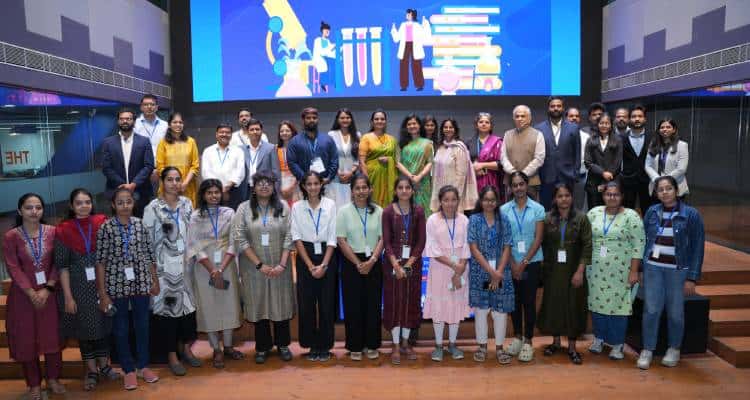

Syngene International in partnership with the Research and Innovation Circle of Hyderabad (RICH) and Biocon Foundation, announced the launch of the third cohort of its flagship scholarship, mentoring and industry orientation program for women in STEM (science, technology, engineering and mathematics). Designed to empower women from tier two and three institutions, the program offers structured mentorship, financial assistance and hands-on research exposure, which includes practical experience in real lab environments. Over the past two years, it has benefitted more than 50 women.
This year, 40 women students are participating in the program, following a rigorous evaluation process that considered academic merit, research orientation and socio-economic background, with a focus on supporting those from low-income or financially underserved families. Their learning journey will conclude with project-based internships with pharma and biotechnology companies across India, as well as government research institutions such as the Council of Scientific and Industrial Research – Centre for Cellular and Molecular Biology (CSIR–CCMB). These internships are embedded within a broader development framework that includes technical seminars and industry exposure visits, designed to build research skills, expand professional networks and inspire long-term careers in STEM.
Despite growing awareness about STEM careers, many women from smaller cities in India still face significant challenges that limit their advancement in these fields. Constraints such as inadequate exposure to scientific opportunities, financial limitations, and a shortage of mentors often prevent them from fully participating in the professional science community. The Syngene–RICH program is addressing these issues by offering scholarships, personalised mentorship, and hands-on research experience, effectively bridging the divide between academic knowledge and real-world career prospects.
Pramuch Goel, Head of Corporate Affairs, Syngene International said, “As an innovation-driven company, Syngene sees this program as an investment in India’s scientific future. Beyond individual growth, it is helping create a stronger, more inclusive research ecosystem by nurturing talent from institutions that often lack access to cutting-edge infrastructure or networks. Supporting such initiatives is part of our broader commitment to building long-term scientific capacity and driving meaningful change across the industry.”
Dr Parvinder Maini, Scientific Secretary, Office of the Principal Scientific Adviser, Government of India said, “This programme is more than an educational intervention, it is a regional solution model that connects science to society, talent to opportunity, and learning to livelihood. Supporting women in STEM cannot rest on isolated programmes alone. It demands collaboration, sustained mentorship, and inclusive environments. What RICH, Biocon Foundation, and Syngene have built here is not just impactful, it is essential to India’s scientific and social progress.”
Dr Anupama Narayan Shetty, Mission Director, Biocon Foundation, said, “Advancing equity in STEM is critical to unlocking India’s full scientific potential. This program exemplifies how targeted support through scholarships, mentorship and exposure to research environments can empower talented women to pursue meaningful careers in science. It’s encouraging to see students grow in confidence, develop professional skills and begin to visualise long-term pathways in STEM. Syngene and Biocon Foundation remain committed to enabling inclusive opportunities that strengthen the scientific talent pipeline across the country.”
Rashmi Pimpale, CEO, Research and Innovation Circle of Hyderabad (RICH), said, “In just two years, we have seen how structured support can turn potential into progress. From tier two and three colleges to industry labs and PhD programmes, these young women are rewriting the narrative. The momentum behind this initiative shows what’s possible when government, industry, and research institutions come together with a shared commitment to equity and inclusion in science. The response and success we have seen reinforce that this is not a nice-to-have, it’s a must-have.”