

Goa’s bid for a bigger role in global pharma
From CDMO expansion to digital quality systems, the Goa Pharma Summit, hosted by Express Pharma, explored the capabilities Goa needs to move into higher-value pharma activities, reports Neha Aathavale

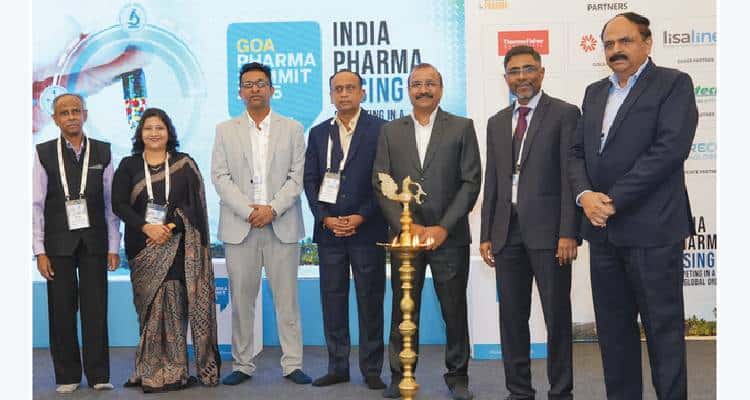

India has built its pharma strength on two formidable foundations: the ability to manufacture at scale and the capacity to reach markets across the world. In recent years, however, it has become increasingly clear that scale alone cannot determine how far the industry can go. The challenge is to keep pace with the shifts while moving beyond volume to create greater value.
For Goa, this challenge presents an opportunity to build on what it already does well. The state has an established pharma manufacturing base and a strong export orientation. The next step is to build capabilities in research and development (R&D), contract development and manufacturing organisations (CDMOs), advanced manufacturing and innovation. These priorities formed the backdrop of the Goa Pharma Summit, which brought together pharma industry leaders, policymakers, manufacturers, researchers and academic representatives to examine what it will take for Goa to move up the value chain and strengthen its position in the global pharma industry.
Goa’s CDMO opportunity
One area of opportunity lies in identifying where Goa can offer greater value to global pharma companies beyond manufacturing scale. Dr Praveen Khullar, Executive Director, VerGo Pharma Research Laboratories, emphasised the importance of building on the state’s export base while developing capabilities that would enable it to participate in more specialised development and manufacturing programmes.
This would mean moving from manufacturing as a standalone capability to building long-term partnerships with global companies. A focused approach to the CDMO market, particularly in complex formulations, specialty products and high-value, smaller-batch programmes, could help Goa address more specialised industry requirements and expand its role across the pharma value chain.
Reliability would be another part of this proposition. Continuity of supply, speed of formulations, advances in formulation development, processing technologies and analytical methods will play an important role in translating these ambitions into manufacturing capabilities.
Advancing formulation technologies
Against this backdrop, Manoj Bansal, Head of Business Development, Thermo Fisher Scientific India, discussed advancements in hot melt extrusion technology, focusing on instrumentation considerations and methodologies. The technology can improve the solubility and bioavailability of drugs, supporting formulation development from R&D through to manufacturing.
Bansal also highlighted the role of molecular spectroscopy in pharma workflows. Thermo Fisher Scientific’s portfolio includes Raman, near-infrared (NIR) spectroscopy and X-ray fluorescence (XRF), which enable rapid, non-destructive testing. These techniques support the analysis of materials and processes, while the integration of formulation technologies, spectroscopy, process analytical technology (PAT) and quality control systems can facilitate faster decision-making, regulatory compliance and manufacturing efficiency.
Beyond developing formulations and monitoring processes, controlling drug release is another consideration in product development. The choice of polymers and their proportions can influence release characteristics, allowing formulators to adjust drug-release profiles to specific requirements.
Krutik Prajapati, Manager (Techno Commercial), Vikram Thermo (India), discussed drugrelease modulation through DRUGCOAT RSPO/RLPO. Vikram Thermo’s DRUGCOAT RL/RS polymers enable controlled and extended drug release by adjusting polymer permeability and concentration. They can also be used in wet granulation to modulate release, offering a simpler processing approach with scope for improved scalability. Optimising the ratio of DRUGCOAT RSPO and RLPO further allows formulators to tailor release profiles to specific formulation needs.
Together, these approaches highlight the role of formulation technologies in translating research into manufacturing capabilities. However, moving towards higher-value products also involves considerations beyond the technical aspects of development. Pricing frameworks, investment decisions and the availability of specialised talent will influence how effectively Goa can capitalise on opportunities in complex generics and biologics. These questions came into focus during the first panel discussion at the summit.
PPILT, patent cliffs and the biologics opportunity
The first panel discussion, moderated by Dr Subrata Chakraborty, Founder, INOPHAR Consulting & Training, brought together Nilesh Hegu, Site Head – Goa II, Cipla; Dr Pankaj Kumar, VP/Head R&D & Director, Wallace Pharmaceuticals; Uttam Kadam, Sterile Head, Zydus Lifesciences, Goa; Dr Prabhat Dessai, Associate Professor & Assistant Director, Placement & Corporate Relations Cell, Parul University, Goa; and Prof (Dr) G Shaber Ali, Professor of Law and former Principal, V M Salgaocar College of Law, to examine whether Goa’s pricing model could support the next phase of pharma growth.
The key point of discussion was the role of PPILT, which combines procurement with negotiated pricing rather than operating as a standalone pricing policy. Its potential to influence investment decisions and attract new manufacturing opportunities must be considered alongside the interests of the pharma industry and the need for public transparency. Confidential pricing remains a challenge in this context, requiring a balance between commercial considerations and accountability.
The discussion also considered whether PPILT could help attract biologics manufacturing and technology transfer to Goa. As the industry responds to patent expiries and explores opportunities in more complex products, the state could benefit from investments that bring specialised manufacturing processes and technical capabilities. However, translating this potential into industrial growth would require more than a pricing mechanism. Complex generics, for instance, demand a different research and development approach, higher investment and advanced analytical capabilities. Developing these capabilities would be important for companies seeking to expand beyond conventional formulations.
Talent availability emerged as another consideration. As pharma manufacturing incorporates more specialised processes and technologies, the demand for skills is changing. Academia continues to face challenges in matching industry requirements, making closer collaboration between educational institutions and pharma companies important. Industry 4.0 and artificial intelligence are also reshaping manufacturing, increasing the need for talent equipped to work with evolving technologies and production systems.
The discussion highlighted the interdependence of pricing, investment, technical capabilities and talent development in shaping Goa’s pharma ambitions. For the state to capitalise on emerging opportunities in biologics and complex generics, its pricing framework will need to work alongside investments in R&D, manufacturing technology and specialised skills. But developing these capabilities is only part of the equation.
Their long-term value will also depend on how effectively companies translate them into products that meet international market needs and build a sustained presence beyond established export destinations.
Diversifying India’s pharma exports
This shift from building capabilities to converting them into market opportunities formed the basis of the next discussion.
Moderated by Mahesh Gurnasinghani, Executive Member, Goa Pharmaceutical Manufacturers’ Association (GPMA) and Visiting Faculty, Goa College of Pharmacy, the panel brought together Maneesh Madhukar Narkar, VP – Formulations, Centaur Pharmaceuticals; Pramod Poojari, Site Head – Warehouse – Manufacturing, Cipla; Hruday Jadhav, Associate VP – Analytical R&D, Micro Labs; Sandeep Kulkarni, Associate Director APAC Sourcing Global Procurement Category, Teva Pharmaceuticals; Niket Talauliker, Head of Site Quality, Sanofi India; and Himank Narvekar, DGM – BD & Strategy, VerGo Pharma Research Laboratories, to examine how India could identify its next export growth engines.
A key consideration was how India could translate its established manufacturing scale into greater value. While the country has developed the capacity to manufacture and supply medicines across international markets, the next phase of export growth may depend on its ability to develop products that require more specialised capabilities. Complex products and formulations could offer opportunities to move beyond competing primarily on volume, provided companies can build the technical expertise and manufacturing capabilities required to develop them.
This also changes how export diversification needs to be approached. Identifying new markets is only one part of the process; companies must also understand the requirements of those markets and develop products that address them. Market strategy and R&D, therefore, need to inform each other. Insights into demand, regulatory requirements and market-specific needs can help guide product development, while R&D capabilities can determine which opportunities a company is equipped to pursue.
Regulatory approval is an important step in entering an international market, but it does not, by itself, ensure sustained commercial presence. The ability to maintain supply, establish distribution and secure market acceptance also matters. Quality, in this context, needs to be built into product development from the outset rather than addressed only after a target market has been identified. Aligning quality requirements with product development and manufacturing can help companies prepare for the demands of their intended markets.
For Goa, these considerations point towards an opportunity to connect its manufacturing base with CDMOs, academic institutions and investment. Such collaboration could support the development of products and capabilities that respond to specific market requirements, while creating stronger links between research, manufacturing and commercial strategy.
The broader question, therefore, is no longer simply whether Goa can manufacture for international markets, but how it can participate in higher-value activities across the pharma value chain. Moving in this direction would require an export strategy that brings together product development, market intelligence, quality, supplychain reliability and ecosystem partnerships. Translating these priorities into practice will depend on how well companies embed them into their manufacturing operations, quality systems and workforce capabilities.
From Panjim to the World: Goa’s export playbook
This formed the focus of the summit’s final panel discussion, moderated by Dr Manoj Kumar Kashyap, Professor and Director, Research & Development, Parul University, Goa. The panel brought together Dr Pradeep Kumar Vishwakarma, Associate Director – COE Manufacturing Science and Technology Respiratory, Cipla; Dr Bhaskar Chauhan, Head R&D and Quality Management, Puniska Injectables; Sartaj Hanfi, Sr GM – Plant Head, Indoco Remedies; Vishwas J Desai, GM – Quality Assurance, Blue Cross Laboratories; Abhinay Ajgaonkar, DGM – Head of QA, Centaur Pharmaceuticals; and Urmila Deepak Naik, AGM, FDC Limited Goa (Unit III), to discuss the capabilities required to strengthen Goa’s position in international pharma markets.
A key consideration was the need to move beyond a compliance-led approach to quality. Passing audits is an important requirement, but sustained global competitiveness calls for organisations to remain prepared for scrutiny as part of their everyday operations. This means embedding quality into processes, systems and decision-making rather than treating inspections as isolated events. Such an approach can help companies strengthen operational consistency while responding to the expectations of international regulators and customers.
Technology is also changing how quality is managed. As pharma manufacturing becomes increasingly digital, quality systems can do more than maintain records. Digital tools can help organisations analyse data, identify deviations and translate findings into action. The shift towards data-led quality management, however, also brings a requirement for people who can interpret information and apply it to manufacturing decisions. With technology advancing faster than workforce skills, talent development could become a constraint on the industry’s ability to realise the full benefits of these systems.
Addressing this gap will require a stronger emphasis on practical exposure. The manufacturing shop floor can serve as an important learning environment, giving future professionals the opportunity to work with equipment, understand production processes and engage with real operational challenges. Hands-on experience can help bridge the gap between academic learning and the requirements of pharma manufacturing, particularly as plants adopt new technologies and processes.
The discussion also pointed to the need for Goa to build capabilities across a larger part of the pharma value chain, from R&D and technology transfer to commercial manufacturing. Expanding these capabilities would require companies to assess established practices critically and remain open to changing them when data and evidence support a better approach. Moving beyond legacy processes is particularly relevant in an environment where digitalisation, analytical capabilities and manufacturing technologies continue to evolve.
ld, collaboration between academia and industry must extend beyond formal agreements. Partnerships need to create practical opportunities for research, technical problem-solving and exposure to industrial requirements. By connecting academic expertise with manufacturing challenges, such collaborations could help develop the skills and capabilities needed to support innovation.
For Goa, strengthening its export position will therefore depend not only on meeting international quality requirements, but also on building organisations, technologies and talent capable of sustaining them.
A closer connection between quality management, digital systems, workforce development and industry-academia collaboration could help the state move towards a more integrated pharma ecosystem, with greater participation in R&D, technology transfer and higher value manufacturing.
From scale to value
For Goa’s pharma industry, the next phase of growth will depend on how effectively it connects manufacturing strength with innovation, technical expertise and global market requirements. This will require sustained investment in R&D, technology, talent and industry-academia collaboration, alongside a focus on quality and supply reliability.
The Goa Pharma Summit underscored that moving up the value chain is not a single step, but a coordinated effort to build capabilities that can support the state’s long-term role in the global pharma industry.
[email protected]
[email protected]
