

How consumers’ demand for transparency will raise the scientific standard of dermocosmetics
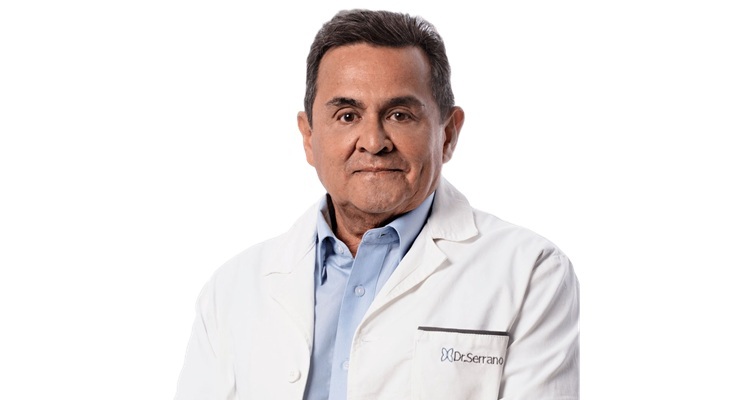
Professor Dr. Gabriel Serrano, Founder, Sesderma shares insights on how global formulations may not always address the needs of Indian skin types, why precision dermatology and delivery can address these gaps and why in an email interaction with Viveka Roychowdhury


How do Indian skin types and physiology differ and where do global dermacosmetic formulations, even though some may be innovative, fall short?
India is not one skin type. There is enormous diversity in phototypes, pigmentation, climate, humidity and individual skin behaviour. However, in Indian and other Asian skin, pigmentation disorders such as melasma and post-inflammatory hyperpigmentation are particularly important, and inflammation or procedures can sometimes leave pigmentation behind.
This is where a global formulation can fall short: it may be scientifically excellent, but not necessarily designed around the specific biology and daily environment of Indian skin. We must formulate according to the skin need, not simply according to geography or marketing trends. In India, I would pay particular attention to pigmentation, photoprotection, barrier integrity, sensitivity and tolerance. The same active, at the same concentration and delivered in the same way, does not necessarily produce the same result in every population.
For me, the future is precision dermatology: understanding the individual skin and adapting the formulation, delivery system and regimen accordingly.
Why does formulation science matter when it comes to dermocosmetics?
Because an ingredient on an INCI list is not the same thing as an effective treatment. This is one of the most important lessons I have learned during my career. You can have an excellent active ingredient, but if it is unstable, poorly delivered, released too quickly, or present in a formulation that irritates the skin, the final result may be disappointing.
Formulation science connects the active ingredient with the biological target. We have to understand the molecule, its concentration, stability, compatibility, penetration, release and interaction with the skin. This is why I have always considered delivery technology fundamental. At Sesderma, we use nanotechnology and liposomes to encapsulate active ingredients, with the aim of improving their penetration, stability, efficacy and tolerance.
Dermocosmetics should not be “magic in a jar”. They should be the result of dermatology, chemistry, biology, technology and clinical experience working together. That is what transforms an interesting ingredient into an effective formulation.
India’s consumers are now educating themselves and moving from blindly following trends and fads to asking for evidence-based solutions to support label claims. How has this changed the dermacosmetics business model for researchers, developers and manufacturers?
This is a very positive evolution. An educated consumer is demanding something that dermatologists have always demanded: evidence. We cannot build the future of dermocosmetics on fashionable ingredients or attractive packaging. We must demonstrate that the active ingredient is stable, that it reaches the skin where it is needed, that the formulation is well tolerated and, most importantly, that it produces a measurable benefit.
For researchers and manufacturers, this changes the entire development model. Research must begin with a real dermatological problem and continue through formulation, delivery technology, safety and clinical evaluation. At Sesderma, this philosophy has always been important because we came from dermatology and from the needs of patients. Our collaborations with universities, hospitals and research centres reflect this approach.
Consumers today are asking the industry to be more transparent. I see this not as a challenge, but as an opportunity to raise the scientific standard of dermocosmetics.
Most consumers, at a minimum, want ‘Clean Beauty’ products. What are the other asks: personalisation, etc.? What are the latest consumer trends in skin care formulation science?
Clean beauty is important, but consumers increasingly want something beyond a clean ingredient list: they want results, tolerance, transparency and personalisation. They want products that understand their skin rather than simply products that follow a trend.
I see several important developments. First is personalised skincare, with formulations and routines organised around individual concerns such as pigmentation, ageing, sensitivity, dehydration or acne. Second is skin-barrier science: consumers increasingly understand that an effective product must also respect the skin. Third is biotechnology, including exosomes and other advanced biological systems. Fourth is intelligent delivery, because the active ingredient alone is not enough; we must control how it reaches the skin.
There is also growing interest in multifunctional formulations that combine several complementary benefits without unnecessarily increasing irritation. At Sesderma, we increasingly think in terms of the skin’s needs rather than simply the product category. That is where personalisation becomes meaningful.
What are the next-generation drug delivery modes in skincare products and dermocosmetics?
The future will be about precision delivery, and not simply putting more active ingredients into a cream. We need to transport the right molecule, in the right concentration, to the right biological location and release it at the right time.
We have already seen the importance of liposomes and nanotechnology. At Sesderma, we began applying NANOTECH technology in 2008, using liposomes to encapsulate active ingredients and improve their delivery into the skin while maintaining good tolerance.
The next evolution is biotechnology. Exosome-based systems are particularly interesting because these small vesicles are involved in communication between cells and can transport biological molecules. Sesderma has developed EXOSES using Lactobacillus-derived exosomes.
I also see significant potential in functionalised carriers, targeted delivery, biomimetic systems, microneedling-assisted delivery and regenerative approaches. The objective is always the same: more precision, greater efficacy and better tolerance.