

Enhancing visibility, predictability and transparency in IP procedures
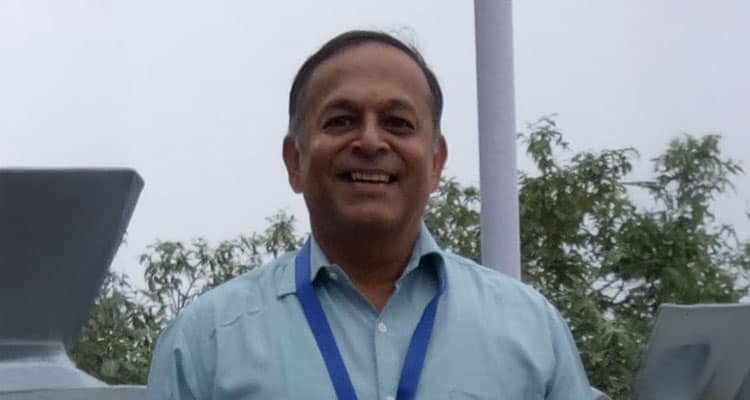
Milind Sathe, Vice President -IP and Tech, Themis Medicare, explains how certain robust search and tracking facilities can enhance the efficiency at the Indian Patent Office, thereby inspiring greater confidence among domestic and international stakeholders


India embraced the knowledge economy when it became party to the TRIPs Agreement, subsequently amending its legislation to align with international norms. Yet, more than three decades since the adoption of TRIPs, there remains considerable scope to improve the visibility, predictability and transparency of procedures within the country’s intellectual property (IP) offices.
The Indian Patent Office currently offers a patent search facility. However, it lacks key features—most notably, the ability to search within the ‘claims’ section, often the most critical element of a patent application. The existing interface primarily supports searches based on some aspects of technical data through options of “complete specification” and “abstract”, and some bibliographic data such as inventor and applicant names, and application or filing dates. While this provides some insight into the applications lodged, users often find that structural formulae are not displayed, and the facility overlooks essential aspects such as claims. The existing facility fails to display the progress of the patent application stage-wise and duration-wise with accountability.
To further increase transparency, it is imperative for the Indian IP Office—particularly the Patent Office—to enhance its search capabilities. In addition to basic bibliographic information, the search module should enable users to track the progress of individual or grouped patent applications from filing or PCT entry to the final grant or refusal. Importantly, the software should illustrate the duration that applications spend at each stage, flagging periods of inactivity and providing contextual reasons for any delays, such as file transfers between offices for internal compliance.
Furthermore, the platform should provide detailed, stage-wise timelines: the time taken for examination, issuance of the First Examination Report (FER), response to FER, review of FER responses, and communication of grants or rejections post-review. By mapping the complete journey of one or multiple applications—from filing through to the grant or refusal, with explicit durations at each milestone—the system would significantly improve both predictability and accountability.
Advanced search fields—such as customisable filtering by date ranges or field of invention—could help applicants narrow hits or output by system to their queries, while the ability to track the status and movement of applications in real time would greatly benefit both inventors and legal practitioners.
Similar enhancements could also be introduced in offices handling other forms of IP, further harmonising and modernising India’s IP infrastructure.
Ultimately, a system capable of providing granular details about application status, delays, and accountable parties would represent a major step toward full integration and digitisation of patent office procedures. For applicants and inventors, clear insights into processing times and application status are essential, especially when applications are delayed without adequate response from the office, despite repeated inquiries. Depiction of the number of days the application was held up at a particular stage or mention of the concerned designated executive would also help to improve the efficiency of the office by appropriate deployment or redeployment of resources.
Implementing such robust search and tracking facilities would dramatically enhance the visibility, transparency and efficiency of the Indian Patent Office, thereby inspiring greater confidence among domestic and international stakeholders. In raising the bar for predictability and operational visibility, India’s IP offices can further solidify their reputation on the global stage.
