

Beyond scale: Rethinking new frontiers in building excellence
At the Injectable Innovations Conclave 2026,hosted by Express Pharma, industry leaders examined the trends, technologies and strategies shaping the next phase of injectable growth, reports Neha Aathavale

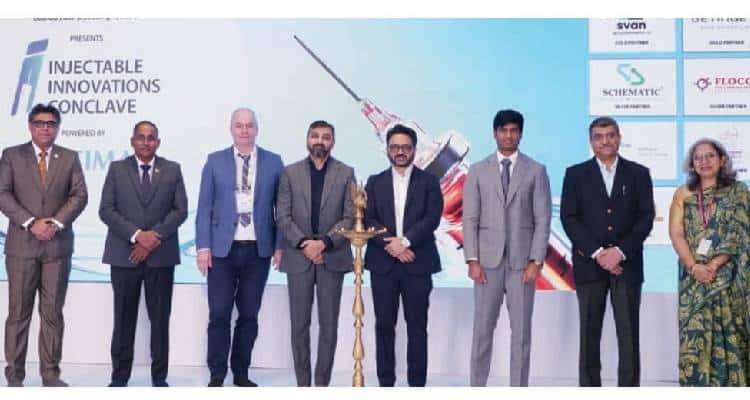

Hyderabad played host to a room full of hard questions as Express Pharma brought back the second edition of the Injectable Innovations Conclave last month. Injectables, once a specialised corner of formulations, are now moving to the centre of India’s pharma growth story. The shift is already visible, but like in every other segment of pharma, the conversations returned to a familiar and almost unanimous refrain that the industry has been circling for a while now, that growth alone is no longer enough.
Built around the theme, ‘The new frontiers in injectable excellence’, the discussions stayed grounded in current realities. A market projected to reach $7.6 billion by 2033 comes with rising expectations. Regulatory scrutiny is tightening, import dependencies persist, and gaps in areas like biosimilars and oncology injectables remain. The conclave brought these threads together to examine what it will take for Indian players to move from just volume driven growth to credibility built on quality, capability and consistency.
Reframing India’s injectable identity
Momentarily stepping back from the immediate pressure points, the keynote address brought the bigger picture into focus, shifting the lens from current challenges to the identity of India’s injectable ecosystem.
Dr Raches Ella, CDO, Bharat Biotech, centred the address on a question the industry can no longer avoid. India’s healthcare model has been built on affordability through generics and biosimilars, but the next phase cannot rely on cost advantage alone. Affordability, he emphasised, must come from innovation, not replace it.
From there, the focus moved to what this shift requires. Dr Ella called for India to evolve into a platform technology hub, building strength in mRNA, biologics, immunotherapies, rare diseases and personalised medicine. He also pointed to a persistent gap between strong manufacturing and weaker early-stage research and clinical translation.
Drawing from Bharat Biotech’s approach, he stressed the need for original, platform led innovation with the confidence to develop and supply novel vaccines globally. The broader shift was clear. India must move from being the world’s pharmacy to an innovation partner, where scale is matched by scientific depth and long-term value.
Building the next decade of injectables
If the keynote zoomed out to define direction, the next conversation brought the focus back to execution, where that ambition is tested.
The first panel discussion, ‘The next decade of injectables: Science, scale and new therapies’, was moderated by Viveka Roychowdhury, Editor, Express Pharma. It also featured industry stakeholders Ankur Shah, Founder & Chairman, Invengene, Atul Shastri, President – Global Operations, Eugia Pharma Specialities, and Raja Bhanu, DG, Pharmexcil, who discussed the key idea that the next phase of growth will depend as much on how products are built as on what is built.
A major theme was the need for early collaboration and globally scalable product design to de-risk investments and secure long-term partnerships. The experts highlighted that success will hinge on how smoothly products move from bench to floor, with manufacturing and supply chain considerations built in from the start.
This also brought up a structural gap. While India has strong manufacturing infrastructure, its R&D ecosystem is still evolving. The disconnect between lab and large-scale production is often where compliance and sterility challenges emerge.
Technology is beginning to shift this. AI, machine learning and IoT are being used to reduce human error, strengthen sterility assurance, and compress timelines, though human expertise remains central to quality. There was also clear curiosity around AI, with several attendees raising questions on its real-world applications, signalling a shift from interest to intent.
The discussion closed on a strategic note. With rising geopolitical uncertainty, building self-reliance through stronger domestic networks is becoming essential, even if gradual. The consensus was clear, the groundwork for this shift needs to begin now.
Rewiring execution
From broader questions of scale and collaboration, the sessions moved into the granular layer of execution.
A key theme was how manufacturing itself is being rethought. Vishal Wagh, Director, Adam Fabriwerk, highlighted modular ‘superskids’ as fully integrated, pre-tested systems that improve efficiency, compliance, and scalability. He pointed to gains in speed, cost, and risk reduction through off-site construction and parallel execution, alongside better sterility control in automated, controlled environments.
This tied into the growing complexity of manufacturing. Thomas Bühler Heinrich, Director Sales Africa, Middle East & Asia, Optima Pharma GmbH, noted that advanced containment systems like isolators and RABS are becoming regulatory expectations, while diverse packaging formats are adding operational challenges. He also stressed tighter control over aseptic environments, including airflow and visualisation studies, as critical for compliance.
From systems, the focus shifted to delivery. Birendra Kumar David, CTO, Graviti Pharmaceuticals, spoke about the rise of device-based formats, with pre-filled syringes, auto-injectors and pens now making up nearly 55 per cent of the market. Driven by home healthcare and patient convenience, therapies like biologics and GLP-1 are increasingly designed for subcutaneous, device-led delivery, requiring early integration of design, fill-finish, and supply chain planning.
Quality, in parallel, is evolving. Shaunak J Dave, CEO & MD, Antares Vision Group, highlighted rising recalls linked to sterility issues and the push for advanced inspection systems. End-to-end traceability, supported by serialisation and AI-driven inspection, is improving transparency and reducing errors, while technologies like VDLD-PDLD and integrated AVI systems enable precise, non-destructive testing.
Bringing these strands together, Dr Vellaian Karuppaiah, COO, Acme and Immacule Group, stressed that technology alone cannot ensure quality, culture plays an equal role. Ownership, discipline, and accountability remain central, alongside a shift from reactive to predictive, data-driven systems. His key point was clear, scale without capability does not create advantage, it amplifies risk.
Rethinking sterility beyond checklists
From systems, design, and delivery models, the focus returned to the layer that quietly holds injectables together: how sterility is defined, maintained, and demonstrated as regulatory expectations continue to tighten.
The panel discussion, ‘Sterility & compliance 2026: What global regulators expect today’, moderated by Rashmi Ranjan Patra, Technical Advisor, brought together Soumya Kumar Panda, Sr VP – Operations, Mankind Pharma, Rakesh Kumar Sinha, Sr VP & Head-Drug Product Manufacturing, Biological E., Pradipta Kumar Swain, COO, Innoxel Lifesciences, Nirvesh C Prajapati, Sr GM, Aspiro Pharma – Specialities (Hetero Group), Pavankumar R Gudi, Manager – Viral Vaccines, Serum Institute of India, and Kinshuk Roy, GM – Quality Assurance, Eugia Pharma Specialities. The core message was clear: compliance is no longer a checklist, it has become an operating system.
From that baseline, the discussion moved to how sterility is managed in practice. A key shift is the move from isolated SOPs to a connected, science-led Contamination Control Strategy, with ownership extending beyond quality to design, operations, and manufacturing.
This ties directly to data integrity. Weak data leads to weak sterility assurance, making digital, real-time systems essential. The shift is towards continuous monitoring that reduces blind spots and prevents risks from escalating.
At the same time, regulatory behaviour is evolving. With unannounced inspections on the rise, especially in India, the expectation has moved to always-on readiness. Compliance can no longer be reactive, it must be built into daily operations.
Experts highlighted that this is also reshaping quality culture. It is no longer confined to documentation but visible in operator behaviour, deviations, and decisions, all under audit scrutiny. Cultural gaps are now as critical as system gaps.
On the manufacturing side, technologies like isolators, RABS, and automation are becoming baseline expectations. Their role in managing high risk sterile processes is now central.
Yet a consistent reality remains, pointed out the panelists. Most contamination events stem from human intervention. Reducing these through better design, automation, and training is key to minimising risk at the source.
Even with advancing technology, the panel aligned on one point. Risk can be reduced, not eliminated. Human behaviour still defines outcomes, making the real shift one of designing systems where the right actions happen by default.
Engineering sterility across systems and scale
As the day progressed, the focus shifted deeper into the core building blocks of sterile manufacturing, where control, design, and technology increasingly shape how injectables are developed and safeguarded.
Across the solo sessions, a clear thread emerged: sterility is no longer something proven at the end, but something engineered from the start across systems, equipment, and human touchpoints.
A sharp framing of this came from Enoch Daniel, Director, Svan Analytical Instruments, who noted that contamination control remains one of the biggest regulatory gaps today, with most FDA warning letters tracing back to failures in this area. He mapped risk across four key exposure points, air, indirect contact parts, interventions, and system design, stressing that the challenge is not lack of technology but inconsistent control in how it is applied. His emphasis was on a shift from detectionled approaches to design-led prevention, where the aim is to eliminate the possibility of contamination itself.
That idea of removing risk at the source extended into aseptic transfer systems. Taabish Siddiqui, Product Manager (Sterile Transfer), Getinge, highlighted human intervention as a major contamination risk, with Annex 1 accelerating the shift towards gloveless, automated systems that eliminate manual touchpoints in critical zones. He noted that modern aseptic transfer solutions are now expected to deliver sterility, efficiency, and compliance together, enabling a more integrated approach without trade-offs.
From system design, the conversation moved into formulation complexity. Mr Daneshwar Kumar, Head – MSAT, Dr Reddy’s Laboratories, spoke about the rise of nano and liposomal injectables, where improved targeting and bioavailability bring significantly higher manufacturing complexity. He emphasised that critical quality attributes such as particle size, drug loading, and stability directly determine outcomes, while tightly linked unit operations mean even small variations can affect final product quality. This makes scale-up highly dependent on strong alignment between CPPs and CQAs.
Reinforcing the importance of upstream control, Lenin Babu N, MD, Omega Scientific Instruments, underscored a simple principle: sterility is designed, not tested. He pointed out that final testing cannot assure sterility, as outcomes are determined by design choices, process control, and execution discipline. He also highlighted that gaps in capability inevitably surface as variability on the floor, making end-to-end integration across design, fabrication, and automation critical to reducing inconsistency in sterile manufacturing.
The discussion then extended into digital transformation. Sridhar Balasubramanian, Head Quality – Sterile / Parenteral, Dr Reddy’s Laboratories, highlighted how digitalfirst, automated operations are reshaping injectable manufacturing by improving process control, reducing human intervention, and strengthening regulatory compliance. He pointed to isolator-based systems, integrated platforms, digital records, review-by-exception models, and end-to-end traceability as key enablers of a more consistent and future-ready manufacturing ecosystem.
Moving past generics
Until this point, the focus was on getting the systems right. This discussion shifted the lens to what comes next, and whether the industry is ready to move beyond generics into more complex segments.
The panel discussion, ‘Beyond generics: Moving into complex injectables, oncology and biosimilars’, moderated by Ranjan Chakrabarti, Independent Consultant – Biopharma & Drug Discovery, brought together Dr Shubhadeep D Sinha, Sr VP, Head – CD&MA, Hetero Drugs, Tridip Mazumder, AVP – Strategic Sourcing – Packaging Material, Dr Reddy’s Laboratories, Girija Prasad Patro, AVP, Eugia Pharma Specialities, Dr Khalid Akhter Ansari, Sr Director R&D, Technical Operations, Rising Pharmaceuticals, and Munindra Roy, AGM – Packaging Development, Gland Pharma. The discussion made it clear that the global market has already moved past generics, and India needs to accelerate its shift to keep up.
A key concern was capability gaps, especially the shortage of specialised talent to interpret complex analytical data. As products grow more sophisticated, this is emerging as a critical bottleneck, affecting both timelines and regulatory readiness.
This transition is also being shaped by evolving therapies. In oncology, biotherapeutics have moved from adjunct use to frontline treatment, replacing traditional chemotherapy. This shift brings added demands on development and manufacturing precision.
At the same time, biosimilars continue to expand access and affordability, even as price erosion tightens margins and raises questions around long term sustainability.
Patient behaviour is also shifting. Wider adoption of GLP-1 therapies has increased acceptance of injectables, with visibility and cultural familiarity helping normalise the route.
Looking ahead, the panel noted that while diabetes and obesity have dominated focus, other endocrine areas such as thyroid may regain traction as exclusivity periods end and pricing stabilises.
Overall, the discussion reflected a sector in transition, where moving beyond generics depends not just on entering complex segments, but on building the capability and depth to sustain that shift.
Positioning India as a global CDMO partner
The final discussion of the day brought the focus to where all of this is headed, India’s position in the global injectable landscape and what it will take to strengthen its role as a CDMO partner.
The panel discussion, ‘India as an injectable hub: Growing CDMO strength and global partnerships’, moderated by Venkatanarayan V, Ex-VP & Specialist – Digital & OE, Dr. Reddy’s Laboratories, brought together Sandip Tarate, MD & COO, Tiefenbacher Group, Mahabubi Shadick, President – Quality, Bharat Biotech International, Arvind Kushwaha, VP – Quality, Kemwell Biopharma, Dr Alagumurugan Alagarswamy, Head – Complex Injectable & Ophthalmics, Alembic Pharma, Balasubramanian M, Director – MSAT & Validations, Pfizer, and Veeraraju Nalla, Sr GM – Quality, Gland Pharma. The discussion reflected a sector that has made visible progress, but is now being measured against a higher global benchmark.
One clear marker of this progress is compliance, with OAI rates dropping from 19 per cent in 2013 to 8 per cent in 2025. This improvement is now expected to translate into stronger global positioning, especially as companies look to diversify supply chains.
In that context, the China+1 strategy came into sharper focus. The panel highlighted its role in building resilient supply networks, supported by multiplant and multi-source models, safety stocks, and real-time digital planning for better demand visibility.
Beyond supply chains, the discussion turned to capability building. To compete globally, India needs stronger end-to-end CDMO capabilities, reduced external dependencies, and more standardised policies for advanced therapies.
Technology is central to this shift. Adoption of advanced sterile systems, closed environments, and digitalised fill-finish platforms is increasingly becoming a baseline requirement for global partnerships and consistent quality.
At the same time, regulatory alignment remains a gap. The need for clearer, more progressive frameworks, especially for biologics, was highlighted to better align with global standards and accelerate approvals.
The conversation also widened to the broader ecosystem, including clinical capabilities, advanced technologies, and incentives required to drive innovation and competitiveness. Alongside this, CDMO models themselves are evolving towards data-driven operations, simulations, and risk- and profit-sharing approaches to improve efficiency and cost structures. Taken together, the discussions point to a clear direction. India’s ambition to become a global injectable hub will rest not just on manufacturing strength, but on how effectively it brings together capability, policy, technology, and partnerships into a cohesive, future-ready ecosystem.
