

Automation, digitalisation, and integrated workflows are redefining India’s life sciences landscape
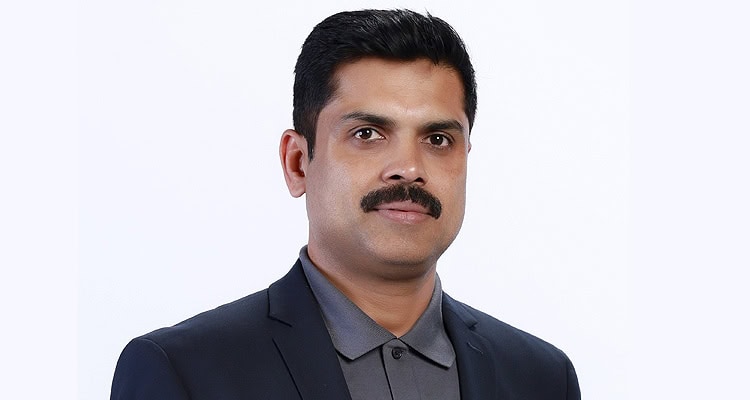
Nandakumar Kalathil, Country General Manager – India, Agilent Technologies, shares insights into Agilent’s performance, strategic investments, and long-term vision for the Indian market. He discusses key industry trends, the growing role of automation, digitalisation, and AI, and how Agilent is strengthening local capabilities through solution centres, innovation hubs, and sustainability-driven initiatives, in conversation with Swati Rana


How has the year (2025) been for Agilent in the pharma sector?
Although we are nearing the end of the calendar year, we are at the start of our fiscal year, as our fiscal closes in October. From that perspective, FY2025 has been a fantastic year for us—not just in terms of performance, but also in terms of the initiatives we have seeded to fuel long-term growth in India.
We have made multiple investments aimed at accelerating innovation in the country, and these are paying off. We are seeing robust growth across pharma and biopharma, driven largely by increased investments in innovation. Customers are shifting toward high-value, complex solutions that require advanced technologies, and we have focused our investments on turning technology into real capabilities. This has helped us expand market share and capture the right opportunities. As an example, our recent investments in the India Solution Center and the Biopharma Center are strengthening our ability to address evolving customer needs. As we enter FY2026, we see these growth drivers continuing, and India is well prepared to support this momentum.
What major market trends and challenges are you observing in India’s life sciences markets, and how is the company addressing them?
The Indian life sciences and analytical market is evolving faster than ever, driven by strong macroeconomic fundamentals and increased technology adoption across laboratories. Growth in pharma and biopharma is being driven by innovation and increased investment in R&D, while applied markets are seeing growth through lab modernisation and the need for advanced analytical capabilities.
At the same time, supply chain resilience and the need for faster innovation— without compromising quality—remain key challenges. This is where automation, digitalisation, and integrated workflows play a critical role. By accelerating scientific progress through these approaches, we help labs meet growing demands more efficiently and reliably. Our India Solution Center further strengthens this by enabling end-to-end workflow demonstrations tailored to local requirements.
What is Agilent’s long-term strategy for the Indian market, and how do recent investments such as solution centres support this vision?
Our intent in India is very clear—we are here to play the long term. Innovation is at the core of our strategy, whether it’s product innovation, capability building, or solution development. For India specifically, localisation is a major focus. Our investments in FY2025 were aimed at building local capabilities while ensuring global-quality standards.
The India Solutions Center in Manesar, for example, is a hub for strategic innovation and enables us to deliver tailored solutions based on what Indian customers actually need. Similarly, the Biopharma Center of Excellence in Hyderabad allows customers to experience real lab scenarios, whether driven by regulatory requirements or technology adoption, before they invest.
How important is R&D and innovation to the company, and how are you investing in this area?
Innovation spans across every part of our organisation. We reinvest a significant portion of our earnings into research and development. This has resulted in the launch of advanced products such as our Infinity III LC systems equipped with InfinityLab Assist Technology, which provides predictive feedback and enhanced automation.Infinity III Advanced HPLC systems, which are future-ready and embedded with AI-driven predictive capabilities.
We have also introduced new LCMS platforms and advanced consumables designed to deliver more reliable analysis. Beyond products, our investments extend to infrastructure development, talent acquisition, and digital transformation. Innovation is not just about products—it’s about converting those products into end-to-end solutions for our customers.
What are the key growth drivers for the pharma and biopharma sectors today?
It’s no longer about a single product—it’s about enabling the workforce and integrating end-to-end workflows. Customers are looking to automate and optimize existing workflows to improve productivity and reliability. AI plays an important role here, not as a buzzword, but as an enabler that helps manage data, improve efficiency, and accelerate scientific outcomes.
GLP-1 therapies are gaining significant momentum globally. How is Agilent contributing in this area, particularly for the Indian market?
GLP-1 represents a major growth opportunity for biopharma labs, and we have proactively built the capabilities required to support this segment. We offer complete end-to-end workflows tailored to labs at different stages—from early adopters to mature facilities that need compliance-ready solutions. Our approach combines scientific solutions with flexible business models, ensuring startups can scale quickly while advanced labs can meet regulatory expectations. The Biopharma Center of Experience in Hyderabad plays a critical role by allowing customers to access and experience these workflows firsthand.
Several centres have been launched in India recently. How are these centres enabling co-innovation, localisation, and deeper customer engagement?
In 2025, we made significant investments to build capabilities for Indian customers. The India Solutions Center enables integrated workflows from early research through production and quality testing. The Biopharma Center of Experience serves as an innovation hub for advanced biopharma solutions. We also inaugurated the India Refurbishment Center in Manesar in December, which delivers Certified Pre-Owned instruments and supports a circular economy through trade-in, buyback, and sustainable lifecycle programs.
We also launched India’s first Agilent Refurbishment Center, which supports a circular economy by extending the life of instruments while maintaining global quality standards. Alongside this, the India Education Center focuses on skill development, hands-on training, and competency building—for both customers and our internal teams.
Talent remains a major challenge across the industry. How is Agilent addressing skill gaps beyond internal initiatives?
Skill development is both a challenge and an opportunity. We work closely with industry leaders, research institutions, academia, and regulators to advance skills across the ecosystem. Through initiatives such as Agilent University, we offer flexible, self-paced, and lab-based training programs tailored to different competency levels. As technology evolves, skill enhancement will remain an ongoing priority, and we see it as a shared responsibility to move the ecosystem forward.
Sustainability is becoming increasingly important across industries. What role does it play in Agilent’s strategy?
Sustainability is embedded into our overall strategy. Several of our systems, such as the 1290 Infinity III LC, have earned sustainability recognition under the ACT® ecolabel program, and our global refurbishment programs support circular economy principles.All our newly launched products are My Green certified, reflecting built-in sustainability goals. Our India Solution Center and Biopharma Center of Experience are also Agcertified labs, promoting sustainable practices in daily operations. The India Refurbishment Center further supports sustainability by enabling a circular economy—extending product life cycles and making advanced technologies more accessible.
Can you share insights into Agilent’s investment focus in India and growth outlook?
Our investments in India are customer-led. We invest where our customers need us—whether in technology, capabilities, resources, or geographic reach. All investments are aligned with global standards while ensuring local accessibility. These investments are helping deepen customer partnerships, which in turn drives sustainable growth. We are also transforming internally to become more market-centric and responsive to evolving customer needs.
What will be Agilent India’s top priorities over the next five years?
Our priorities remain focused on innovation, localisation, and customer partnerships. We will continue expanding infrastructure, workflow capabilities, and organisational strength. The goal is to generate meaningful outcomes—new solutions, faster innovation, and deeper collaboration with customers across pharma, biopharma, applied markets, and advanced diagnostics.
How is Agilent strengthening its presence in advanced diagnostics?
We offer cutting-edge technologies and solutions that support next-generation diagnostics and cancer research. Our platforms are empowering advanced research and diagnostic workflows, helping labs move faster and deliver more precise outcomes.
Looking ahead, how do you see Agilent India’s growth trajectory shaping up over the next two years amid evolving pharma and biopharma demand?
Independent industry forecasts indicate that India is poised to remain the fastest growing instrumentation market globally. We also see companies in India accelerating capital investments to build local manufacturing and analytical capabilities. This shift is creating sustained demand for advanced analytical tools, quality-control systems, and bioprocess technologies across the value chain.
Given these sectoral tailwinds and India’s continued infrastructure investments, we expect India to remain one of the most dynamic and strategic growth engines for Agilent globally. Our focus will be on deepening customer partnerships, expanding local capabilities, and delivering lifecycle-driven solutions that support India’s expanding scientific and industrial ecosystem.
