

AAPI, Cadila Pharma host forum on Ayurveda’s role as an integrated solution in modern medicine
Participants discussed how Ayurveda’s emphasis on prevention and lifestyle modification could complement modern medicine

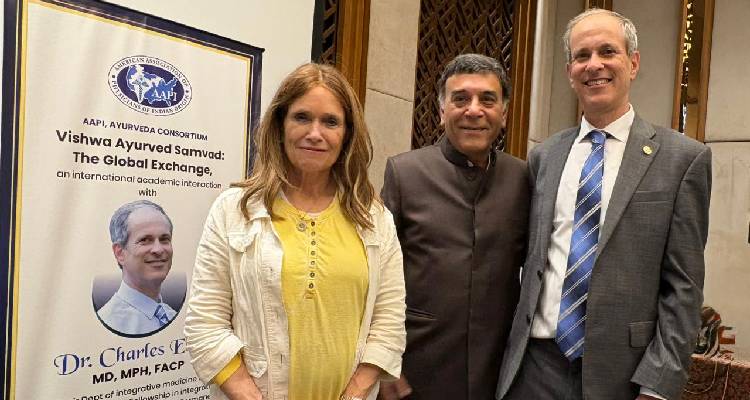

The American Association of Physicians of Indian Origin (AAPI), in collaboration with Cadila Pharmaceuticals, organised “Vishwa Ayurved Samvad”, an academic forum aimed at advancing dialogue on the role of Ayurveda as an integrated solution to rising healthcare costs and challenges in the United States.
The forum focused on the increasing economic burden of healthcare in the US, where spending has reached nearly 18 per cent of GDP, driven by chronic diseases, complications and the high cost of treatment. Participants discussed how Ayurveda’s emphasis on prevention and lifestyle modification could complement modern medicine and help reduce long-term healthcare costs, while improving patient outcomes.
Dr. Charles Elder, a global pioneer in integrative medicine and Executive Director of the Fellowship in Integrative Medicine and Ayurveda at Maharshi International University (MIU), said, “We have learnt how Ayurveda can be integrated with modern medicine to achieve better outcomes for patients. Our mission is to transmit this knowledge in a structured and scientific manner, showing how Ayurveda and contemporary medicine can work together for the best results.”
“In the United States, it is essential that licensed physicians are trained to understand authentic Ayurveda, and for that we need strong resources, collaborators and institutional support. We are encouraged by the growing interest and are close to finalising formal frameworks that will help take this work forward,” he added.
Dr. Amit Shah, Chairman of AAPI’s Ayurveda Consortium, said the initiative was driven by the urgent need to rethink healthcare delivery in the US amid rising costs.
“Healthcare costs in the US continue to rise, while complications from purely intervention-driven approaches remain a concern. This is not a debate of Ayurveda versus allopathy. Our focus is patient well-being, irrespective of medical discipline. If something works and benefits the patient, it should be part of care. Just as yoga has seen widespread adoption in the US over the last 15-20 years, Ayurveda has the relevance to become an integral tool in holistic treatment,” he said.
He said the Consortium is working on the three pillars of education and training, research, and quality product development.
“Ayurveda’s strong preventive focus can significantly reduce healthcare costs over time. This is not about sentiment or heritage. Integrated science has become a necessity. There is also a significant opportunity for high-quality, well-researched Ayurvedic medicines in the US,” he said.
During the discussions, participants noted the challenges posed by contamination and quality variations in some products, and called for a multi-pronged approach involving regulators, industry and the medical community. In this context, a state-level working group, comprising allopathic and Ayurvedic practitioners, research scientists and industry players, has been formed in Gujarat. The group will work towards the development of high-quality, globally acceptable Ayurvedic products and integrated healthcare practices.
Dr. Manjul Joshipura, President of Cadila Pharmaceuticals, said, “For Ayurveda to gain wider acceptance internationally, particularly in regulated markets like the US, ensuring quality and safety of medicines is critical. Industry, academia and medical professionals must work together to strengthen standards and build trust, so that the true benefits of Ayurveda are not undermined by quality concerns.”
The session was attended by Ayurvedic scholars, experts, and leading practitioners of both allopathy and Ayurveda.