

Zydus Lifesciences hosts health symposium on new WHO influenza vaccination guideline for Northern Hemisphere 2025-26
Zydus Lifesciences convenes healthcare professionals in Bengaluru to discuss WHO’s updated influenza vaccination recommendations and India’s vaccination needs

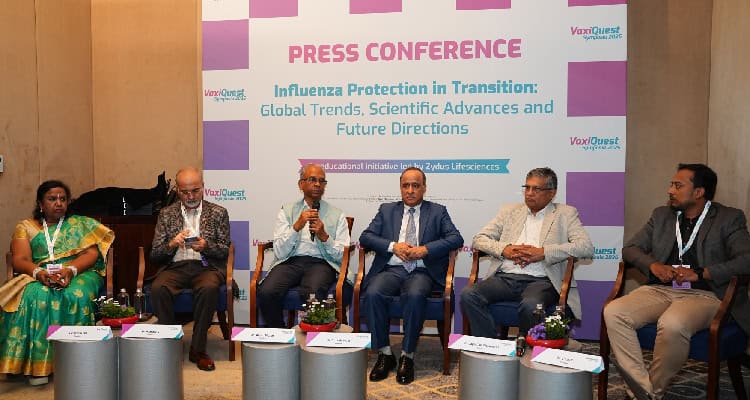

Zydus Lifesciences, including its subsidiaries and affiliates hereafter referred to as “Zydus,” held a health symposium in Bengaluru to bring together healthcare professionals who discussed the transition to a new influenza vaccination guideline as recommended by the World Health Organisation (WHO) for the Northern Hemisphere 2025-26.
Global influenza continues to be a public health concern, causing an estimated 400,000 respiratory and 300,000 deaths annually worldwide. In the United States and Europe, almost 50 per cent of the population is vaccinated for seasonal flu each year. In India, the universal immunisation programme (UIP) has countered several childhood vaccine-preventable diseases. However, influenza vaccination remains an unmet need, with less than 1.5 per cent of the population vaccinated.
Dr Sharvil Patel, Managing Director, Zydus Lifesciences, said, “Good health starts with prevention, and vaccines play a key role in protecting people and improving health. Influenza continues to pose a recurring challenge, leading to seasonal outbreaks and placing a considerable burden on healthcare systems. Vaccination plays a vital role in reducing the spread of infection, lowering the severity of disease, and preventing complications, especially among high-risk and vulnerable groups. At Zydus, we are committed to advancing preventive healthcare by promoting timely vaccination and raising awareness about its importance in controlling influenza and safeguarding public health.”
As per WHO’s 2025-26 recommendations of Northern Hemisphere strains, the persistent absence of naturally occurring B/Yamagata lineage viruses since March 2020 indicates a very low risk of infection. Consequently, the inclusion of a B/Yamagata antigen in quadrivalent influenza vaccines is no longer considered necessary. The United States Centers for Disease Control and Prevention (CDC) has excluded the B/Yamagata component from all U.S. influenza vaccines starting with the 2024–25 season. This decision reflects global surveillance data and aims to streamline vaccine composition for efficacy and production efficiency.
The National Centre for Disease Control (NCDC), India, has also recommended following the WHO guidelines to adopt the latest strain of the vaccine to prevent influenza and influenza-like illnesses. The disease affects vulnerable populations such as infants, older persons, and individuals with chronic conditions.
Seasonal influenza infections occur in India throughout the year, with peaks during the monsoon and winter seasons. Influenza causes disease and deaths annually, but estimating the number of deaths is challenging due to limited routine testing, weak surveillance, and its rare certification as a cause of death. Out of 1.27 lakh deaths attributed to influenza per year, 65 per cent occur among older persons above 65 years, and 15-20 per cent occur among children under five years. This highlights the need for annual vaccination of nationally defined target groups, with vaccine composition based on circulating strains.
Zydus, one of the largest manufacturers of flu vaccines in India, has been promoting preventive health and timely vaccination to address influenza, influenza-like illnesses, and related complications in high-risk groups within vulnerable populations. Influenza is a contagious respiratory illness caused by influenza viruses that spreads mainly through airborne respiratory droplets from coughing and sneezing, or through direct contact with infected surfaces or individuals.