

FOPE & PharmaState Academy hosts session 15 PULSE Program
This session highlighted industry best practices in change control & deviations under Revised Schedule M

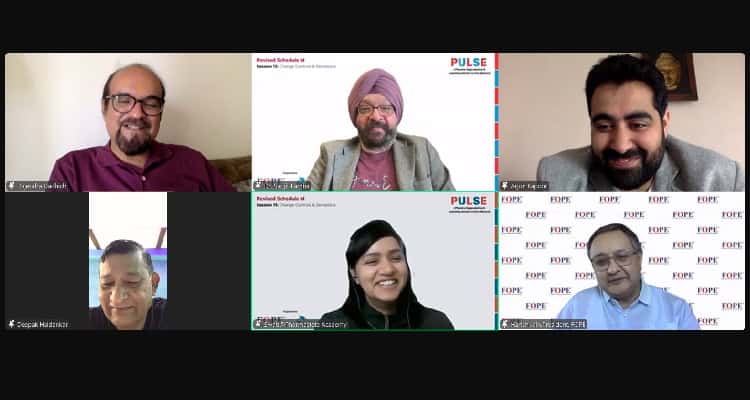

The Federation of Pharma Entrepreneurs (FOPE) and PharmaState Academy successfully hosted Session 15 of the PULSE (Pharma Upgradation & Learning Series for Excellence) initiative, focusing on Change Control & Deviations under the Revised Schedule M Guidelines. The session witnessed participation from a large number of pharma professionals, reinforcing PULSE’s reputation as a premier industry learning platform.
Session Highlights:
The session began with an insightful keynote address by Tajber Singh, Drug Controller, Uttarakhand. Singh emphasised that quality in pharmaceuticals is not an option but an absolute necessity, as every batch produced directly impacts patient lives. He highlighted that India’s pharmaceutical industry holds a global reputation, but sustaining this leadership requires a strong commitment to compliance, transparency, and continuous improvement in managing change control and deviations. He stressed that with Revised Schedule M now mandatory, adherence is no longer a choice but a responsibility for all stakeholders to ensure high-quality pharmaceutical manufacturing.
In-depth presentation: The expert education session, conducted by Rajendra N. Dadhich, Senior VP, Corporate Quality, Ipca Laboratories. Rajendra emphasised the importance of shifting from an audit-fear mindset to a culture of compliance, urging pharmaceutical professionals to take ownership of quality systems. He highlighted that change control and deviation management are fundamental to maintaining regulatory compliance and product integrity, stressing the need for a proactive and predictive approach rather than a reactive one. He explained the difference between incidents and deviations, stating that deviations are departures from written procedures, while incidents are unplanned events, reinforcing the need for clear SOPs and proper documentation.
He also addressed the integration of computerised systems into pharmaceutical quality management and the importance of adhering to electronic compliance requirements. On Kappa checks, Dadhich explained that effectiveness should be assessed based on whether a deviation is systemic or individual, ensuring corrective actions truly prevent recurrence. He cautioned against quick fixes and encouraged thorough root-cause analysis. He emphasised the need for a proactive and predictive approach to change management and deviation control, highlighting how a compliance-driven mindset must replace the common fear of audits. The session also covered the significance of teamwork, continuous improvement, and leveraging technology to enhance regulatory compliance.
Panel discussion: Addressing industry challenges
A thought-provoking panel discussion followed, moderated by Arjun Kapoor, Additional General Secretary, FOPE, featuring:
- Dr Deepak Haldankar, Pharma manufacturing expert with over four decades of experience
- Dr Sanjit Singh Lamba, Managing Partner, Trillyum Consulting
- Rajendra N. Dadhich, Senior Vice President, Corporate Quality, Ipca Laboratories
The discussion provided crucial insights into key industry challenges, particularly around the frequency and effectiveness of CAPA checks. Dadhich explained that the frequency depends on whether the deviation is systemic or personal. Dr. Lamba emphasised that the purpose of an effectiveness check is to ensure that corrective actions successfully prevent recurrence, cautioning against quick fixes and underscoring the importance of thoughtful decision-making.
The discussion also addressed the planning and assessment involved in introducing new molecules in a facility, where the panel emphasised the necessity of a cross-functional team to assess factors such as safety, solubility, and colour. The importance of clear documentation and a structured approach to variation management, ensuring that any deviation beyond the specification undergoes thorough investigation and root cause analysis, was highlighted. The panel further explored the role of AI in pharma quality and its potential to streamline processes. However, the speakers cautioned against over-reliance on AI for decision-making, highlighting data security concerns and risks associated with sharing sensitive pharma information with AI systems.
Another key area of discussion was system confidence and change control, where Dr Haldankar and Dr Lamba emphasised the need to record and investigate incidents rather than avoid them out of fear. Dr Haldankar noted that change control should ideally be initiated by the affected department, ensuring accountability and proper documentation of the changes. The conversation also touched on the categorisation of change control, particularly for minor and major instruments in laboratories. One of the practical challenges discussed was the implementation of personal and material airlocks in small pharmaceutical companies, where the panel addressed space constraints and suggested viable alternatives such as dynamic pass boxes and modular cubicles for material transfer.
The session concluded with an interactive Q&A, and discussions that reinforced the key takeaways for participants. An announcement was made regarding a Keystone Session on Gap Analysis for Revised Schedule M Implementation, highlighting its critical importance for MSME pharmaceutical companies.
The PULSE series continues to receive strong support from leading pharmaceutical industry associations, including the Confederation of Indian Pharmaceutical Industry (CiPi), Laghu Udyog Bharati (LUB), Indian Pharma Machinery Manufacturers’ Association (IPMMA), Karnataka Drugs & Pharmaceuticals Manufacturers’ Association (KDPMA), Himachal Drug Manufacturers Association (HDMA), Federation of Madhya Pradesh Chamber of Commerce & Industry (FMPCCI), Drug Marketing & Manufacturing Association (DMMA), Rajasthan Pharmaceutical Manufacturers Association (RPMA), Pharmaceutical Manufacturers’ Association of Tamil Nadu, and Drug Manufacturers Association (DMA).
Stay tuned for updates on the PULSE initiative and upcoming sessions. For inquiries or to pre-book participation, visit PharmaState Academy’s official website.