

Vizag rising: Shaping India’s pharma future
At the Vizag Pharma Summit 2025, hosted by Express Pharma, industry leaders discussed how quality, R&D, compliance, and emerging technologies are driving India’s next phase of pharma growth, reports Neha Aathavale

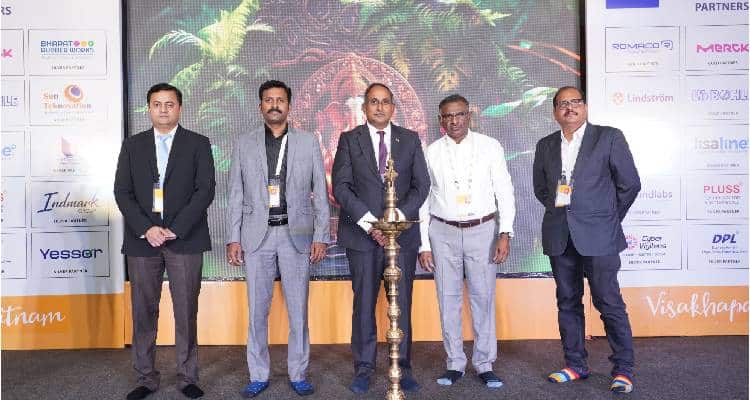

As the Indian pharmaceutical industry grapples with a defining question: What comes after scale?; the conversations in Visakhapatnam (Vizag) on December 17, 2025 offered some clear answers. At the Vizag Pharma Summit 2025, hosted by Express Pharma, industry leaders, policymakers and decision-makers came together to confront the hard realities of a sector under global scrutiny, even as it stands on the cusp of unprecedented opportunity. The message was unmistakable: cost leadership may have built India’s pharma reputation, but global excellence will demand far more rigour, innovation and long-term vision.
Held in a city fast emerging as a serious pharma contender, the fourth edition of Express Pharma’s national summit series reflected the shifting centre of gravity within Indian manufacturing and R&D. From debates on policy direction and supply chain resilience to the push for quality-first growth and innovation beyond generics, the discussions mirrored Vizag’s own trajectory: ambitious, infrastructure-backed and export-oriented. What unfolded over the day was not just a regional narrative, but a broader blueprint for how Indian pharma must evolve if it hopes to remain relevant in a rapidly transforming global market.
Why not Vizag? A call for excellence
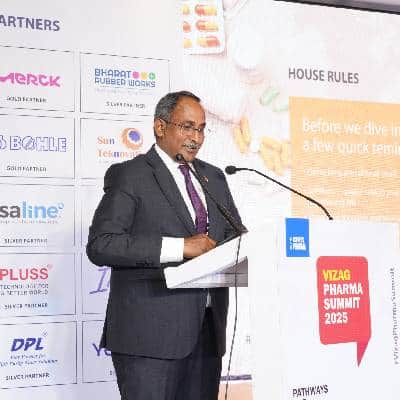
Setting the context for the day’s deliberations, K Raja Bhanu, Director General, Pharmexcil, delivered the Special Address with a clear-eyed assessment of where Indian pharma stands, and where it must go next. Pointing to the unmistakable slowdown in the plain generics growth story, he noted that the industry can no longer rely on volume-led expansion alone. The next phase, he stressed, will have to be driven by movement into more complex and differentiated territories, such as complex generics, biosimilars and innovative formulations that demand deeper scientific capability and higher execution standards.
However, market expansion without credibility, he cautioned, would be a hollow victory. Drawing a sharp distinction between economic and reputational risks, Mr Bhanu observed that while trade deficits can be managed, a trust deficit cannot. For Indian pharma, this translates into raising the bar on quality, consistency and compliance; not merely to satisfy global regulators, but to earn long-term confidence and set benchmarks of its own.
He also underlined the urgency of building a self-reliant yet globally integrated ecosystem, one that strengthens domestic capabilities while reducing strategic dependencies across the supply chain. Such resilience, he argued, would be central to sustaining competitiveness in an increasingly volatile global environment.
Lastly, bringing the spotlight back to the host city, Bhanu concluded on a decisive note: as the industry debates whether Vizag can become India’s next pharma capital, the more pertinent question, he said, is simply – why not Vizag?
Vizag’s next leap
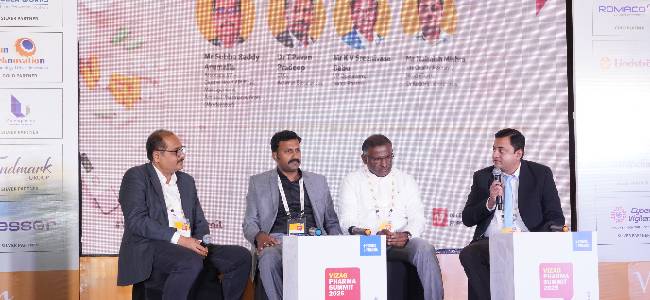
With the larger vision firmly in place, the conversation shifted from why Vizag matters to what it will take for the city to translate potential into leadership. Moving decisively from aspiration to execution, the panel discussion ‘Vizag Rising: Can it be India’s next pharma capital?’ brought together voices from manufacturing, operations, quality and leadership to examine the realities on the ground.
Moderated by Subba Reddy Arumalla, Associate VP – Cluster Head API Plant Management, Amneal Pharmaceuticals, the panel featured Dr T Pavan Pradeep, CEO, Actimus Biosciences; K V Sreenivasa Babu, VP–Operations, Natco Pharma; and Naimish Mishra, Site Quality Assurance Head–FTO11, Dr Reddy’s Laboratories. Together, they examined whether Vizag’s advantages, spanning infrastructure, land availability and ecosystem support can be translated into a sustainable, globally competitive pharma hub, or whether deeper systemic shifts are still required.
While acknowledging Vizag’s growing industrial footprint, the panellists were candid about the gaps that still need attention. Regulatory delays, infrastructure bottlenecks and process inefficiencies were flagged as challenges that could slow momentum if not addressed decisively. For Vizag to attract higher-value investments particularly in complex and innovation-driven segments the ecosystem, they agreed, must offer speed, predictability and execution excellence alongside scale
A recurring theme was talent. Building a robust, futureready workforce through targeted skill development and deeper industry – academia collaboration was seen as non-negotiable for the region’s next phase of growth. At the same time, Vizag’s availability of land was highlighted as a strategic advantage, one that could enable the creation of integrated pharma clusters capable of competing with global manufacturing and R&D hubs.
Ultimately, the panel concluded that Vizag’s success will not be determined by infrastructure alone. Sustainability, technology adoption, quality and regulatory compliance will define whether the city can sustain its ambitions over the long term. The opportunity is real, the consensus suggested—but realising it will require coordinated action, not incremental change.
From compliance to operational excellence
As the discussion moved from regional ambition to operational reality, a clear throughline emerged across subsequent sessions: global excellence in pharma will be defined by how well quality, compliance and manufacturing intelligence are embedded into everyday decision-making. The focus shifted from what India and Vizag aspire to become, to how organisations must re-engineer systems, partnerships and processes to get there.
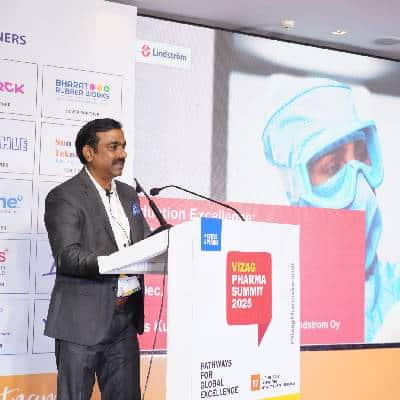
Addressing the theme of raising the bar on quality and compliance, Manas Kumar, Global Director – Pharma, Strategic Marketing and Business Development, Lindström Oy, highlighted a dimension of compliance that is often underestimated: risk mitigation through strategic outsourcing. He explained how outsourcing garment processing to specialised partners like Lindström not only reduces contamination and compliance risks, but also frees up valuable in-house capacity, allowing pharma manufacturers to focus on core operations without compromising regulatory expectations.
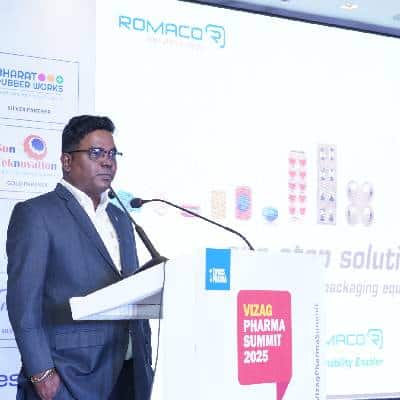
The emphasis on building resilient, end-to-end manufacturing ecosystems continued with Rajesh Sopan Sudit, AGM – Sales, Romaco India, who presented Romaco as a one-stop solution provider for both OSD and injectable manufacturing. With a comprehensive portfolio spanning processing to packaging, he underlined how integrated equipment partnerships can simplify complexity, enhance efficiency and support pharma companies as they scale up while maintaining consistency and compliance.
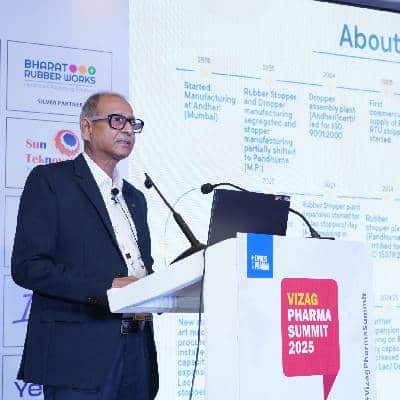
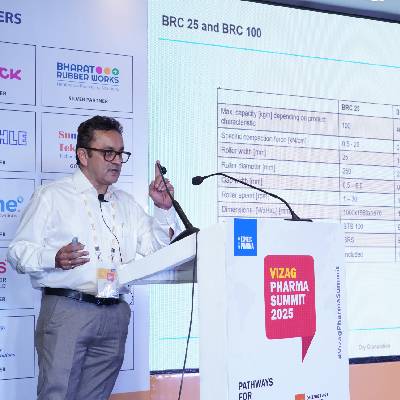
Delving deeper into the often-overlooked micro-details that can have macro implications for product quality, Nitin R Khaladkar, Head – R&D, Bharat Rubber Works, spoke on Moisture Vapour Transmission Rate (MVTR) in pharmaceutical rubber stoppers. He highlighted how innovative coating technologies that significantly reduce moisture vapour transmission can dramatically improve the stability and protection of moisture-sensitive medicines, reinforcing the idea that quality is built not just at the formulation level, but across every component of the drug product.
Process optimisation and manufacturing intelligence were further explored by Parag S Radia, Director, L.B. Bohle India, who showcased innovative OSD manufacturing solutions from L.B. Bohle, Germany. He emphasised how advanced equipment design enables faster, gentler and more consistent processing, while simultaneously lowering maintenance and operating costs, an increasingly important balance as manufacturers face pressure to improve both productivity and compliance
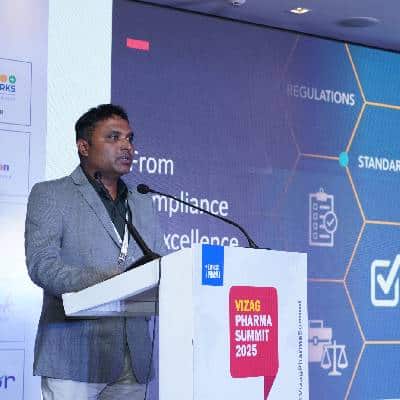
The conversation then moved from compliance as an obligation to quality as a strategic differentiator. In his session on creating future-ready quality systems, Jyothi Venkata Prasad V, Head – QA API (Site-6), Biocon, stressed that robust GMP frameworks, when combined with automation, are critical to ensuring consistent product quality, strengthening regulatory trust and safeguarding patient safety. Compliance, he noted, must evolve from a reactive checklist to an integrated, technology-enabled culture.
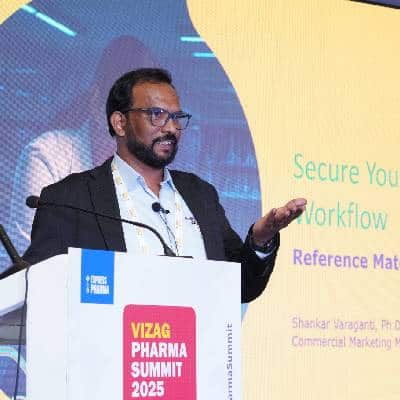
Reinforcing this theme, Dr Shankar Varaganti, Commercial Marketing Manager, Merck Life Science, addressed the role of pharma secondary standards in securing quality control outcomes. He highlighted how Merck’s fully traceable secondary standards, supported by dual traceability and dual values, help manufacturers strengthen data integrity and regulatory confidence. Particularly in increasingly complex analytical environments.
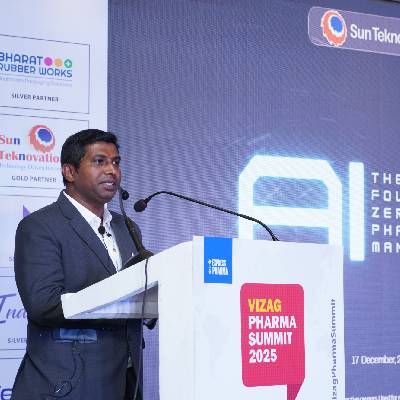
Closing this segment with a forward-looking lens, Vijay Kumar, Regional Manager – South, Sun Teknovation, explored AI as the new foundation of zero-defect pharma manufacturing. Emphasising the shift toward edge AI, he explained how AI-driven solutions can deliver real-time insights, speed and compliance without dependence on cloud infrastructure. Marking a significant step toward smarter, more autonomous manufacturing systems.
Together, these sessions underscored a central truth echoed throughout the summit: the future of Indian pharma will not be built on scale alone, but on systems that are intelligent, compliant, resilient and relentlessly focused on quality.
Roadmap to 2035
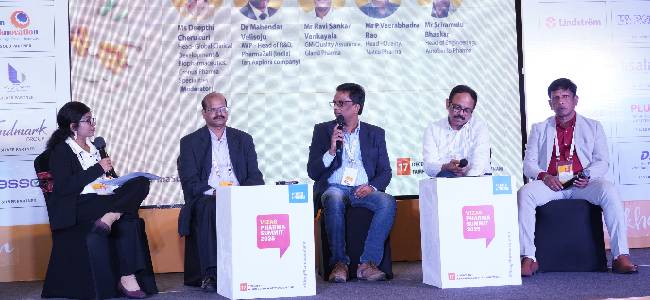
As the day’s discussions progressed, it became evident that operational excellence and advanced technologies, while essential, are only part of the equation. To sustain momentum over the next decade, Indian pharma will need clear policy direction, cross-sector partnerships and a fundamentally different growth mindset. This set the stage for the panel discussion ‘Pharma 2035: Policies, partnerships and pathways to growth’, which examined how the industry must prepare for its next chapter. Moderated by Deepthi Cherukuri, Head – Global Clinical Development & Biopharmaceutics, Cronus Pharma Specialities, the panel brought together diverse perspectives from R&D, quality and engineering. The panellists included Dr Mahendar Velisoju, AVP – Head of R&D, PharmaZell (India), Axplora Group; Ravi Sankar Vankayala, GM – Quality Assurance, Gland Pharma; P Veerabhadra Rao, Head – Quality, Natco Pharma; and Sriramulu Bhaskar, Head of Engineering, Aurobindo Pharma.
Together, they stressed that the next phase of India’s pharma journey will be defined not by volumes alone, but by R&D depth, technology adoption, infrastructure readiness and a fundamental shift in growth mindset.
A strong emphasis was also placed on patient-first thinking, which the panellists agreed must remain non-negotiable. Beyond regulatory compliance, every medicine must meet the core test of being safe, effective and accessible, with patient safety acting as the unifying thread across product development, manufacturing and quality systems. In this context, safety was discussed not just as a regulatory requirement, but as a pillar supporting the credibility of the industry itself.
Quality and compliance emerged once again as decisive factors for future growth. The panel noted that being audit ready at all times is no longer optional, it is a strategic necessity in a globally competitive and highly regulated environment. As regulatory scrutiny intensifies, organisations that embed quality into design, systems and culture will be best positioned to scale responsibly.
Looking ahead, the discussion also highlighted the importance of public–private partnerships in building a skilled, future-ready workforce. From talent development and upskilling to creating innovationfriendly ecosystems, collaboration between industry, academia and government was seen as essential. Particularly in emerging hubs like Vizag, where the foundations for long-term growth are already taking shape.
Building tomorrow’s medicines today
As conversations around Pharma 2035 laid out the strategic and policy framework for the decade ahead, the focus naturally shifted to the scientific and technological capabilities that will determine whether those ambitions can be realised. If Indian pharma is to move from value creation to value leadership, advances in drug delivery and manufacturing paradigms will play a defining role.
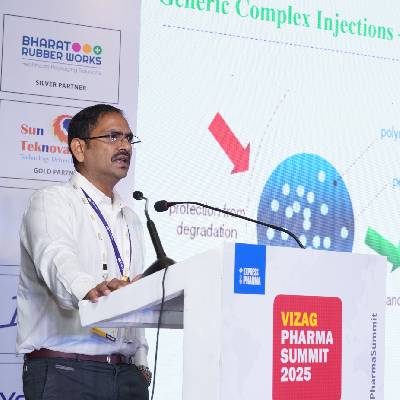
Speaking on generic complex injections, Gurupyar Reddy, Head – Production, Complex Injections, Dr Reddy’s Laboratories, highlighted how the industry’s growth trajectory is increasingly tied to its ability to master complexity. He emphasised that advanced drug delivery systems, including NDDS, are no longer optional add-ons but critical enablers of improved therapeutic efficacy, better patient outcomes and long-term differentiation. As regulatory and clinical expectations rise, he noted, capability in complex injectables will be central to the future value of pharmaceutical innovation.
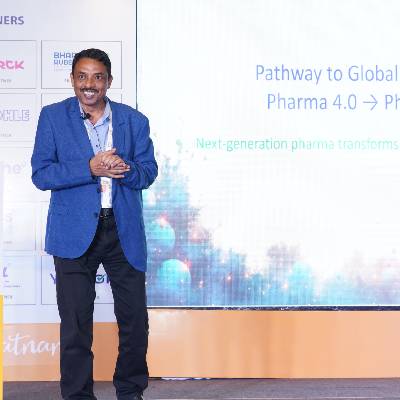
Extending this perspective to the broader evolution of manufacturing, Dr Bikash Kumar Nayak, Plant Head, Aurobindo Pharma, traced the industry’s shift from Pharma 4.0 to Pharma 5.0. While automation and digitalisation have transformed efficiency, he argued that the next leap will be defined by precision rather than scale. Leveraging rapid genomics, AI driven insights and an increasingly connected healthcare ecosystem, Pharma 5.0 represents a move toward truly patient-centric care, where manufacturing, data and clinical outcomes are seamlessly aligned.
Together, these sessions reinforced a central idea echoed throughout the summit: the future of Indian pharma will be shaped by its willingness to embrace complexity, intelligence and precision; not just capacity.
Innovation beyond scale
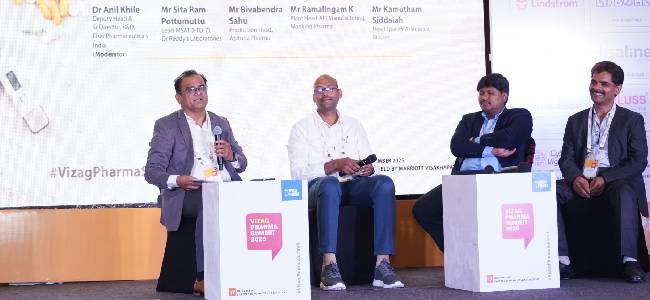
As the Vizag Pharma Summit 2025 drew to a close, the conversation returned to the question that had quietly underpinned the day’s discussions: what lies beyond generics for Indian pharma? The concluding panel discussion, ‘Beyond generics: From Make in India to Innovate in India’, brought together leaders across R&D, manufacturing and quality to examine how the industry must reorient itself for long-term relevance.
Moderated by Dr Anil Khile, Deputy Head and Senior Director, R&D, Eisai Pharmaceuticals India, the panel featured Sita Ram Pottumuttu, Lead, MSAT (FTO-7), Dr Reddy’s Laboratories; Ramalingam K, Plant Head, API Manufacturing, Mankind Pharma; and Kamutham Siddaiah, Head, Quality Assurance, Biocon. The discussion centred on how new modalities and emerging therapies are reshaping healthcare and redefining expectations around innovation, speed and patient outcomes.
The panellists were aligned in their view that future growth will not come from scale alone but from the ability to develop innovation-led therapies that address unmet medical needs. As global markets become more competitive and complex, India’s next growth curve will depend on how effectively it can translate scientific capability into differentiated, high-value products.
Technology also emerged as a critical enabler in this transition. Digitalisation, AI and automation are already opening new pathways for faster development, smarter manufacturing and data-driven decision-making, accelerating India’s innovation potential across the value chain. However, technology without strong systems risks fragmentation rather than progress. Building robust, integrated frameworks for faster drug discovery and development will be essential to maintaining global competitiveness.
Threaded through the discussion was a familiar but uncompromising message: quality must be built in by design. Sustainable innovation requires not only advanced tools and platforms but also a deep-rooted culture of excellence that places quality, compliance and patient safety at the core of every process.
Conclusion
As the summit concluded, the narrative that emerged was clear. Indian pharma’s journey from Make in India to Innovate in India is no longer aspirational. It is imperative. The conversations in Vizag demonstrated that the pathways to global excellence are already taking shape.
