

Unani Medicine: At crossroads of tradition and modernity
Manufacturers,academic institutions and research councils are working together to elevate Unani medicine through clinical validation and policy alignment with international standards, finds Swati Rana


Unani medicine has been practiced in India for centuries but in recent years, the global health and wellness trend has brought renewed attention to Unani and other traditional systems. Once viewed largely as a heritage stream of healthcare, it is now repositioning itself as a modern, evidence-driven system with aspirations for global recognition. The sector is proactively investing in analytical technologies, pharmacological studies, and clinical evaluations to build a body of data that strengthens both credibility and consumer confidence.
The industry is witnessing a significant change to further strengthen and boost the growth of Unani medicine not only in India but across globe. The three major stakeholders of the industry – manufacturers, academia and CCRUM are collaborating and exploring various initiative that would help in gaining credibility and accessibility of Unani medicine.
From traditional to modern, evidence-based products
Today, Unani stands at a transformative moment where its future is shaped not only by the weight of its tradition but also by the demands of modern science, global regulation, and discerning consumers. “Unani medicine today stands at a unique crossroads where tradition and modern science can enrich one another,” reflects Abdul Majeed, Chairman & Trustee, Hamdard. “The journey ahead is about harmonising timeless wisdom with rigorous evidence to earn both trust and global acceptance,” he adds.
Unlike earlier decades, where classical formulations were reproduced with little alteration, today’s Unani manufacturers are increasingly turning to evidence-based validation. “This shift is not cosmetic—it is strategic,” said Majeed. He further elaborated that the industry is currently focusing on credibility and accessibility to ensure Unani is scientifically validated at the same time making it affordable for wider acceptance, especially among younger, wellness-driven consumers.
To achieve this, the industry is placing greater emphasis on investment in R&D, state-of the-art quality systems, and sustainable sourcing. Majeed opines, “The next generation of consumers is not only health-conscious but also value-driven and exceptionally well-informed, seeking authentic knowledge about products and their ingredients—they expect transparency, authenticity, and ecological responsibility. By integrating GMP practices, digitised supply chains, and environmentally responsible cultivation, Unani medicine can demonstrate its relevance in a modern, wellness-driven world. The vision is clear: preserve its heritage while innovating boldly to create a global future for Unani.”
Sharing his thoughts on how academic institutions are integrating modern scientific methods in Unani research and teaching, Prof Khan Mohammad Qaiser, HOD, Tahaffuzi wa Samaji Tib (PSM), Anjuman Islam’s Dr.M.I.J.Tibbia Unani Medical College & H.A.R.K Hospital, Mumbai said, “Today’s students are learning not just Nabz (pulse diagnosis) and Mizaj (temperament analysis), but also biomedical sciences, pharmacology, and evidence-based medicine. Labs for pharmacognosy and phytochemistry are ensuring that classical formulations meet global quality standards.”
The Unani institutes are focusing on curriculum modernisation. It is integrating biomedical sciences, pathology, and pharmacology into Unani education while embedding Evidence-Based Medicine (EBM) modules to train students in critical appraisal, clinical reasoning, and research methodology. Establishing pharmacognosy, phytochemistry, and quality-control laboratories within Unani colleges to ensure safety, reproducibility, and scientific validation of classical formulations. Conducting ethics committee– approved clinical trials with robust study designs, while combining modern diagnostic tools (imaging, biomarkers, lab investigations) with traditional diagnostic methods like Nabz (pulse), Mizaj (temperament), and Baul-Baraz (urine–stool examination).
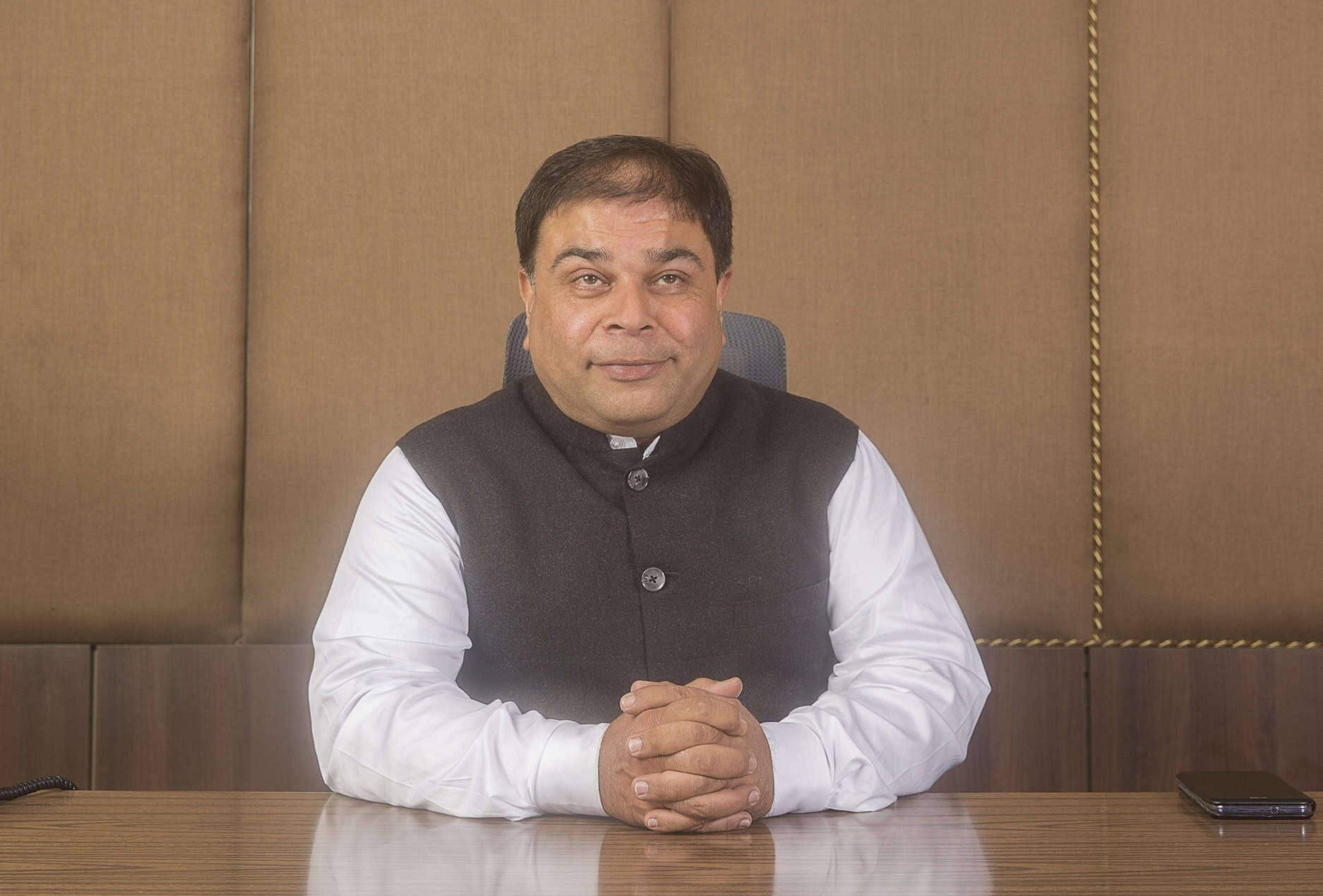
The industry is currently focusing on credibility and accessibility to ensure Unani is scientifically validated at the same time making it affordable for wider acceptance, especially among younger, wellness-driven consumers
– Abdul Majeed Chairman & Trustee, Hamdard
Current market scenario and challenges
As of 2024, the Indian traditional medicine market was valued at approximately $416 million, with a projected growth to $707 million by 2030, according to a study published by Precedence Research. The Ministry of AYUSH actively supports this growth by funding research, infrastructure, and public awareness programmes. Initiatives like the construction of new Unani colleges and hospitals, such as the 200-bed Unani Medical College & Hospital in Bihar last year, signal strong government commitment. In addition, schemes promoting herbal cultivation and AYUSH integration into public healthcare have boosted the credibility and reach of Unani treatments.
Despite all these positive trends, several challenges persist in the domestic market. These include a lack of standardisation in formulations, limited clinical validation, inadequate awareness among the public, and weak supply chains for medicinal plants. Regulatory compliance for exports also remains a hurdle, with many products struggling to meet international quality and safety standards.
On the global front, Unani medicine, though lesser-known than ayurveda or other tradition medicine, is gradually gaining recognition. It is practiced in parts of the Middle East, Southeast Asia, and among South Asian diaspora communities worldwide. The global herbal medicine market is booming and expected to surpass $580 billion by 2034, offering a large potential market for Unani products.
Global expansion faces hurdles such as varying regulatory frameworks, limited international awareness, and skepticism about traditional medicine. Intellectual property issues and the lack of standard pharmacopoeia for Unani products also restrict global adoption.
Majeed explained that these hurdles can be overcome if international expansion navigates stringent quality standards, proving safety through clinical substantiation, and overcoming the perception gap that often sidelines traditional systems of medicine. However, he views these challenges as opportunities: “Every regulatory barrier is a chance to showcase Unani’s credibility. If Ayurveda and Yoga have earned global recognition, Unani too will claim its rightful space.”
The modern consumer is both health-conscious and value-driven—demanding transparency, sustainability, and authenticity. To meet these expectations, the Unani industry is investing in state-of-the-art R&D, digitised supply chains, GMPcertified production, and sustainable sourcing of medicinal plants. This evolution is not just about product quality, but also about ecological responsibility—ensuring Unani’s growth aligns with environmental stewardship. Majeed emphasises, “We must innovate boldly, but with the wisdom to preserve nature’s balance. Only then can Unani remain relevant in a wellness-driven world.”
On the academic side, the sector is facing challenges like:
◆ Curriculum–practice gap – Overemphasis on theoretical teaching with limited hands-on clinical exposure in both Unani and integrative settings.
◆ Balancing tradition and modernity – Preserving the integrity of Unani’s classical principles while equipping graduates with contemporary skills in diagnostics, pharmacovigilance, and digital health.
◆ Regulatory and standardisation issues – Variability in enforcement of Good Manufacturing Practices (GMP), drug quality, and clinical trial standards creates hurdles for credibility.
◆ Professional identity and career pathways – Ambiguity around the role of Unani practitioners in modern healthcare, limited career opportunities, and low global visibility affect student motivation and long-term prospects.

Today’s students are learning not just Nabz (pulse diagnosis) and Mizaj (temperament analysis), but also biomedical sciences, pharmacology, and evidence based medicine. Labs for pharmacognosy and phytochemistry are ensuring that classical formulations meet global quality standards
– Prof. Khan Mohammad Qaiser HOD, Tahaffuzi waSamaji Tib (PSM), Anjuman Islam’s Dr.M.I.J.Tibbia Unani Medical College & H.A.R.K Hospital, Mumbai
Contribution of CCRUM
The Central Council for Research in Unani Medicine (CCRUM) is playing a pivotal role in shaping Unani’s future. Under the Ministry of Ayush, CCRUM has established NABLaccredited labs, introduced high-end testing technologies like HPTLC and HPLC, and rolled out a structured pharmacovigilance programme with peripheral centers across India. Dr Ghazala Javed, Assistant Director at CCRUM, explains: “Our focus is on aligning Unani with global benchmarks of quality, safety, and efficacy. From patents to clinical trials, we are building a robust scientific foundation for international acceptance.”
She added, “In recent years, the Government of India has taken several important steps to globalise the Ayush streams of medicine, positioning them as credible and evidence-based healthcare options. Ministry of Ayush has actively entered into MoUs with many foreign countries for cooperation in the field of traditional medicine. The creation of Ayush Information Cells in Indian embassies, as well as the inclusion of Ayush systems in bilateral dialogues concerning health, has further strengthened the international visibility and accessibility of Ayush practices.”
CCRUM has signed MoUs with Hamdard University, Bangladesh, and University of Western Cape, South Africa for establishment of academic chairs in Unani medicine. Various academic activities were undertaken by the Unani chairs at these Universities. CCRUM has also signed MOUs with Avicenna Tajik State Medical University, Tajikistan for cooperation in Unani medicine and with Tehran University of Medical Sciences, Iran for cooperation in the field of Unani and Persian medicine.
The International Cooperation Scheme of the Ministry of Ayush provides financial assistance for a wide range of activities aimed at the global promotion of Ayush streams of medicine. These include deputation of experts to foreign institutions, organisation of international conferences and seminars, translation and publication of Ayush literature in foreign languages, provision of scholarships to foreign students for pursuing Ayush courses in India and participation in health fairs and exhibitions abroad. The scheme also supports market access for Ayush products by addressing regulatory challenges.
A landmark initiative by the Government in the globalisation of Ayush is the establishment of the WHO Global Centre for Traditional Medicine (GCTM) in Jamnagar, Gujarat, developed in collaboration between the Government of India and the World Health Organisation. The GCTM serves as a knowledge hub for global traditional medicine, fostering research, policy development, innovation, and cross-country learning in Ayush and other traditional systems. It is the first and only global centre of its kind, and its presence in India highlights the country’s leadership role in shaping the future of traditional medicine worldwide.
Alongside these efforts, the government has also worked with WHO to develop global benchmarks for practice and training in Ayush systems including Unani medicine. Dr Javed, highlighted that these benchmarks define the minimum requirement/criteria for establishing training and practice of Unani medicine in WHO Member States and the documents shall serve as a reference to national authorities to establish/strengthen regulatory standards to ensure qualified training and practice of Unani medicine.
Another important milestone is the publication of International Standard Unani Terminologies comprising 4,028 terms. CCRUM has also successfully incorporated Unani morbidity codes into the ICD-11 ASU TM 2 Chapter, a crucial step toward global recognition of the Unani medicine. This initiative not only enhances the credibility of Unani Medicine but also integrates it with mainstream healthcare systems.

Our focus is on aligning Unani with global benchmarks of quality, safety, and efficacy. From patents to clinical trials, we are building a robust scientific foundation for international acceptance
– Dr Ghazala Javed Assistant Director at CCRUM
Power of PPAPs
Public–Private–Academic Partnerships (PPAPs) hold tremendous potential in shaping the future of Unani healthcare delivery. Such collaborations create a robust ecosystem where public sector institutions provide validated knowledge and infrastructure, academia contributes research and innovation and the private sector brings expertise in scale-up, commercialisation, and outreach.
For CCRUM, which has developed a large repository of research data, pharmacopoeial standards, and formulations, these partnerships are an avenue to translate publicly funded research into commercially viable products. By opening up publicly available resources for responsible commercialisation, the impact of Unani research can move beyond laboratories and reach communities in the form of accessible, standardised, and evidence-based healthcare solutions.
Academia can play a pivotal role by strengthening research infrastructure through the establishment of multi-disciplinary research centers and biostatistics units to support rigorous clinical trials and metaanalyses. Collaborations with international universities, the WHO, and global integrative medicine networks can help codevelop standardised research protocols and conduct comparative effectiveness studies. Developing teaching hospitals and clinical partnerships with allopathic institutions would facilitate integrative patient care and enable outcomes-based research. In addition, there is a pressing need for faculty development—training Unani educators in clinical research methods, modern diagnostics, and regulatory science to enhance both academic and clinical standards. Increased public and professional outreach, through publication in peer-reviewed journals, participation in global conferences, and community engagement, can raise awareness and build patient trust. Finally, sustained research investment—via dedicated AYUSH funding, industry partnerships, and international grants—will be essential to accelerate the innovation, validation, and global positioning of Unani therapies.
Looking ahead public– private–academic partnerships are emerging as the catalyst for Unani’s growth. By translating publicly funded research into commercially viable products, involving academia in rigorous validation, and leveraging private sector expertise in scale-up and distribution, these partnerships can accelerate Unani’s integration into global healthcare.
