

India’s biopharma industry charts the road from biosimilars to innovation
Express Pharma hosted the Biopharma Leadership Conclave 2025, under the theme, 'The future of biopharma: Made in India'.

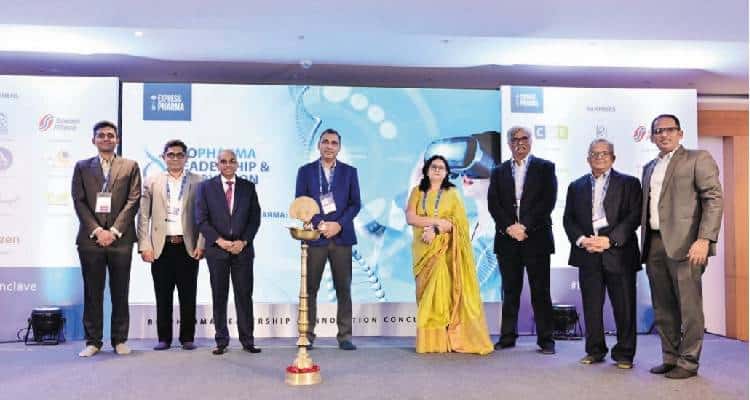

Express Pharma hosted the maiden Biopharma Leadership Conclave 2025 and brought together industry leaders to discuss how India can move from being the world’s leading producer of generics and biosimilars to becoming a hub for innovative, affordable, and high-quality biologics and advanced therapies
Global health needs are changing fast. New challenges such as complex diseases, rare conditions, and personalised treatments are reshaping how therapies are developed and delivered. Technology is also transforming discovery and manufacturing. This shift opens a new window of opportunity for biopharma in India.
To explore this potential, Express Pharma hosted the Biopharma Leadership Conclave 2025, under the theme, ‘The future of biopharma: Made in India‘.
Held at Hilton Garden Inn, Pune Hinjawadi, the conclave brought together industry leaders, entrepreneurs, researchers, innovators and ecosystem partners to discuss how India can move from being the world’s leading producer of generics and biosimilars to becoming a hub for innovative, affordable, and high quality biologics and advanced therapies.
The conclave covered a wide range of themes including India’s innovation pathway, digital transformation, biopharma funding, Manufacturing 4.0, regulatory harmonisation etc.
India’s move beyond biosimilars
The day opened with a panel moderated by Dr Dakshesh Mehta, Independent Biopharma Professional. The panelists included Nitin Damle, Executive VP and Chief Innovation Officer, Sun Pharma Advanced Research Company; Sonia Gandhi, DGM & Head (Regulatory Affairs & Policy Advocacy), BIRAC; Dr Mukesh Kumar, Chief Scientific Officer, CLINEXEL; Dr Venkata Ramana, Chief Scientific Officer, Reliance Life Sciences; Dr Vishal Pavitrakar, Sr DirectorGlobal Regulatory AffairsCMC, Alvotech and Dr Santosh Taur, Director-Medical Affairs, Pfizer.
The session, titled ‘From biosimilars to breakthroughs: India’s innovation pathway’, focused on how India can move up the value chain, from being a manufacturing powerhouse in biosimilars to becoming a true innovation hub for biologics and large molecules.
Panellists observed that India’s foundation in bioprocessing, analytical sciences, and clinical execution provides a strong base for expansion into novel entities.
However, they agreed that India must strengthen translational research infrastructure, offer sustained support for biotech start-ups, and ensure predictable regulatory pathways to accelerate innovation. The conversation also underlined the importance of bridging academia and industry, ensuring lab discoveries are developed into commercial products faster.
A shared view was that innovation must remain affordable and accessible for Indian and global patients alike.
Clinical development strategies for emerging biotech
The event also saw several focused sessions. One was by Dr Mukesh Kumar, Chief Scientific Officer, CLINEXEL, who discussed how smaller biotech companies can design clinical development programmes more efficiently. He stressed on adaptive trial design, the use of real-world data, and early regulatory engagement. Collaborating with CROs, academic networks, and international partners, he noted, can help smaller firms scale their programmes faster and reduce costs. The session highlighted that clinical strategies should connect directly with market access and affordability goals.
The digital leap in biopharma manufacturing
Next, followed a panel discussion that explored how digital tools are transforming biopharma manufacturing. Moderated by Dr Sudeep Kumar, COO, Techinvention Lifecare, the panel featured Prof Samir Kulkarni, Head; Department of Biological Sciences and Biotechnology, Institute of Chemical Technology, Mumbai; Usman Ali Ansari, Sr Manager (Biotech DS Production Department), Bharat Serums and Vaccines; Dr Peddireddy SR, GM-Manufacturing & Development-Mabs & Vaccines, Serum Institute of India; Prashant Chawla, Sr GM, Biological E; Pankaj Gour, Sr GM and Head of Manufacturing Science and Technology (MSAT), Enzene Biosciences; Shital Jain, Deputy GM, Serum Institute of India and Mukesh Patale, Group Lead, MSAT, Dr Reddy’s Laboratories, Biologics Unit, Hyderabad.
The discussion focused on automation, predictive analytics, and electronic batch records as the next frontier in improving compliance and process consistency. Many organisations, the panel noted, are transitioning through hybrid models, blending traditional and digital systems during the transformation phase.
The need for a digitally fluent workforce was highlighted repeatedly. Participants agreed that digitalisation is not just a technology upgrade, but a shift in culture and skills within the organisation.
Smarter systems, intelligent processes
A technical session led by Garet Jacob Fernandes, Product Manager, Smart Intelligent Process Software, showcased Aseptsoft: Smart Intelligent Process Software, a platform designed to bring intelligence and efficiency to biopharma process management.
He informed that Aseptsoft enables digital process mapping, automated documentation, traceability, and validation alignment. It aims to shorten tech-transfer and scale-up timelines, allowing faster movement from lab to plant. The session illustrated how software driven process design can make manufacturing more transparent, standardised, and inspection-ready.
Reviving a critical need: anti-snake venom therapeutics
Dr Anil Yadav, Technical Director, Raut Serums India, presented the next session, highlighting developments in anti-snake venom production, a critical yet often underfunded therapeutic segment in India.
The presentation traced the journey from traditional serumbased treatments to highly purified, standardised antivenom formulations that meet WHO and Indian Pharmacopoeia 2022 standards.
The session also noted the need for better supply mechanisms and region-specific formulations, given India’s diversity of snake species. It was an example of how biopharma innovation can also serve public health priorities.
Functional characterisation in mAbs
Sheetal Raut, Sr Manager & Bioassay Team Lead, Advanced Biotech Lab, Ipca Laboratories, presented on the importance of functional characterisation in biosimilar development.
These studies are key to both regulatory approval and lifecycle management, ensuring continued similarity even when manufacturing changes occur.
The presentation highlighted that robust analytical and functional data form the backbone of regulatory confidence and product reliability.
Quality, compliance and inspection readiness
The concluding panel, moderated by Prasun Guha, Head & VP – Regulatory Affairs (Biologics), Dr Reddy’s Laboratories; Dr Yashwant Chavan, MD, geneOmbio Technologies; Dr Shuvankar Ballav, Manager and Lead – Regulatory Affairs (ABL), Ipca Laboratories and Jayachandran Ramalingam, DGM- Biosimilars QC, Serum Institute of India.
This session titled, ‘Quality and compliance: Powering global leadership in biopharma’ focused on building a culture of compliance. Panellists said that quality is no longer just about regulatory obligation, it is about trust, reliability, and competitive advantage. They stressed the importance of data integrity, robust documentation systems and proactive internal audits. The discussion concluded that continuous inspection readiness is essential for India’s credibility as a global biopharma supplier.
A new phase of growth
The Biopharma Leadership Conclave 2025 made it clear that India’s biopharma story is entering a new phase. With its scientific talent, manufacturing scale and cost advantage, India is well-positioned to lead in biologics and advanced therapies. However, achieving this will require stronger partnerships, smarter investments, and agile regulation.