

CPHI India opens in New Delhi, puts spotlight on India Pharma’s next phase of growth
The 19th edition brings together over 2,000 exhibitors, with organisers expecting more than 50,000 pharma professionals from over 120 countries

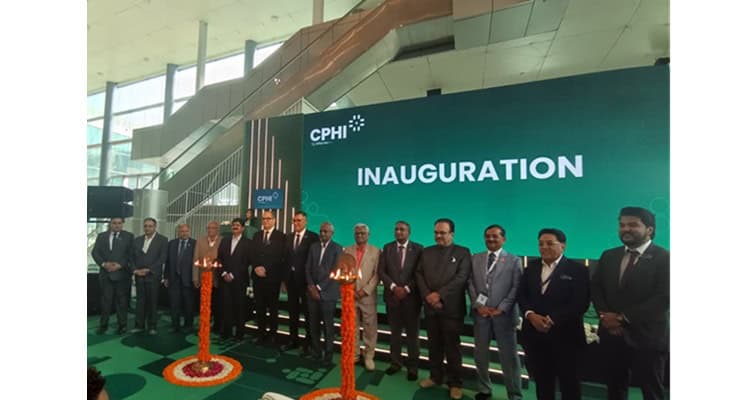

India’s pharmaceutical industry has built its reputation on volume. At the 19th edition of CPHI India, which opened on November 23 at Yashobhoomi, leaders made the case that the next chapter must be about value.
The show covers APIs, finished formulations, excipients, fine chemicals and natural extracts. Its sister event, PMEC India, runs from November 24 to 26 at India Expo Mart, Greater Noida, and covers machinery, equipment, packaging, laboratory systems and manufacturing technologies. Informa Markets India separated the two after industry feedback, aiming for more focused engagement and a better visitor experience, informed Mudras. Together, they bring over 2,000 exhibitors and are expected to draw more than 50,000 pharma professionals from over 120 countries across four days.
From generics to complex therapies
Yogesh Mudras, Managing Director of Informa Markets India, said the industry’s rise rests on manufacturing scale, quality and global reach. The way forward, he said, lies beyond volume-driven generics, in biologics, specialised therapies and complex formulations. Getting there will demand greater investment in innovation, technology, advanced manufacturing and quality systems.
Regulation as an enabler
Dr Chandrashekar Ranga, Joint Drugs Controller (India) at CDSCO, spoke about the regulatory measures taken to raise quality while easing the path for industry.
- Quality: Revised Good Manufacturing Practices under Schedule M, in effect since January, are meant to lift standards and align them with international practices.
- Reliance: CDSCO uses approvals from stringent and WHO-listed authorities for certain decisions on new drugs and clinical trials. This supports accelerated approvals, orphan drugs, conditional approvals for unmet medical needs and breakthrough therapies.
- Digitisation: More than 95 per cent of CDSCO’s regulatory processes are digital, and a single-window Digital Drug Regulatory System is under development.
- Ease of doing business: Risk-based regulation, simpler requirements for manufacturing certain drugs for testing and analysis, export NOCs valid for up to one year, and pre- and post-submission meetings.
India has reached WHO maturity level 3 for vaccine regulation, with level 4 in more than five regulatory functions, he said. The Indian Pharmacopoeia is recognised in 25 countries, and its 10th edition was launched this year. He also cited India’s CAR-T therapies as a sign of progress in innovative treatments.
Building domestic strength
Dr Ranga said the production-linked incentive (PLI) schemes have supported investments in critical pharmaceutical products and expanded domestic capacity where India was earlier import-dependent. He also pointed to growing adoption of digital traceability, continuous manufacturing, flow chemistry, real-time quality control and quality-by-design approaches.
India’s role during the COVID-19 pandemic showed its importance to global pharma supply chains, he said. The country must now keep strengthening its capabilities in innovative products and technologies.
Trade as a growth lever
Raja Bhanu, Director General of Pharmexcil, said India’s free trade agreements could open up export opportunities. India has signed around nine FTAs over the past six to seven years, covering 38 countries, with potential business of around $100 billion.
He put India’s pharmaceutical market at $60-70 billion, projected to reach $120-130 billion by 2030, with an ambition of $400 billion by 2047. Platforms like CPHI, he said, can connect Indian manufacturers with international markets.
What’s on the agenda
The Pharma Connect conference alongside the exhibition addressed topics such as API self-sufficiency, biopharma, emerging technologies, manufacturing, regulatory harmonisation and global trade. It also examined growth opportunities in injectables and biosimilars, CRDMO partnerships, sustainable manufacturing and capital investment.
